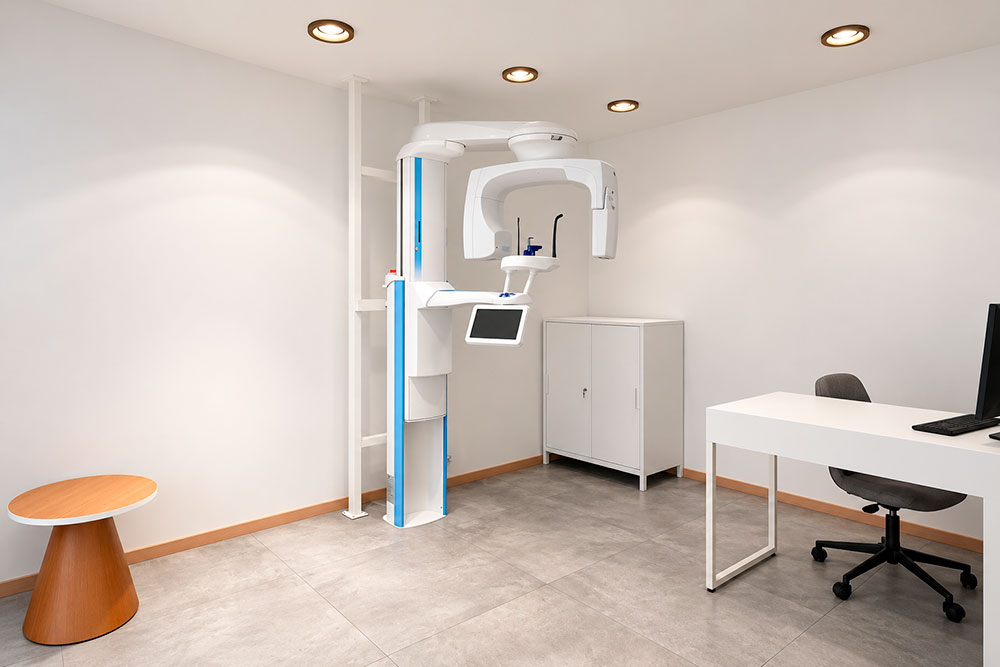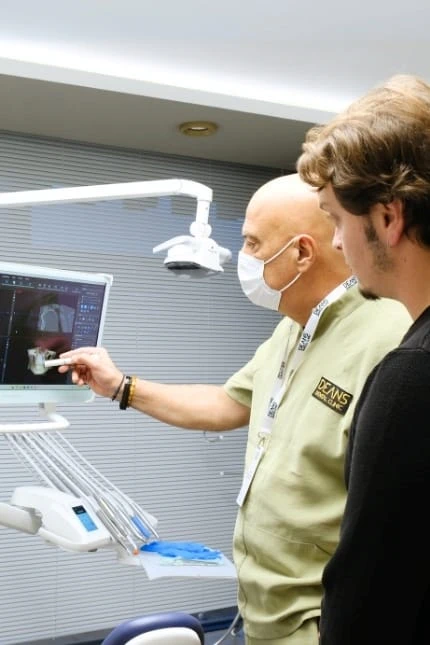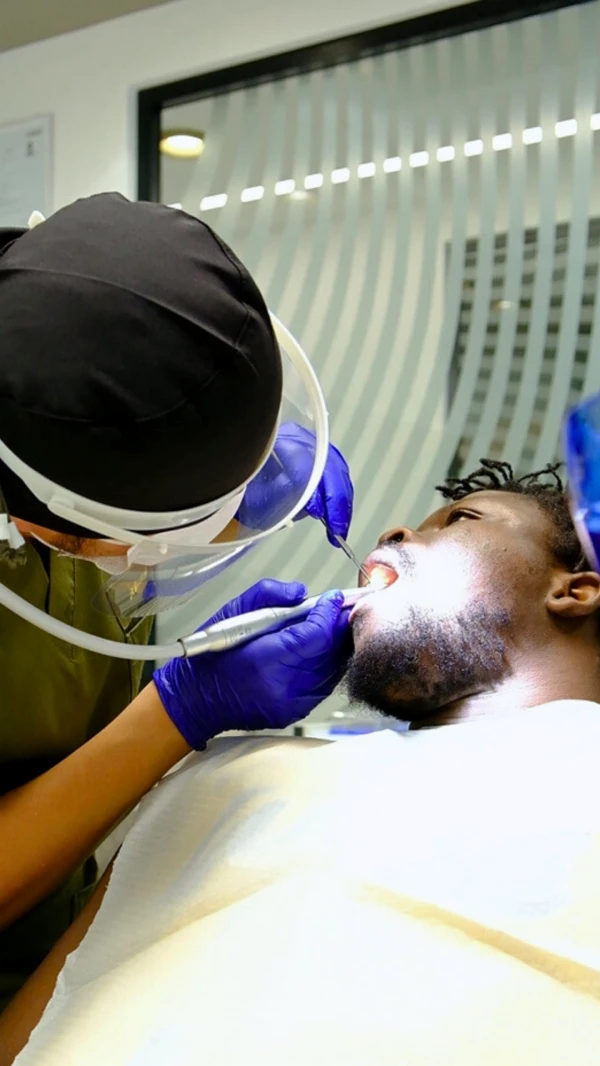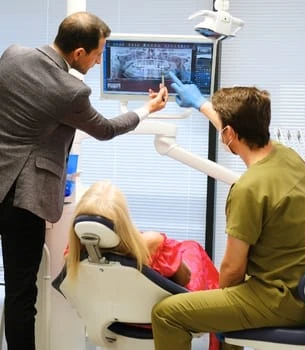
Dental implants are placed through a planned series of clinical steps that replace a missing tooth root with a small titanium or zirconia post anchored in the jawbone. The process usually begins with an exam, digital X-rays, and often a 3D CBCT scan to measure bone width, height, and the location of nearby nerves or sinus spaces. If the site is suitable, the dentist or oral surgeon places the implant into the bone under local anesthesia. In many cases, the implant is left to heal for about 8 to 12 weeks in the lower jaw and 12 to 16 weeks in the upper jaw, though timing varies with bone quality, smoking status, grafting needs, and the implant system used.
After healing, the implant bonds with the bone through osseointegration. A connector piece called an abutment is attached, and a custom crown is made to match the color, bite, and shape of nearby teeth. Some patients receive one implant for one missing tooth, while others use 2 to 6 implants to support a bridge or full-arch restoration. A single implant surgery often takes about 45 to 90 minutes. Full treatment may take 3 to 9 months if bone grafting, sinus lift surgery, or gum contouring is needed.
Dental implants are recommended when a patient has healthy gums, adequate bone support, and good daily oral hygiene. Success rates are high, often reported around 95% to 98% for healthy non-smokers over 10 years, though results depend on medical history, implant position, and aftercare. Costs vary widely by country and clinic, but one implant with abutment and crown commonly ranges from $3,000 to $6,500 in the United States. The main benefits are stability, chewing efficiency, and preservation of bone in the area where the tooth was lost.
What Are Dental Implants?
Dental implants are artificial tooth roots placed into the jawbone to support a replacement tooth, bridge, or full-arch prosthesis. In most cases, the implant itself is a screw-shaped post made from medical-grade titanium, though zirconia implants are also used in selected cases. The implant replaces the root portion of a missing tooth, not just the visible crown. That distinction matters because the root is what transfers chewing force into the jawbone and helps maintain bone volume over time.
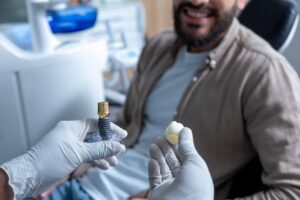
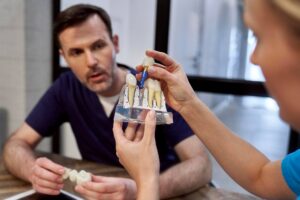
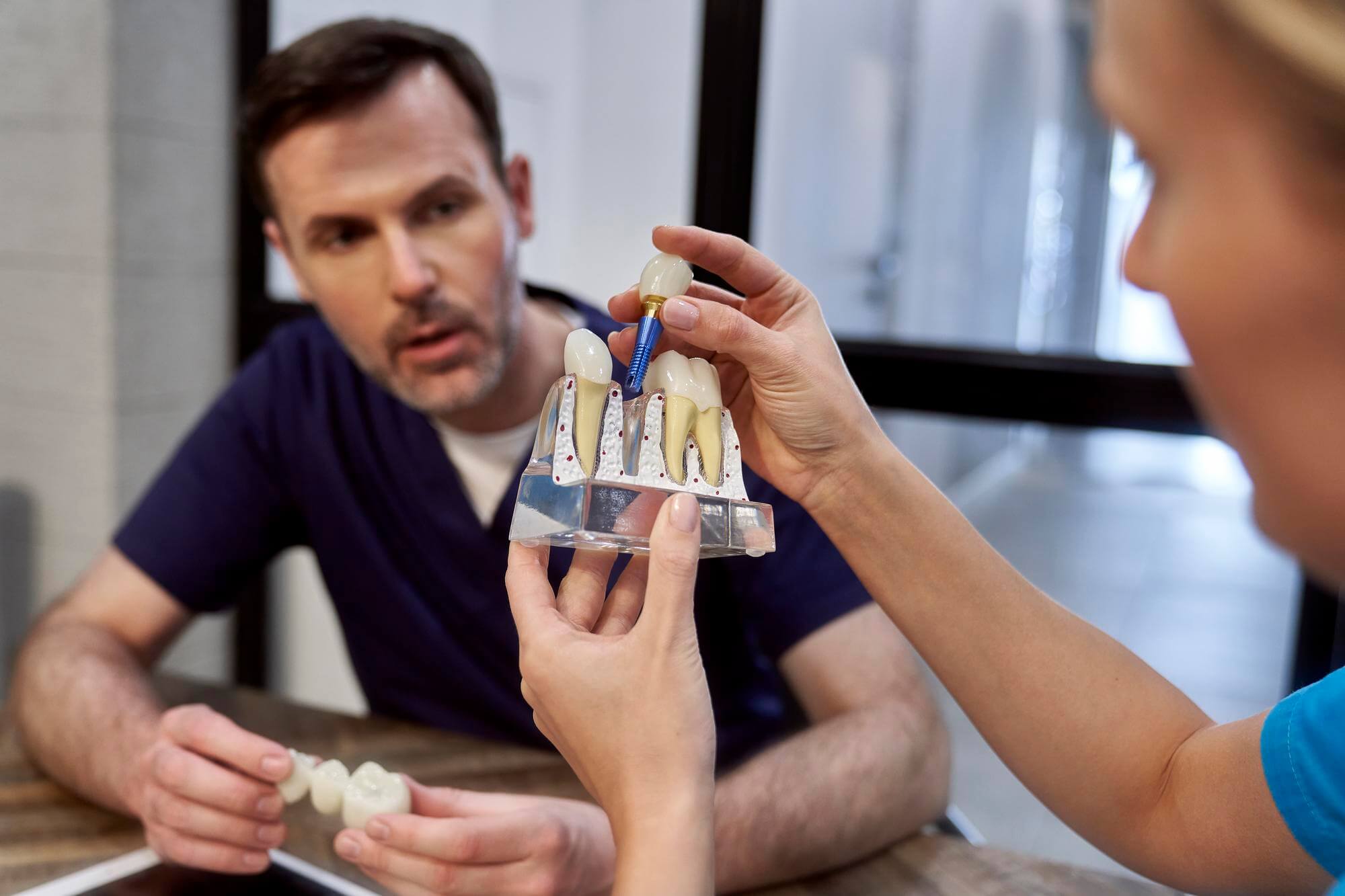
A complete implant restoration usually has three parts. The first is the implant fixture, which sits inside the bone. The second is the abutment, a connector that attaches the fixture to the visible tooth. The third is the restoration, which may be a single crown, a fixed bridge, or a denture-type prosthesis. If one front tooth is missing, one implant may support one crown. If several teeth are missing, two or more implants can support a bridge. In full-mouth treatment, 4 to 6 implants per arch are commonly used to support a fixed set of teeth.
Dental implants differ from removable dentures and traditional bridges because they do not rely on suction, adhesives, or the cutting down of neighboring teeth. A conventional bridge often requires shaping the adjacent teeth to support the false tooth in the middle. An implant stands independently when enough bone is present. That makes it a more conservative option for nearby natural teeth.
From a biological standpoint, implants work through osseointegration, the direct bonding between bone and the implant surface. This healing process can take a few months. Once the bond is stable, the implant functions much like a natural root during chewing. Bite force with implant-supported teeth is usually far stronger and more predictable than with removable dentures, though the exact force depends on the number of implants, the prosthesis design, and a patient’s muscle strength.
Implants are used for many clinical situations. They may replace one missing molar, support a bridge after trauma, or stabilize a lower denture that has become loose. They are also common after tooth loss from decay, gum disease, fracture, or failed root canal treatment. Modern implant diameters often range from about 3.0 mm to 5.5 mm, and lengths commonly range from 6 mm to 13 mm, chosen according to anatomy and load requirements.
For our readers comparing options, it helps to think of implants as a structural replacement rather than a cosmetic add-on. They restore support beneath the gum line, which is why they can help preserve facial contours and reduce the bone shrinkage that often follows tooth loss.
Who Is a Good Candidate for Dental Implants?
A good candidate for dental implants is someone with one or more missing teeth, healthy enough to undergo a routine oral surgery procedure, and able to maintain consistent oral hygiene. Age alone is not usually the deciding factor. Many patients in their 60s, 70s, and even 80s do well with implants if their bone quality, gum health, and general medical condition are stable. What matters more is whether the jaw can support the implant and whether the patient can heal predictably.
Healthy gums are one of the main requirements. Active periodontal disease raises the risk of implant complications because the same bacterial environment that damages natural teeth can also inflame tissues around implants. Dentists often treat gum disease before implant surgery. Patients with a plaque score under control and regular maintenance visits every 3 to 6 months tend to have better long-term outcomes.
Bone volume is another major factor. After a tooth is lost, the jawbone often shrinks over time. In the first year after extraction, horizontal bone loss can be substantial, and continued remodeling may follow. If the bone is too thin or too short, a patient may need bone grafting, ridge preservation, or a sinus lift before an implant can be placed safely. A CBCT scan is often used to measure dimensions accurately, sometimes to within fractions of a millimeter, and to avoid nerves in the lower jaw or sinus cavities in the upper jaw.
Medical history also matters. Well-controlled diabetes may still allow successful implant treatment, though poorly controlled blood sugar is associated with slower healing and higher infection risk. Smoking is one of the clearest modifiable risk factors. Heavy smokers often show reduced implant success compared with non-smokers, with risk increasing as cigarette use rises beyond 10 to 20 cigarettes a day. Patients taking certain medications, such as intravenous bisphosphonates or high-dose antiresorptive drugs, need a careful risk review because of concerns related to bone healing.
Teeth grinding, known as bruxism, does not automatically rule out implants, but it can increase the mechanical load on the crown, abutment, or implant connection. In these cases, a night guard may be recommended. People with unrealistic expectations may also need more counseling. An implant can feel very natural, but it is still a prosthetic treatment that requires maintenance.
Young patients must usually wait until jaw growth is complete. For many females this may be around 16 to 18, and for many males around 18 to 21, though growth assessment should be individualized. A thorough consultation helps determine whether immediate placement, delayed placement, grafting, or a non-implant option is the most predictable choice.
How to Prepare for Dental Implant Surgery
Preparing for dental implant surgery starts with diagnosis and planning, not with the day of the procedure itself. The dentist or surgeon typically reviews your dental history, medical conditions, medications, allergies, and previous surgeries. Diagnostic records often include a clinical exam, panoramic imaging, periapical X-rays, and a 3D CBCT scan. The CBCT scan is often the key planning tool because it shows bone height, width, density, sinus position, and the path of the inferior alveolar nerve. These details guide implant size, angle, and whether grafting is needed.
If a damaged tooth is still present, the team decides whether the implant can be placed immediately after extraction or whether the area should heal for several weeks or months first. Immediate placement can reduce total treatment time in selected cases, though it is not suitable for every patient. Active infection, major bone loss, or inadequate primary stability may require a delayed approach. If bone grafting is planned, healing can add 3 to 6 months before final restoration.
Medical preparation may involve adjusting certain medications with the approval of the prescribing physician. Patients on blood thinners are not always told to stop them, but the surgeon needs to know the exact drug and dose. Blood pressure should be reasonably controlled. Diabetic patients are often advised to schedule surgery when glucose control is stable. Smokers are commonly encouraged to stop at least 1 to 2 weeks before surgery and remain smoke-free during healing because nicotine constricts blood vessels and can impair osseointegration.
Oral preparation matters as much as medical preparation. Professional cleaning may be recommended before surgery to reduce bacterial load. If gum disease or untreated decay is present, that is often managed first. Patients are usually asked to brush carefully on the day of surgery and may be prescribed a chlorhexidine rinse for use shortly before the appointment or during the first 1 to 2 weeks afterward.
Practical planning also helps the day go smoothly. A straightforward single implant may take less than 1 hour, but multi-implant surgery can take 2 to 4 hours. If sedation is planned, patients generally need an escort, time off work, and instructions about food and drink. Soft foods such as yogurt, soup, eggs, mashed vegetables, pasta, smoothies, and fish are useful to have ready at home for the first few days.
Questions are worth asking before surgery. Patients should know the expected number of implants, the type of prosthesis, whether temporary teeth will be provided, how many visits are likely, and the total fee range. Written treatment plans often list surgery, graft materials, abutments, crowns, and follow-up visits separately, which makes cost comparisons much easier.
Step-by-Step: How Dental Implants Are Done
Dental implant treatment is done in a sequence of planned stages, though the exact order can vary depending on whether the tooth is already missing, whether grafting is required, and whether the final tooth is fixed immediately or after healing. For many patients, the process begins with consultation and digital planning. The clinical team examines the bite, gum condition, smile line, and available space. Imaging identifies safe implant positions and helps determine if the case involves one implant, multiple implants, or a full-arch design.
The surgical phase usually starts with local anesthesia. Some patients also choose oral sedation or IV sedation, particularly for longer procedures or dental anxiety. If a failing tooth needs removal, it may be extracted first. In selected cases, the implant is placed during the same appointment. The surgeon opens the gum or uses a flapless guided approach, prepares the implant site with a sequence of precision drills, and inserts the implant into the bone with controlled torque. Primary stability is checked, often using insertion torque values or resonance frequency measurements. In many clinics, torque values above about 30 to 35 Ncm may support immediate provisionalization when other conditions are favorable.
After the implant is inserted, the site may be closed with stitches. Some implants receive a cover screw beneath the gum for buried healing. Others receive a healing abutment that projects through the gum so the tissue can shape around it. If the bone contour is thin, a graft membrane and particulate graft material may be placed around the implant. This can support better long-term tissue form and reduce collapse of the ridge.
Healing follows. During osseointegration, the bone bonds to the implant surface over several weeks to months. Temporary teeth may be worn during this period, though they must often be adjusted to avoid heavy pressure on the healing implant. Once integration is confirmed clinically and radiographically, the restorative phase begins. The implant is uncovered if needed, an abutment is attached, and an impression or digital scan is taken. The laboratory then fabricates the crown, bridge, or arch prosthesis using ceramic, zirconia, metal-ceramic, or hybrid materials.
The final restoration is fitted, checked for bite balance, and secured either with cement or a screw-retained design. The dentist verifies contact points, cleans excess cement if used, and confirms that the patient can floss or use the recommended hygiene tools. Follow-up visits are commonly scheduled after 1 to 2 weeks, a few months later, and then at regular maintenance intervals.
For a straightforward single-tooth case without grafting, the active chair time may total 2 to 4 appointments over several months. Full-arch cases are more complex and may involve 4 to 10 visits, surgical guides, temporary bridges, and a final prosthesis after tissue stabilization.
How Long Does the Dental Implant Process Take?
The total dental implant timeline can be short in simple cases and much longer in complex ones. For a healthy patient with enough bone and no active infection, a single implant may be placed in one appointment lasting about 45 to 90 minutes. If the implant is stable and the gum condition is favorable, a temporary crown may sometimes be attached the same day or within 48 hours. Even then, the final crown is often delayed until the implant has integrated fully, which can take roughly 2 to 4 months.
The lower jaw often heals faster than the upper jaw because the bone is usually denser. A common healing estimate is around 8 to 12 weeks in the mandible and 12 to 16 weeks in the maxilla. These are not fixed deadlines. Some surgeons wait longer when the bone is soft, when grafting has been performed, or when the patient has risk factors such as smoking, uncontrolled diabetes, or a history of periodontal disease.
If a tooth must be extracted before implant placement, treatment may follow one of several schedules. Immediate placement happens on the day of extraction. Early placement may occur after several weeks of soft tissue healing. Delayed placement may happen after 2 to 4 months, and in some situations after longer. Bone grafting can extend the process. A socket preservation graft after extraction may need around 3 to 4 months before an implant is placed. A sinus lift or larger ridge augmentation may add 4 to 9 months depending on the amount of graft and the healing response.
The restorative phase also takes time. Once the implant is ready, the dentist places a healing abutment or abutment, takes an impression or digital scan, and sends the case to a lab. A custom crown may take 1 to 3 weeks to fabricate. More complex full-arch cases often involve a temporary bridge worn for several months while the implants integrate and the bite is refined. The final prosthesis may be delivered 4 to 8 months after surgery, though some all-on-4 style cases provide fixed temporary teeth on the same day and postpone the definitive bridge until healing is complete.
For many patients, realistic total timelines look like this:
-
Simple single implant, no graft: about 3 to 5 months
-
Single implant with extraction and graft: about 4 to 8 months
-
Multiple implants with moderate grafting: about 6 to 10 months
-
Full-arch treatment with immediate temporary bridge: surgery in 1 day, final teeth often in 4 to 8 months
Speed matters less than stability. Rushing a case with poor primary stability or immature bone can raise the risk of failure, loosening, or cosmetic compromise.
Does Getting a Dental Implant Hurt?
Most patients are surprised that the implant placement itself is usually less painful than they expected. During the procedure, the area is numbed with local anesthesia, so you should feel pressure and vibration rather than sharp pain. For people who are anxious, oral sedation or IV sedation may also be used. In a routine single implant case, many patients describe the surgery as easier than a difficult tooth extraction because the site is controlled, sterile, and planned in advance.
Discomfort is more common after the anesthesia wears off, usually during the first 6 to 12 hours. The level varies by case complexity. A single implant without grafting may cause mild to moderate soreness for 2 to 3 days. Multi-implant surgery, sinus lift procedures, or bone grafting can lead to more swelling, bruising, and tenderness for 5 to 10 days. Pain scores are individual, but many patients manage well with ibuprofen, acetaminophen, or a short prescribed medication plan. Some surgeons advise taking pain relief before the numbness fully fades to stay ahead of the inflammatory response.
Swelling often peaks around 48 to 72 hours. Ice packs applied in short intervals during the first day can reduce this. Minor bleeding or blood-tinged saliva is common in the first 24 hours. Tightness when opening the mouth and tenderness while chewing are also common for a few days, particularly when implants are placed in the back molar area.
What usually feels more uncomfortable than the implant itself is any extra procedure performed with it. Bone grafting, sinus elevation, and full-arch surgery can create a broader healing field. Temporary dentures pressing on the surgery site may also cause irritation if not adjusted properly. That is one reason follow-up visits matter. A quick bite or denture adjustment can make a major difference in comfort.
Pain that gets worse after day 3 to 5, rather than gradually improving, deserves attention. Severe throbbing, bad taste, increasing swelling, pus, fever, or movement in the temporary tooth may point to infection or overload. Numbness lasting beyond the expected anesthetic period should be reported promptly, since nerve irritation, while uncommon, needs assessment.
For our readers who want a practical expectation, many return to desk work within 24 to 48 hours after a simple implant. Physically demanding jobs may require more time, particularly after grafting or several implants. Most people can talk normally the same day, eat soft foods that evening, and resume a more regular diet within several days if healing is uncomplicated.
What Is the Recovery Process After Dental Implants?
Recovery after dental implants has two layers: short-term healing of the gum and longer-term integration of the implant with the bone. The first part is what you feel day to day. The second part is mostly biological and continues quietly for weeks or months. Right after surgery, mild bleeding, swelling, and soreness are expected. Many patients need 1 to 3 days of lighter activity after a straightforward implant and closer to 5 to 7 days after more extensive treatment. The first 24 hours are focused on clot protection, swelling control, and avoiding irritation.
Soft foods are usually recommended for several days. Good options include eggs, yogurt, oatmeal, soup that is not too hot, mashed vegetables, pasta, soft fish, and smoothies eaten without a straw if your surgeon advises avoiding suction. Hard, seeded, spicy, and crunchy foods can disturb the wound early on. Smoking and alcohol are often restricted for at least a few days, and many clinics urge a longer nicotine-free period because blood supply is critical during early healing.
Oral hygiene must continue, but with care. Brushing nearby teeth is still important. The surgical site may need a gentler technique or temporary avoidance for the first day. Saltwater rinses often begin after 24 hours. Some patients receive chlorhexidine rinse for 7 to 14 days, though it should be used as directed because prolonged use can stain teeth and alter taste. Stitches may dissolve on their own or be removed after about 7 to 14 days.
During the first week, swelling often peaks by day 2 or 3 and then starts to settle. Bruising can spread down the cheek or jawline and may look worse before it looks better. This is common and not usually a sign of a problem. Pain should trend downward, not upward. If a temporary crown or bridge was placed, the dentist may instruct you to avoid biting directly on it for several weeks to protect the implant while it stabilizes.
Osseointegration takes much longer than soft tissue recovery. Even when the gum looks healed after 2 to 3 weeks, the implant may still be maturing in bone for another 2 to 4 months or more. Follow-up appointments allow the dentist to monitor the site, evaluate tissue contour, and check for signs of early overload or inflammation. In full-arch cases, speech and chewing adaptation can take time, and patients may need several bite refinements before the final prosthesis is made.
Long-term recovery blends into maintenance. Once the implant is restored, professional reviews every 6 months are common, though some patients with past gum disease benefit from 3- to 4-month intervals. Bone levels around the implant are often checked with periodic X-rays. Stable implants can function for decades, but that depends on plaque control, bite management, and regular monitoring.
What Are the Risks or Complications of Dental Implants?
Dental implants have a high success rate, but they are still surgical and prosthetic treatments with known risks. Complications can happen during surgery, early in healing, or years later under functional load. The most basic risk is failure of osseointegration, where the implant does not bond adequately to the bone. This can occur if the implant lacks primary stability, becomes overloaded too soon, develops infection, or heals poorly due to smoking, uncontrolled diabetes, or inadequate bone quality. Early failure may show up as pain, mobility, persistent inflammation, or radiographic bone loss within the first few months.
Infection is a recognized complication. Around a recently placed implant, infection may delay healing or contribute to failure. Around an implant that has already integrated, inflammation may present as peri-implant mucositis or peri-implantitis. Mucositis affects the soft tissue and can often be managed if detected early. Peri-implantitis involves bone loss and can threaten the implant’s long-term stability. Patients with a history of severe periodontitis tend to carry a higher risk if maintenance is inconsistent.
Anatomical complications are important to plan around. In the lower jaw, implants placed too close to the inferior alveolar nerve can cause numbness, tingling, or altered sensation in the lip or chin. In the upper jaw, over-preparation or poor angulation can lead to sinus involvement. This is one reason CBCT-guided planning has become common in modern implant practice. Accurate measurements lower risk, though they do not eliminate it entirely.
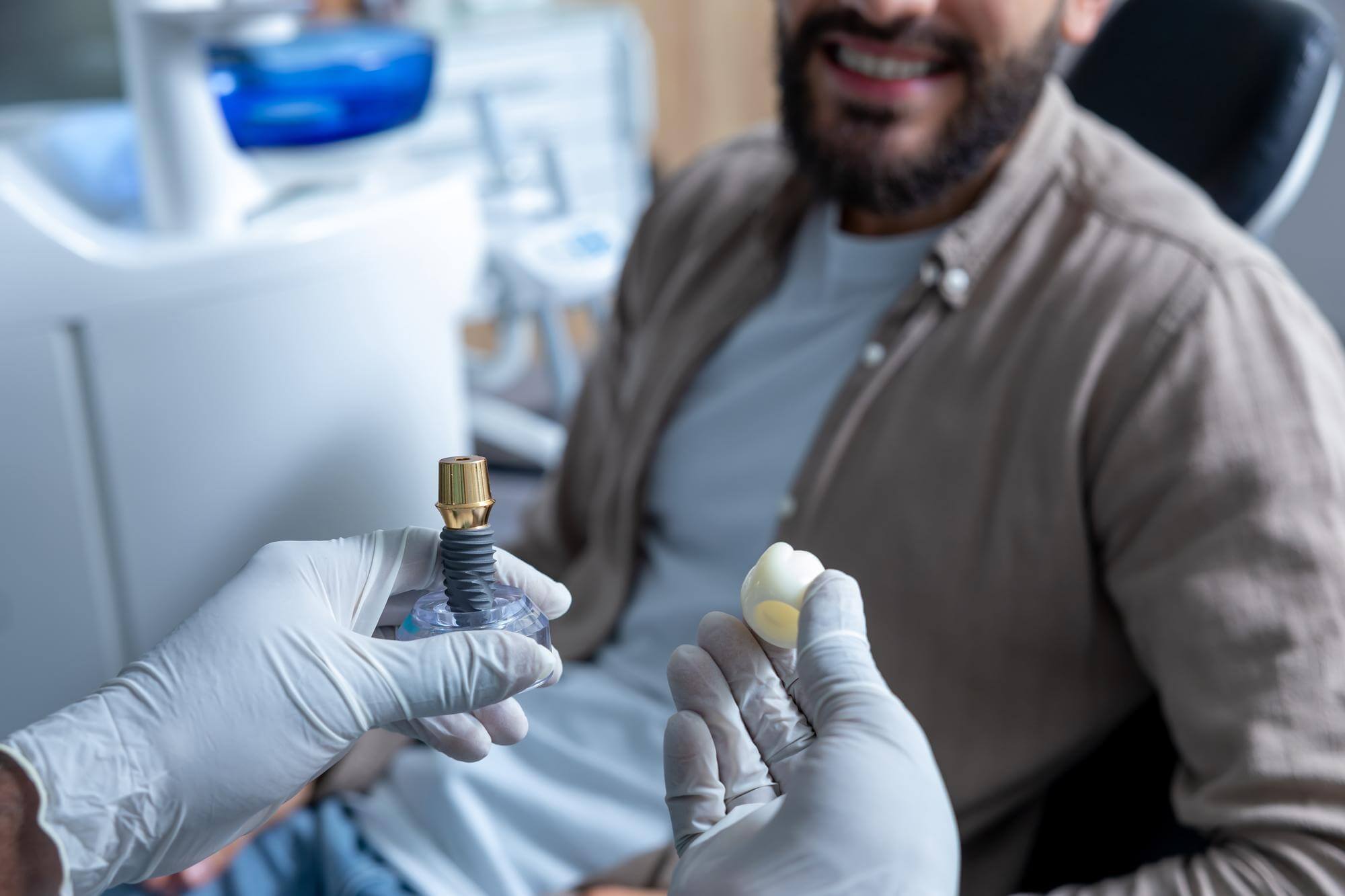
Mechanical complications are also part of implant care. Abutment screws can loosen, crowns can chip, and components can fracture under heavy bite forces. Bruxism increases this risk. Narrow implants placed in high-load areas may face more stress, while full-arch cases need careful occlusal design to distribute force across multiple implants. Even when the implant remains stable, the prosthetic parts may need maintenance over time.
Cosmetic complications matter too. If an implant is placed in a visible front area with thin gum tissue or inadequate bone, gum recession, shadowing, or asymmetry can occur. The front teeth demand more exact positioning than back teeth because even a 1 to 2 mm mismatch in gum level can be obvious in a smile.
Most risks can be reduced through careful case selection, hygiene control, smoking reduction, and regular reviews. Patients should ask about the surgeon’s planning method, the expected need for grafting, and what signs would count as an emergency. A problem caught early is usually easier and less expensive to manage than one left for months.
How Successful Are Dental Implants?
Dental implants are among the most predictable treatments in modern dentistry when they are planned well and maintained properly. Reported success rates are commonly around 95% to 98% for single implants in healthy patients over 5 to 10 years, though exact numbers vary by study design, implant location, patient health, and what the researchers define as success. Some studies separate survival from success. Survival means the implant is still in place. Success usually applies stricter criteria, such as minimal bone loss, absence of pain, no mobility, and healthy surrounding tissue.
Location in the mouth affects outcomes. Implants in the front lower jaw often perform very well because the bone there is typically dense. The back upper jaw can be more challenging due to softer bone and sinus anatomy. That does not mean upper implants are unreliable, only that treatment planning may be more complex and healing may take longer. Bone grafting, sinus lifts, and careful implant selection help improve predictability in these areas.
Patient factors are just as important as surgical skill. Smoking is linked with lower success rates and more peri-implant tissue problems. Poorly controlled diabetes can slow healing and increase inflammatory complications. A history of advanced gum disease raises the chance of peri-implantitis if maintenance is poor. Oral hygiene habits matter every day after placement, not just during the first month. Plaque accumulation around implants can lead to bleeding, pocketing, and bone loss much like bacterial disease around natural teeth.
The prosthetic design influences long-term performance too. A single implant crown that is correctly shaped, cleansable, and not overloaded tends to perform better than a restoration with poor bite distribution or inaccessible hygiene contours. Full-arch bridges can be highly successful, but they require skilled design, regular professional maintenance, and patient commitment to cleaning underneath the bridge using specific tools.
Success is also tied to follow-up care. Many clinicians review implants at 6- to 12-month intervals with periodic X-rays to compare bone levels. Small changes can be normal in the first year, but progressive bone loss is a warning sign. Early intervention may involve hygiene treatment, occlusal adjustment, replacing a loose screw, or managing inflammation before the damage becomes advanced.
For our readers looking at practical outcomes, a well-placed implant can function 15 years or much longer. Crowns or prosthetic components may need repair or replacement during that time, much like fillings or natural teeth require maintenance. High success rates are real, but they are not automatic. They depend on planning, biology, daily care, and long-term monitoring.
How Much Do Dental Implants Cost?
The cost of dental implants varies widely by country, city, clinic type, implant brand, and how much preparatory treatment is needed. In the United States, a single dental implant with the implant fixture, abutment, and crown often falls between $3,000 and $6,500. In higher-cost urban clinics or specialist-led cosmetic cases, the total may exceed $7,000. If extractions, bone grafting, sinus lift surgery, IV sedation, or temporary prosthetics are added, the final amount rises. A simple extraction might add a few hundred dollars, while grafting can range from roughly $300 to more than $3,000 depending on complexity. A sinus lift may add about $1,500 to $5,000.
Patients are often confused because “implant cost” may refer only to the surgical post, not the full restoration. A quote for $1,500 or $2,000 may cover the implant fixture alone, while the abutment and crown are billed separately. A clear written estimate should show each item. Common line items include consultation, CBCT scan, extraction, graft material, implant placement, healing abutment, abutment, final crown, anesthesia or sedation, temporary teeth, and review appointments.
For multiple missing teeth, implants can become more cost-effective than replacing each tooth with its own implant. A three-tooth gap may be restored with two implants and a bridge rather than three separate implants. Full-arch fixed solutions often use 4 to 6 implants per jaw. In the United States, an all-on-4 or full-arch fixed implant bridge commonly ranges from about $15,000 to $35,000 per arch, with premium materials and extensive bone work pushing costs higher. Final zirconia arches can increase the total fee.
Costs outside the United States may be lower. In parts of Europe, Latin America, and the Middle East, a single implant restoration may range from about $1,000 to $3,500 depending on the clinic and materials. Lower pricing does not automatically mean lower quality, but patients should check credentials, imaging standards, sterilization protocols, the implant system used, and what happens if complications arise after they return home.
Insurance coverage is mixed. Many dental plans still classify implants as elective or have annual maximums of only $1,000 to $2,000, which covers only part of the treatment. Some medical insurance plans may contribute if tooth loss is linked to trauma, pathology, or reconstructive surgery. Financing plans are common and may spread the fee over 6 to 60 months.
Value should be judged over time, not only by the starting price. A low quote that excludes scans, grafts, or the final crown can be misleading. A transparent plan that explains timelines, maintenance, warranty terms, and component quality is usually a better sign of reliable treatment.
Dental Implants vs Other Tooth Replacement Options
Dental implants are one of several ways to replace missing teeth. The main alternatives are traditional dental bridges and removable partial or full dentures. Each option has different trade-offs in cost, surgery, comfort, maintenance, and long-term bone preservation. The best choice depends on how many teeth are missing, the condition of neighboring teeth, the amount of available bone, and the patient’s budget and expectations.
A single dental implant replaces one missing tooth without using adjacent teeth as support. A traditional bridge usually requires the two neighboring teeth to be reshaped so crowns can anchor the false tooth between them. That can work well when the adjacent teeth already need crowns, but it removes healthy tooth structure if they do not. Implants avoid that issue. They also stimulate the bone in the missing root area, which helps reduce shrinkage. Bridges do not preserve the underlying bone in the same way.
Removable partial dentures are usually the lowest-cost option for several missing teeth. They can be made relatively quickly, often within a few weeks, and may cost a fraction of implant treatment. The trade-off is stability. Many patients notice movement during chewing or speaking, food trapping around clasps, and pressure on the gums. Full dentures face the same challenge, particularly in the lower jaw where retention is often weaker. Two implants under a lower overdenture can improve retention dramatically, and four or more implants can support a fixed bridge in selected cases.
Durability and maintenance differ across options. A bridge may last 7 to 15 years or longer with excellent care, but decay or root problems in the supporting teeth can compromise the entire restoration. Dentures may need relining or replacement as the jaw changes shape over time. Implant crowns can also need repairs, yet the implant itself may remain stable for decades if the tissues stay healthy.
Function is often where implants stand out most clearly. Bite efficiency with a removable denture can be significantly reduced compared with natural teeth. Implant-supported restorations usually provide better force distribution, confidence while eating, and fewer worries about slipping. Speech can also feel more natural once a patient adapts. Some people still prefer removable options because they involve no surgery, lower initial cost, and easier replacement if medical issues later make maintenance difficult.
A fair comparison is not just about price on day one. It includes future repairs, bone changes, comfort, appearance, and the condition of neighboring teeth. For one missing tooth, an implant is often the most conservative long-term solution. For complex full-mouth cases, the right answer may be a removable prosthesis, implant-supported overdenture, fixed implant bridge, or a staged plan that evolves over time.
How to Care for Dental Implants
Caring for dental implants means protecting both the implant itself and the surrounding gum and bone. Implants cannot develop tooth decay, but they can suffer from plaque-related inflammation that leads to bleeding, pocketing, and bone loss. Daily home care is the main factor patients control. Most people should brush twice a day for 2 minutes with a soft manual or electric brush. The gumline around the implant deserves the same attention as a natural tooth, since bacterial buildup tends to collect there first.
Cleaning between teeth is essential. For a single implant crown, floss, interdental brushes, or water flossers may be recommended depending on the contour of the crown and the spacing. The tool should fit the space without causing trauma. Interdental brushes often come in different diameters, and using the correct size matters. A brush that is too small may not clean effectively, while one that is too large can irritate the tissue. For implant bridges or full-arch restorations, patients often need super floss, threaders, water irrigators, or angled brushes to reach underneath the prosthesis.
Professional maintenance should continue at regular intervals. Many stable patients are seen every 6 months, while patients with a history of gum disease may need reviews every 3 to 4 months. During these visits, the dentist or hygienist checks bleeding, probing depths, mobility, bite force, and hygiene access. X-rays may be taken periodically to compare bone levels around the implant. Small technical problems, such as a loosening screw or chipped ceramic, are easier to fix when caught early.
Habits matter. Smoking increases the risk of peri-implant disease and delayed healing. Teeth grinding can overload implant components, so some patients benefit from a night guard. Hard items such as ice, unpopped popcorn kernels, and non-food habits like pen chewing can chip crowns or stress prosthetic parts. Patients with full-arch implant bridges should understand that even fixed teeth require detailed cleaning underneath every day.
Signs that deserve prompt evaluation include bleeding when brushing around the implant, persistent bad taste, pus, gum swelling, increasing sensitivity in nearby tissue, or any sensation that the crown is moving. The implant itself may still be stable while the crown or screw has loosened, so movement does not always mean complete failure. That said, it should not be ignored.
Well-maintained implants often remain healthy for many years. The routine is not complicated, but it has to be consistent. Good brushing, interdental cleaning, regular reviews, and sensible bite protection are the habits that support long-term results.
Frequently Asked Questions About How Dental Implants Are Done
People usually have practical questions about how implant treatment is carried out, how long it takes, and what life looks like afterward. One common question is whether implants are placed in one visit. The answer is sometimes yes for the surgical placement, but complete treatment is usually spread over several visits. The implant post may be inserted in 45 to 90 minutes for a simple case, while the final crown is often attached only after 2 to 4 months of healing. If grafting is needed, the timeline may be longer.
Patients also ask whether everyone needs a bone graft. No. Many people have enough bone for direct placement, particularly if the tooth was lost recently or the jaw shape has remained stable. Bone grafting is more likely after long-term tooth loss, infection-related bone damage, trauma, or sinus-related limitations in the upper back jaw. A CBCT scan helps measure this accurately.
Another frequent question is whether the implant is visible during healing. It depends on the method. Some implants heal under the gum with a cover screw. Others have a healing cap visible through the gum. In cosmetic areas, a temporary tooth may be provided, but it may be adjusted so it looks natural without carrying full chewing force.
People often wonder how many implants they need. One missing tooth usually requires one implant. Several missing teeth may be restored with fewer implants than teeth if a bridge design is used. A full arch may be supported by 4, 5, or 6 implants in many cases. The exact number depends on bone distribution, bite force, prosthesis material, and anatomical limitations.
Questions about materials are common too. Titanium is the standard because it has strong long-term evidence and excellent biocompatibility. Zirconia implants are available, though they are less commonly used and may be selected in specific clinical situations. The visible crown may be porcelain, zirconia, or layered ceramic depending on strength and esthetic goals.
Many ask whether implants feel like real teeth. They can feel very natural once healed because they are fixed in place and do not move like dentures. The sensation is still not identical to a natural tooth because an implant does not have the same periodontal ligament. Most patients adapt quickly and value the stability more than the sensory difference.
There is also the question of failure. If an implant does not integrate, it can often be removed, the area allowed to heal, and another implant placed later if the conditions are favorable. The replacement plan depends on why the first implant failed. That is why careful planning, hygiene, and follow-up remain central throughout the process.