Dental implants usually feel very close to real teeth once healing is complete, though they do not feel identical in every biological sense. An implant replaces the root with a titanium or zirconia post placed in the jawbone, then supports a crown shaped like a natural tooth. Because the implant is fixed in bone, it tends to feel stable, secure, and natural during chewing and speaking. Many patients describe the result as more tooth-like than a removable denture and more independent than a bridge.
The main difference is sensation. A natural tooth contains nerves and periodontal ligament fibers around the root, which help detect pressure, texture, and very fine bite changes. A dental implant does not have that same ligament or internal nerve supply. You can still feel pressure through the surrounding bone, gums, cheek, tongue, and jaw, but the sensory feedback is somewhat different. In day-to-day life, most people adapt well and stop noticing the difference after a period of weeks or months.
Comfort depends on several measurable factors: precise implant positioning, healthy bone support, a well-shaped crown, balanced bite forces, and complete healing. Osseointegration, the process where bone fuses to the implant surface, often takes about 6 to 12 weeks in straightforward cases and 3 to 6 months in more complex ones. During this period, the implant may feel unfamiliar, and the gums may remain mildly sensitive. Once the tissues settle, many patients can bite, chew, smile, and speak with high confidence.
Clinical success rates for modern dental implants are often reported above 94% to 98% over 10 years in suitable candidates. That high success rate helps explain why they are widely used for single missing teeth, multiple teeth, and full-arch restorations. If you are asking whether implants feel natural enough for normal life, the answer is usually yes. If you are asking whether they recreate every nerve sensation of a real tooth, the answer is no.
How Dental Implants Compare to Natural Teeth
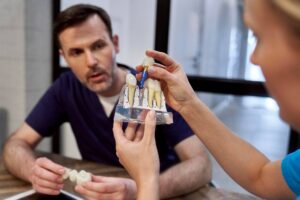
Dental implants and natural teeth serve the same broad purpose, but they are not biologically identical. A natural tooth has enamel, dentin, pulp, nerves, blood vessels, and a periodontal ligament that connects the root to the surrounding bone. A dental implant uses a metal or ceramic post in the jawbone with an abutment and crown above the gumline. The crown may look nearly indistinguishable from a natural tooth, yet the way it is attached is different. A natural tooth has a tiny amount of movement because of the ligament around the root. An implant is more rigid because it is anchored directly to bone through osseointegration.
That difference affects how pressure is perceived. Natural teeth can sense subtle bite forces as low as a few microns of contact change. Implants can still transmit force, though they rely more on bone and surrounding tissues for feedback. Many patients notice this only in the early adaptation period. In practical terms, a well-made implant crown can still let you chew steak, apples, bread, nuts, and most normal foods once your dentist clears you for full function. Studies commonly show chewing efficiency with implant-supported teeth is much higher than with removable dentures and closer to natural dentition.
In appearance, a high-quality implant restoration can match neighboring teeth in color, translucency, width, and contour. Digital scanning, CAD/CAM milling, and layered ceramic systems have improved precision. Crowns are often adjusted in fractions of a millimeter to align the bite. That level of customization matters because even a slight high spot of 100 to 200 microns can make an implant feel unnatural or overloaded.
Durability also differs. Natural teeth can decay, crack, wear, or need root canal therapy. Implants do not get cavities, though they can develop complications such as peri-implant mucositis or peri-implantitis if plaque control is poor. Long-term maintenance still matters. From a daily comfort perspective, a healthy implant often feels strong and stable. From a sensory perspective, a natural tooth remains more biologically responsive. That is the clearest comparison between the two.
What Dental Implants Feel Like After Healing
After healing, most dental implants feel firm, fixed, and unobtrusive. Patients often say the implant stops drawing attention to itself. That is usually the goal. You should not feel wobbling, clicking, rubbing, or shifting when you chew. The crown should contact the opposite teeth evenly, and the gum around it should feel calm rather than sore. Once the surrounding tissue matures, the implant area often becomes part of your normal chewing pattern, much like a healthy tooth.
The timeline to reach that feeling varies. Soft tissue tenderness may settle within 1 to 2 weeks after placement if the surgery is straightforward. Bone integration can take roughly 2 to 6 months depending on jaw location, bone density, smoking status, diabetes control, grafting needs, and whether the implant was placed immediately after extraction or in a healed site. Upper jaw implants often need more healing time than lower jaw implants because the bone is usually less dense. During this phase, some pressure awareness is normal, though actual pain should gradually reduce rather than increase.
What many people notice after healing is stability. A removable denture may have movement of 1 to 2 millimeters or more under function. A successful implant should have no clinically detectable mobility. It can feel solid when you bite into firmer foods, and that stability tends to improve confidence in social situations and meals. The crown material also influences comfort. Porcelain and zirconia are smooth and polished, so the tongue often adapts quickly.
There are still limits to what “natural” means. Because the implant lacks the exact nerve system of a living tooth, temperature and micro-pressure feedback are not the same. You may sense an ice-cold drink through nearby tissues, but not in the same direct way you would through a vital natural tooth. That does not usually affect everyday use. If an implant still feels sharp, too tall, loose, or persistently tender months after treatment, that is not a normal healed feeling and should be assessed by a dentist.
Do Dental Implants Feel Different From Dentures or Bridges
Dental implants usually feel noticeably different from dentures and often somewhat different from bridges. Compared with removable dentures, implants are far more stable because they are anchored in the jaw rather than resting on the gums. A full denture can shift during chewing, create sore spots, trap food under the base, and reduce bite force. Research often shows complete denture wearers produce only about 15% to 25% of the bite force of people with natural teeth, while implant-supported restorations can restore a much higher proportion. That difference changes how food feels in the mouth and how confident a person feels when speaking or laughing.
Removable dentures also cover more soft tissue, often including the palate in upper dentures. That can alter taste perception, temperature perception, and speech. Implant-supported crowns do not cover the palate and usually leave more of the mouth feeling open and natural. If a patient has worn a removable denture for years, an implant can feel surprisingly secure because there is no rocking, no adhesive, and less fear of movement in public.
Compared with a dental bridge, the difference is smaller but still relevant. A bridge is fixed, so it does not come out, and many people function well with one. The bridge uses neighboring teeth as support, which means the sensation is partly transmitted through natural tooth roots. Some patients say a bridge feels familiar because it is tied to their own teeth. An implant-supported crown stands on its own. It may feel slightly more independent in the mouth, and the flossing pattern is different because you clean around an implant rather than under a bridge pontic.
Comfort can favor implants when the bridge would otherwise require significant drilling of healthy adjacent teeth. An implant also helps preserve bone in the missing-tooth area, while a bridge does not stimulate the bone below the gap in the same way. For many patients, the practical feeling difference is this: dentures feel removable, bridges feel connected to nearby teeth, and implants feel fixed directly in the jaw.
How Long It Takes for Dental Implants to Feel Normal
The feeling of “normal” develops in stages rather than overnight. Surgical soreness often peaks within 48 to 72 hours and then eases over the next 7 to 10 days. Swelling is usually mild to moderate in single-tooth cases and often fades within 3 to 5 days. If stitches are used, they may dissolve in 1 to 2 weeks or be removed around day 7 to day 14. During that early phase, the area can feel tender, unfamiliar, or slightly bulky if a temporary restoration is present.
Bone integration takes longer. In many straightforward cases, osseointegration is strong enough by 8 to 12 weeks for the next restorative step, though some treatment plans allow 3 to 6 months. Full adaptation to the final bite and crown shape may add several more weeks. Many patients report the implant feels “part of the mouth” by about 1 to 3 months after the final crown is placed. For others, the adjustment takes closer to 6 months, particularly if they had a long-standing gap, a previous denture, multiple implants, or extensive grafting.
Several factors can lengthen the timeline. If the implant was placed in the upper back jaw where bone density is lower, healing may be slower. Smokers may have delayed healing and higher complication risk. People with uncontrolled diabetes, active gum disease, or heavy nighttime grinding often need more close follow-up and fine bite adjustments. Even a strong implant can feel odd if the crown contour is too full near the tongue or cheek. Tiny refinements in the crown shape can change comfort significantly.
A useful benchmark is this: mild awareness that gradually fades is common, sharp pain or increasing discomfort is not. By the time the implant truly feels normal, you should not be thinking about it every time you eat. The crown should meet the opposing teeth comfortably, your speech should feel natural, and the surrounding gum should no longer feel irritated during routine brushing and flossing.
Can You Eat Normally With Dental Implants
Yes, most people can eat normally with dental implants once healing is complete and the final restoration is in place. That includes biting into many common foods such as sandwiches, cooked vegetables, chicken, rice, pasta, bread, and in many cases firmer foods like apples or steak. The exact timing depends on whether you have a single implant crown, multiple implants, or a full-arch implant restoration. During the healing phase, your dentist may recommend a soft-food diet for several days to several weeks. After final integration and restoration, chewing function is usually far better than with a removable denture.
The reason implants perform well is stability. They are anchored in bone, so they do not rely on suction or gum pressure the way dentures do. A healthy single implant can generally tolerate normal chewing loads when the crown is well designed and the bite is balanced. Typical human bite force can range from around 70 to 150 newtons in gentler chewing and exceed 300 to 500 newtons in stronger posterior biting. Implant restorations are engineered to handle those forces, though patients with severe bruxism may need a night guard to reduce overload.
There are still practical limits. Dentists often advise caution with ice, unpopped popcorn kernels, very hard candies, and using teeth as tools to open packaging. Those habits can chip porcelain, loosen screws in some implant systems, or place excess stress on the restoration. Full-arch implant bridges can restore a wide range of function, yet food choices may still need some common-sense moderation depending on the material used, such as acrylic hybrid prostheses versus full zirconia arches.
If you are in the early stage after surgery, a gradual diet progression is typical. Smooth foods, yogurt, eggs, mashed vegetables, fish, soft rice, and pasta are common starting points. Once the implant is restored and your dentist confirms stable integration, normal eating usually returns. If chewing remains painful or the bite feels uneven, a simple occlusal adjustment can sometimes make a major difference.
Do Dental Implants Affect Speaking
Dental implants can affect speaking briefly during the adjustment period, though long-term speech problems are uncommon when the restoration is properly designed. Speech depends on the relationship between the tongue, teeth, lips, palate, and airflow. If you receive a single implant crown, speech changes are often minimal. You may notice a slight difference for a few days because the tongue senses a new shape where a gap used to be. If the implant replaces front teeth, pronunciation of sounds such as “s,” “f,” “v,” “th,” and “t” may feel different until the tongue and lips adapt.
With multiple implants or full-arch restorations, the adjustment can be more noticeable. The contour of the teeth, thickness of the prosthesis, and support for the lips all influence articulation. Even a 1 to 2 millimeter change in the position of front teeth can alter how air escapes during speech. Dentists and lab technicians usually test phonetics during try-in appointments, asking patients to count, smile, and pronounce common sound combinations. That process helps refine tooth length and position before the final prosthesis is delivered.
Compared with removable dentures, implants often improve speech because they reduce slipping and eliminate upper palate coverage in many cases. Denture wearers may click, whistle, or mumble when the appliance shifts. Implant-supported teeth are more secure, which often restores confidence in conversations and public speaking. Most patients adapt within days to a few weeks. Reading aloud for 10 to 15 minutes a day can speed that adjustment by training tongue placement and airflow patterns.
If speech remains distorted, the cause is usually mechanical rather than mysterious. The crown could be overcontoured, the front teeth may be too long, or a full-arch prosthesis may need adjustment at the polished surfaces where the tongue rests. Persistent lisping, whistling, or lip strain deserves follow-up. Well-planned implant restorations are intended to support, not disrupt, clear speech.
Are Dental Implants Uncomfortable or Painful
Dental implants are not meant to remain painful, though some discomfort is normal during surgery recovery and early healing. Most patients report pressure during the procedure rather than sharp pain because local anesthesia is used. Depending on complexity, placing a single implant may take about 30 to 90 minutes. If bone grafting, sinus lift surgery, or multiple implants are involved, the appointment can be longer. After anesthesia wears off, soreness typically peaks in the first 2 to 3 days and improves over 1 week.
Pain levels vary, though many people compare a straightforward implant to a tooth extraction or rate the discomfort in the mild-to-moderate range. Over-the-counter pain control such as ibuprofen or acetaminophen is often enough, while some cases require a short prescription. Swelling, mild bruising, slight gum tenderness, and sensitivity when chewing on the area can be expected early on. A temporary diet of softer foods often helps. The final crown appointment is usually far more comfortable than the surgical phase.
Once healing is complete, an implant should not hurt in normal daily use. A stable implant should feel comfortable when biting and brushing. Pain after the healing period may signal a problem such as a high bite contact, crown loosening, gum inflammation, food impaction, clenching-related overload, or implant failure. Peri-implant mucositis may present with bleeding and tenderness around the gum. Peri-implantitis may include deeper inflammation and bone loss, often visible on radiographs.
Warning signs include throbbing pain after the first week, bad taste, pus, swelling that worsens rather than improves, fever, or any mobility. It is worth noting that the implant itself has no tooth nerve, so discomfort often comes from the surrounding gum, bone, or bite mechanics rather than from the implant body. Long-term comfort depends on healthy tissue, precise restorative work, and regular maintenance visits every 6 to 12 months.
What Factors Affect How Natural Dental Implants Feel
How natural a dental implant feels depends on a mix of anatomy, surgical accuracy, restorative design, and patient habits. The implant must be placed at the right depth, angulation, and position relative to the neighboring teeth. A difference of even 1 to 2 millimeters can influence crown emergence, tongue space, flossing access, and bite comfort. Digital planning and surgical guides often improve precision by mapping the bone volume and ideal crown position before surgery begins.
Bone quality matters. The lower front jaw often has denser bone than the upper back jaw, so initial stability tends to be stronger there. Implant stability is sometimes measured with insertion torque or resonance frequency analysis. Values vary by system, though insertion torque in the range of about 25 to 45 Ncm is commonly considered acceptable for many treatment protocols. Better stability supports more predictable healing and can influence how secure the area feels during early function.
The shape and material of the crown also affect comfort. A crown that is too bulky can irritate the tongue or trap food. A crown that is too narrow may feel weak or leave black triangles. Porcelain-fused-to-metal, lithium disilicate, and zirconia each have different esthetic and wear properties. Bite balance is critical because implants do not cushion forces like natural teeth. If one implant crown takes too much load, it may feel sore or strange under pressure.
Gum condition plays a large role as well. Healthy, well-contoured soft tissue creates a more natural transition around the crown. If tissue is thin or receded, the implant may still function well but feel less natural to the patient because of food trapping or sensitivity in the surrounding area. Bruxism, smoking, poorly controlled diabetes, and irregular hygiene all increase complication risk. The brain’s adaptation process matters too. People who had a missing tooth for years sometimes need more time to accept a new tooth in that space. A natural feeling result comes from both technical quality and biological adaptation.
How to Care for Dental Implants So They Keep Feeling Comfortable
Comfort over the long term depends on daily care and regular professional review. Dental implants cannot decay, but plaque still accumulates around the crown and gumline. If that plaque is not removed, the tissue can become inflamed and bleed, leading to peri-implant mucositis or more advanced peri-implantitis. Many patients are surprised to learn that implant maintenance can be as demanding as caring for natural teeth, sometimes more so because the early stages of inflammation may not be painful.
A practical home-care routine usually includes brushing twice a day for about 2 minutes with a soft-bristled brush, cleaning between the teeth once a day with floss, interdental brushes, or a water flosser, and using any specific tools recommended by your dentist. For single implants, flossing technique matters because plaque often collects just under the contact point and around the implant crown margins. For full-arch implant bridges, special threaders or water irrigation devices may be needed to clean under the prosthesis. Interdental brushes should fit gently rather than being forced into the space.
Professional maintenance intervals are often every 6 months, though some patients benefit from 3- to 4-month visits if they have a history of gum disease, smoking, diabetes, or full-arch restorations. At these visits, clinicians check probing depths, bleeding, plaque levels, bite contacts, screw stability where relevant, and radiographic bone levels. Small problems are much easier to correct early. A slightly loose crown screw, for example, may be solved in one appointment if noticed quickly.
Patients who grind their teeth at night may be advised to wear a custom night guard to reduce excess load. Avoid using the implant crown to crack shells, chew ice, or tear packaging. If the crown starts feeling tall, food traps develop, or the gum becomes tender, seek review rather than waiting. A comfortable implant is usually a clean implant with a balanced bite and healthy surrounding tissue.
Who Is a Good Candidate for Dental Implants
A good candidate for dental implants usually has one or more missing teeth, healthy enough gums, and sufficient jawbone volume to support the implant. Age alone is not the main issue. Adults in their 20s, 40s, 60s, and beyond may all qualify if growth is complete and general health is reasonably stable. Many practices place implants successfully in older adults in their 70s or 80s when bone quality and medical status are appropriate. The key requirements are local bone support, good healing potential, and willingness to maintain oral hygiene.
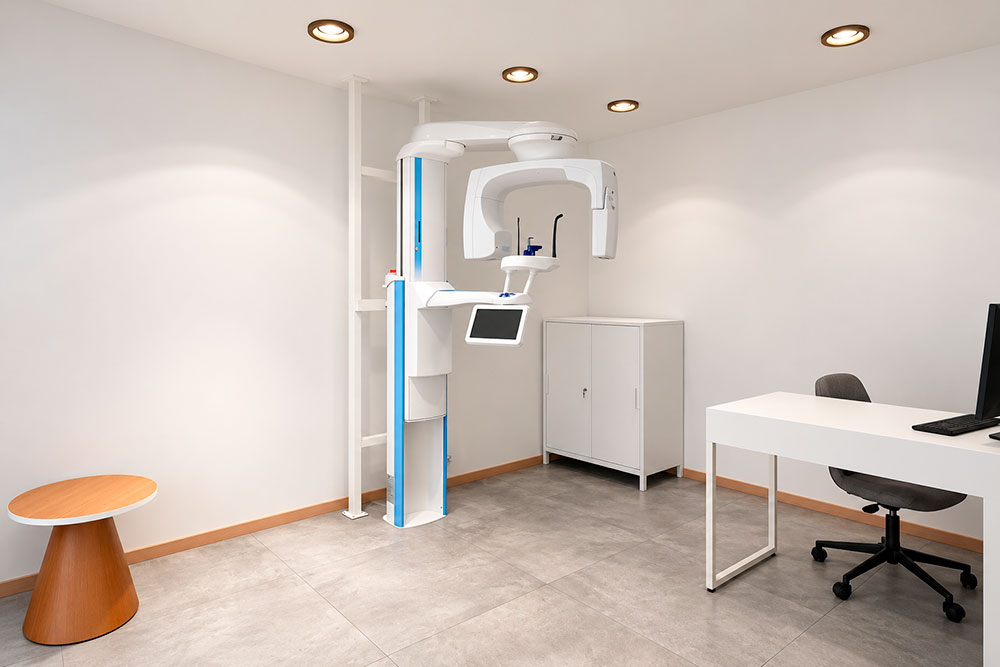
Bone quantity is assessed with imaging, often including a panoramic X-ray and a CBCT scan. The scan shows width, height, and proximity to structures such as the sinus or the inferior alveolar nerve. If bone is limited, grafting may still make treatment possible. Healing also depends on medical factors. Well-controlled diabetes is often compatible with implant treatment, while poorly controlled diabetes can increase infection risk and slow healing. Smokers have higher rates of implant complications, with risk increasing alongside cigarette consumption. Heavy smoking can reduce blood flow and impair osseointegration.
Periodontal health matters because active gum disease raises the chance of implant inflammation later. Bruxism does not automatically exclude a patient, though it may require stronger restorative planning and a protective night guard. People with untreated tooth decay, severe dry mouth, or poor oral hygiene habits may need those issues addressed before implant treatment begins. Some medications and conditions, such as high-dose antiresorptive therapy or recent radiation to the jaws, require careful specialist assessment.
Suitability is not only about surgery. A person who wants the implant to feel natural must also be prepared for the treatment timeline, which can range from a few weeks in selected immediate cases to several months in grafted or staged cases. Good candidates understand that the implant is a medical device that still needs maintenance. With proper case selection, long-term survival rates are high, often reported above 90% over 10 years.
When to Call a Dentist About an Implant That Feels Wrong
You should call a dentist if an implant feels loose, painful, swollen, suddenly high when you bite, or persistently uncomfortable after the expected healing period. A healthy implant should feel stable. Mobility is one of the clearest warning signs because the implant body itself should not move once integrated. Sometimes the implant is stable and the crown or abutment is loose instead, which is still worth prompt evaluation because movement can worsen mechanical wear or bacterial leakage.
Timing matters. Mild tenderness in the first few days after surgery is common. Worsening pain after day 5 to day 7 is less typical and can signal infection, bite overload, or early failure. If the gum bleeds when brushing only once or twice, that may simply mean the area needs better cleaning. If bleeding continues for days, the tissue looks puffy, or there is a bad taste or pus, peri-implant inflammation should be ruled out. A temperature above 38°C, facial swelling that increases, or trouble opening the mouth also deserves professional review.
Functional warning signs are just as important. If food constantly packs around the implant, the floss shreds, the crown feels sharp to the tongue, or you avoid chewing on that side for weeks, the restoration may need reshaping or bite adjustment. Patients sometimes ignore a high bite contact because the implant is not severely painful. That can still overload the surrounding bone over time, particularly in grinders. Clicking sounds, a sensation of springiness, or visible gaps between the crown and gum should not be dismissed.
A practical rule is simple: if the feeling is getting better each week, healing is usually moving in the right direction. If the feeling is staying the same for a long time or getting worse, book an appointment. Early assessment often prevents a small issue from becoming a more costly or biologically significant problem.
FAQ About How Dental Implants Feel
People often ask whether dental implants feel “real,” whether they hurt, and whether they change eating or speech. The most accurate answer is that implants usually feel natural in daily life because they are fixed, stable, and custom-shaped to the bite. They do not recreate the exact nerve sensation of a living tooth, though many patients stop noticing that distinction after adaptation. A well-integrated implant should feel secure rather than foreign.
One common question is whether you can tell that an implant is not a natural tooth. Early on, yes, many people can. The gum may feel tight, the tongue may explore the new crown, and chewing may feel cautious. Once tissues settle and the bite is adjusted, that awareness often fades. Another frequent question is about pain. Surgery causes temporary discomfort, usually strongest for 2 to 3 days and improving within a week. Long-term pain is not considered normal and should be checked.
Many readers ask about chewing. In most cases, you can chew a full diet after healing. Patients with single implants often return to normal foods, while those with full-arch restorations may receive more specific guidance based on the prosthesis material. Speech is another concern. Single implant crowns rarely cause lasting speech changes. Full-arch cases can require a short adaptation period while tongue movements adjust to new contours.
Readers also ask about maintenance and longevity. Implants can last many years, often more than 10 to 20 years, if the bone remains healthy and the patient controls plaque and bite stress. The crown may need replacement earlier than the implant itself depending on wear, material, or screw maintenance. A useful way to think about implant feel is this: a successful implant should become quiet in your awareness. You may still understand intellectually that it is an implant, but your mouth should treat it as a stable working tooth.
Do dental implants feel exactly like real teeth
Dental implants do not feel exactly like real teeth in a biological sense, though they can feel very similar in practical daily use. The reason lies in anatomy. A natural tooth root is suspended in bone by the periodontal ligament, which contains specialized nerve endings that detect pressure, direction of force, and minute bite changes. An implant does not have that ligament. It fuses directly with the jawbone, creating a stable connection that lacks the same micro-sensory mechanism.
That said, “not exact” does not mean “unnatural.” Most patients describe healed implants as solid, dependable, and comfortable. You can still perceive pressure through the surrounding bone, gum tissue, tongue, cheek, and jaw muscles. This adaptation is sometimes discussed as osseoperception, a functional awareness of force around implants. It is not the same as natural tooth sensation, yet it often provides enough feedback for normal chewing and speaking.
The difference is most noticeable in subtle tasks rather than routine use. A natural tooth may register very fine pressure changes or feel cold with more immediacy. An implant crown may not produce that same internal sensation. If the restoration is accurately shaped and the bite is balanced, many people stop paying attention to these distinctions. Clinical success and patient satisfaction are generally high, often above 90% in long-term studies, which reflects how acceptable the feel is for most users.
Expectations matter. If someone expects a perfect duplicate of living tooth biology, the answer is no. If someone wants a fixed replacement that looks natural, supports chewing, and feels stable enough to forget about in daily life, implants often meet that goal very well. The best outcomes come when the implant is placed precisely, the gum contours are healthy, and the final crown is adjusted carefully.
Can you bite and chew normally with dental implants
In most cases, yes, you can bite and chew normally with dental implants after healing and final restoration. This is one of the main reasons implants are often preferred over removable dentures. Because the implant is anchored in bone, the restoration does not slide across the gums during chewing. That stability usually allows stronger, more confident biting and more even force distribution than a loose appliance can provide.
The return to normal chewing is gradual. Right after surgery, patients are often advised to avoid biting directly on the implant site and to choose softer foods for several days or longer depending on the treatment plan. If the implant is left unloaded during integration, the final chewing experience begins after the crown is placed. If immediate provisionalization is used, your dentist may still limit hard biting for a set period, often 6 to 12 weeks, to protect early integration.
Chewing ability depends on the type of restoration. A single implant crown can often handle routine foods very well once integrated. Implant-supported bridges and full-arch prostheses can also restore substantial function, though the material and design matter. A zirconia full arch may tolerate different loads than an acrylic hybrid. Patients who grind their teeth may be told to avoid excessive force and to wear a night guard because bruxism can lead to porcelain chipping, screw loosening, or restorative wear.
If biting feels awkward, the bite may need adjustment. Implants do not compress like natural teeth, so high contacts can feel more abrupt. Even slight refinements can improve comfort quickly. When everything is planned well, many patients chew normally enough that they stop favoring one side of the mouth and regain confidence at meals.
Why does my dental implant feel strange at first
A dental implant often feels strange at first because your mouth is adapting to a new structure, new gum contours, and a different pattern of force transmission. If you had a gap for a long time, your tongue and cheek became used to that empty space. Once a crown fills it, the area can feel bulky or unfamiliar even when the dimensions are correct. This does not always mean there is a problem. It often means the brain is remapping what the mouth considers normal.
There is also a mechanical reason. A natural tooth has a periodontal ligament that gives tiny shock absorption and rich sensory feedback. An implant is more rigid because it is fused to bone. Early on, that can create a sensation of firmness that some patients notice immediately when chewing. Temporary restorations may add to the unusual feeling because they are sometimes shaped more conservatively to protect healing tissues.
Post-surgical healing contributes as well. The gum may be mildly swollen, tender, or tight for days or weeks depending on the procedure. If a healing abutment is present, the tongue can repeatedly notice it. Once the final crown is placed, slight differences in contour may remain noticeable until your speech and chewing patterns adapt. Many patients stop noticing these sensations within a few weeks, though adaptation can take several months in more complex cases.
There are limits to what counts as normal strangeness. Awareness, mild tightness, and cautious chewing can be expected. Sharp pain, persistent pressure, a bite that feels clearly too high, or any movement should be evaluated. If the implant still feels distinctly wrong after the initial adjustment period, a dentist can check the bite, crown shape, soft tissue, and integration status to identify the cause.
Do dental implants have nerves or sensation
Dental implants do not have nerves inside them the way natural teeth do. A natural tooth contains pulp tissue with nerves and blood vessels, and the root is surrounded by a periodontal ligament rich in sensory receptors. An implant is an artificial structure, usually titanium or zirconia, placed into bone. It does not grow its own dental pulp or periodontal ligament. For that reason, it does not provide the same direct nerve-based sensation as a living tooth.
People can still feel an implant area, though the sensation comes from surrounding tissues rather than from the implant itself. The gum, bone, periosteum, cheek, tongue, lips, and jaw muscles all contribute to pressure awareness. This is why patients can usually tell when they are biting on an implant-supported crown even if the sensation is less refined. Researchers often describe this functional pressure awareness around implants as osseoperception.
This distinction helps explain common experiences. You may not feel cold or sweet stimuli through an implant crown the same way you would through a natural tooth. You can still sense force, texture, and contact during chewing, just through different biological pathways. A dentist also relies on this difference when adjusting the bite because implants are less forgiving of overload. Natural teeth can move slightly under force; implants are far more rigid.
For patients, the practical meaning is reassuring. Lack of internal tooth nerves does not usually prevent comfortable use. Most people adapt well enough to speak and eat normally. If pain occurs, it often comes from the gum, bone, bite pressure, or nearby teeth rather than from the implant body itself. Understanding that difference can make postoperative sensations less confusing.
How long do dental implants last
Dental implants can last for many years and often for decades, though longevity depends on oral hygiene, bite forces, smoking, medical history, implant position, and the type of restoration attached. Long-term studies commonly report survival rates around 90% to 95% or higher at 10 years in suitable patients. Some implants function well beyond 20 years. The implant fixture in the bone often lasts longer than the crown attached to it, because crowns may need replacement from wear, chipping, or cosmetic changes before the implant itself fails.
A realistic lifespan discussion should separate the components. The implant post may remain stable for decades if the surrounding bone stays healthy. The abutment and screw can also last many years, though screws occasionally need tightening or replacement. The crown may last around 10 to 15 years or more depending on material, bite stress, and maintenance. Full-arch prostheses have their own maintenance cycle, and acrylic teeth may wear faster than zirconia restorations.
The biggest threats to implant longevity are usually peri-implant disease and overload. Poor plaque control can lead to inflammation and bone loss around the implant. Heavy grinding can increase the risk of restorative fractures or mechanical complications. Smoking raises the risk of failure and long-term tissue problems. Patients with a history of periodontitis often need closer maintenance, sometimes every 3 to 4 months rather than every 6 months.
If you want an implant to last as long as possible, the essentials are consistent cleaning, regular checkups, bite monitoring, and prompt care when something changes. An implant that feels comfortable, does not bleed, and remains stable on X-rays has a strong chance of long service. Longevity is rarely about one dramatic event. It is usually the result of many years of quiet maintenance and healthy tissue behavior.