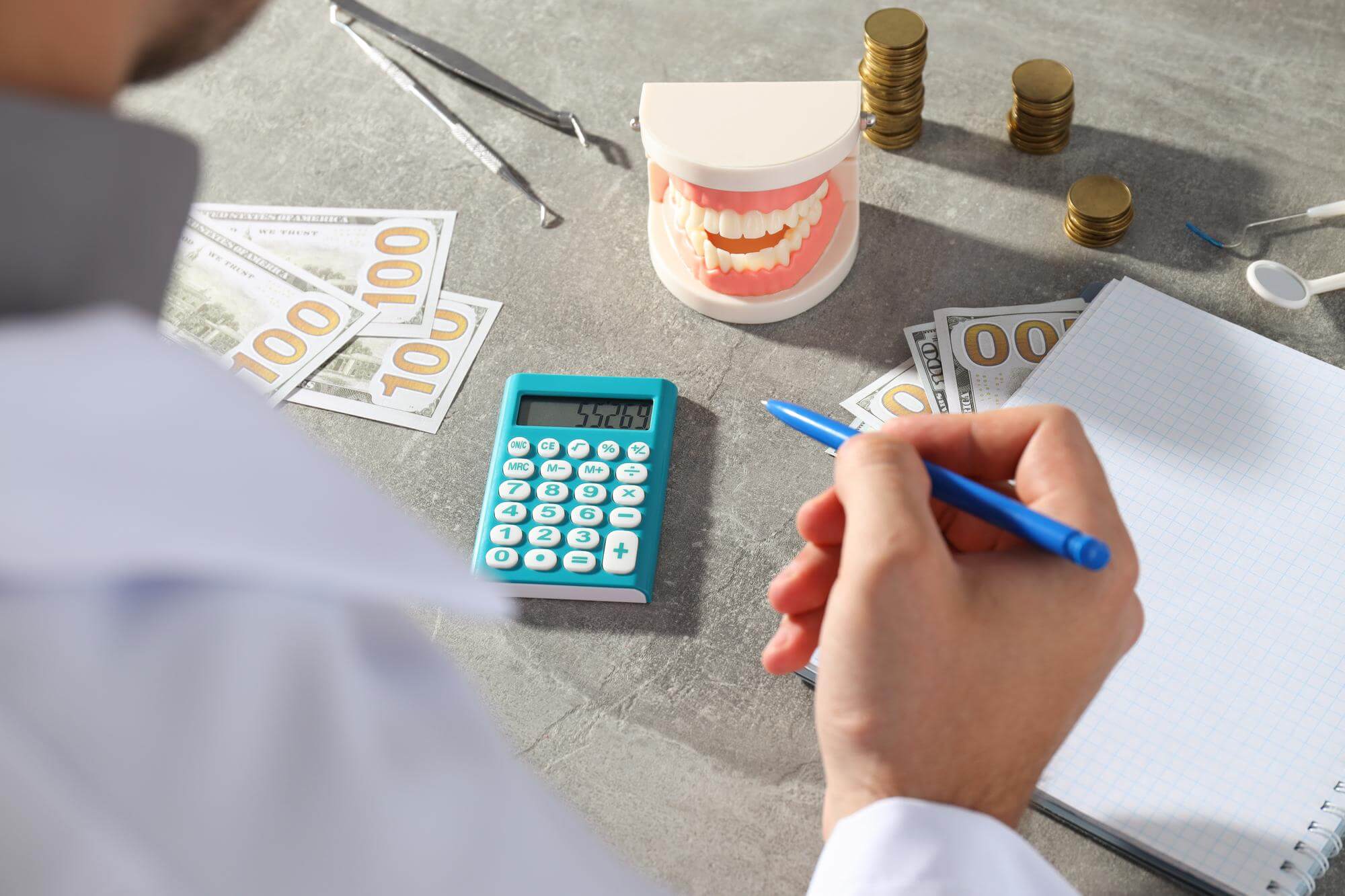
A reasonable dental implant cost depends on how much treatment is actually needed, not just the price of the titanium post. In the United States, a single dental implant for one missing tooth often falls between $3,000 and $6,500 when the implant fixture, abutment, crown, imaging, exams, and routine follow-up visits are included. Some clinics advertise prices closer to $1,500 to $2,000, though that figure often covers only the implant post and leaves out the crown, extraction, sedation, bone grafting, or surgical guides. When readers compare quotes, the total treatment fee matters far more than the headline number.
For multiple teeth, costs scale according to the number of implants, the need for grafting, the restoration design, and the complexity of the bite. An implant-supported bridge may cost roughly $6,000 to $15,000 for a small section. Full-arch treatment can range from about $15,000 to $35,000 per arch in many U.S. markets, while premium full-mouth reconstruction may exceed $50,000 to $70,000 when advanced grafting, sedation, premium materials, and specialist-led planning are involved.
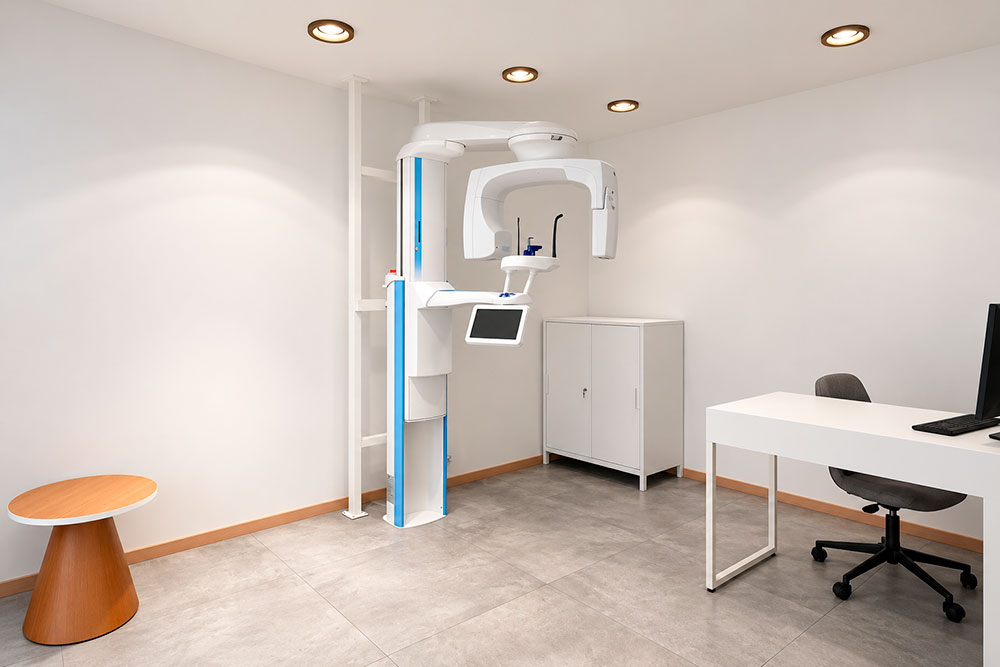
Geography changes pricing sharply. Large metropolitan areas and specialist-only surgical centers usually charge more than suburban or regional clinics. The clinician’s credentials also matter. A board-certified oral surgeon or periodontist with digital planning, CBCT imaging, guided surgery, and an in-house lab may have higher fees than a general office offering only parts of the process. Those added systems can improve precision, reduce chair time, and lower the risk of remakes or complications.
A fair price should include a written treatment plan showing each component separately: consultation, scans, extractions if needed, grafting, implant surgery, healing abutment, final abutment, crown or bridge, anesthesia, and post-op reviews. If a quote looks unusually low, ask what is not included, what happens if bone grafting becomes necessary, and whether the final prosthetic is temporary or permanent. The most useful benchmark is not the cheapest option. It is a transparent total fee for a clinically appropriate plan performed by an experienced team using quality materials and documented follow-up care.
Average Cost of Dental Implants
The average cost of dental implants varies by country, clinic type, and treatment scope, though many patients want a realistic number before booking a consultation. In the U.S., a single implant tooth replacement commonly averages between $3,000 and $6,500 in total. That range usually includes the implant fixture placed in the jawbone, the abutment that connects the implant to the visible tooth, and the final crown. In higher-cost cities, it is not unusual to see totals of $5,500 to $7,500 for one tooth when advanced imaging, specialist fees, and sedation are part of the plan.
Average pricing becomes more complex when a clinic advertises “implants from $999” or “single implants for $1,499.” In many cases, those rates cover only the surgical post. Patients may later discover separate charges for CBCT scans, extraction, sinus lift, bone graft, custom abutment, temporary prosthesis, and final crown. A more meaningful average is the all-in treatment amount. For one straightforward case with no grafting, a realistic all-in fee often falls around $4,000 to $5,000.
Multiple-tooth treatment follows a different pricing model. Two implants supporting a three-tooth bridge can cost about $7,000 to $12,000. Four implants supporting a removable overdenture may run from $8,000 to $20,000 depending on materials and attachments. Full-arch fixed systems such as All-on-4 or All-on-6 are frequently priced from $15,000 to $35,000 per arch in the U.S., though highly specialized centers may quote $40,000 or more per arch if zirconia finals, IV sedation, and same-day conversion prosthetics are included.
International averages are usually lower. In Mexico, Turkey, Hungary, and parts of Eastern Europe, a single implant with crown may range from $1,000 to $3,000, while full-arch systems can be 30% to 60% less than U.S. averages. Lower labor costs and exchange rates drive much of that gap. Travel, aftercare logistics, and remake policies still need attention because the cheapest sticker price is not always the lowest total cost.
Readers comparing averages should focus on four practical numbers: the implant surgery fee, the restorative fee, the imaging and diagnostic fee, and the cost of any preparatory work. Without that breakdown, average price figures can be misleading.
What Is Included in the Cost of Dental Implants?
Dental implant pricing can look confusing because the procedure is usually made up of several separate clinical and laboratory steps. A complete quote may include diagnostics, surgery, restoration, materials, lab fabrication, anesthesia, and post-operative care. When clinics bundle these steps into one number, treatment feels easier to compare. When they list everything separately, patients can see where the fee goes. Both approaches can be fair, though the details matter.
The most basic clinical sequence starts with an initial consultation and diagnostic imaging. A standard implant workup may include a clinical exam, digital X-rays, and a cone beam CT scan. Depending on the office, those items can cost from $100 to $500 for the consultation and radiographs, while CBCT imaging may add $150 to $400. If the treatment plan proceeds, some offices credit part of that fee toward surgery.
The surgical phase includes the implant fixture itself and the placement procedure. The titanium implant post may be priced at $1,000 to $2,500, while surgical placement fees can range from $1,000 to $3,000 depending on complexity and the specialist involved. Some clinics merge these as one line item. After healing, the restorative phase begins. The abutment can cost about $300 to $800, and the final crown often costs $1,000 to $2,500 depending on whether it is porcelain-fused-to-metal, layered ceramic, or zirconia.
Quotes may also include small but meaningful items such as a healing abutment, surgical guide, digital impressions, temporary crown, local anesthesia, and follow-up appointments. A guided-surgery protocol using 3D planning and printed guides can increase precision and may add several hundred dollars. Sedation, if chosen, is usually not included in the base figure unless stated. Nitrous oxide might cost $100 to $250, oral sedation around $200 to $500, and IV sedation $500 to $1,500 or more.
Readers should ask whether the cost includes extractions, socket preservation, bone grafting, membrane placement, sinus lift procedures, emergency visits, repair of a temporary prosthesis, and replacement terms if an implant fails to integrate. A transparent quote should state what is included, what is optional, and what may become necessary later if the bone volume or gum condition changes during treatment.
Dental Implant Cost by Type of Implant
Dental implant cost changes significantly depending on the type of implant system and restoration design selected. People often use the term “implant” as if it describes one standard product, though in practice there are several categories. Endosteal implants, mini implants, zygomatic implants, immediate implants, and full-arch systems all involve different materials, training, planning, and laboratory work. The price reflects that difference.
The most common option is the standard endosteal implant placed directly into the jawbone. For one missing tooth, this is usually the reference point for pricing. A full treatment fee with crown often falls between $3,000 and $6,500 in the U.S. If the site has adequate bone and the bite is straightforward, the lower end of the range is more likely. If the case requires a specialist, custom abutments, digital surgical guides, or premium ceramics, pricing moves upward.
Mini dental implants are narrower than standard implants and are sometimes used where bone width is limited or to stabilize a denture. Their per-unit cost may be lower, often around $500 to $1,500 for placement alone, though total treatment still depends on the denture or restoration attached to them. Mini implants can be useful in selected cases, though they are not a universal substitute for standard implants supporting single crowns in areas with heavy chewing forces.
Zygomatic implants are among the most expensive categories because they are used in severe upper-jaw bone loss and require advanced surgical skill. These implants anchor into the cheekbone rather than the upper jaw. Treatment fees can range from $20,000 to $40,000 or more per arch, depending on the prosthesis, anesthesia, and hospital or surgical-center setting. This is a highly specialized solution rather than a routine implant choice.
Immediate implants, placed at the same appointment as tooth extraction, may or may not cost more than delayed placement. When immediate placement avoids a second surgery, it can reduce total chair time. If the extraction site needs grafting, membrane stabilization, or temporary esthetic restoration in the front teeth, pricing can increase by several hundred to a few thousand dollars.
Full-arch systems such as All-on-4, All-on-5, and All-on-6 are priced by the arch rather than by single tooth. Costs often range from $15,000 to $35,000 per arch. Premium zirconia finals, stronger frameworks, advanced sedation, and dual-arch planning can push treatment well above that. The type of implant is only one pricing factor, though it strongly shapes the clinical pathway and total fee.
Dental Implant Cost for One Tooth vs Multiple Teeth
The cost of replacing one missing tooth is structured very differently from the cost of replacing several teeth. With a single tooth, most of the fee is tied to one implant fixture, one abutment, one crown, and one surgical site. In many U.S. practices, that complete treatment costs around $3,000 to $6,500. If the bone is healthy and no extraction or grafting is needed, patients may land near the middle of that range. Front-tooth implants sometimes cost more because temporary esthetics, soft tissue shaping, and custom ceramic work are more demanding.
When several teeth are missing, the cost does not always rise in a simple one-to-one pattern. If two or three adjacent teeth are absent, it may be possible to place two implants and support a three-unit bridge instead of placing three separate implants. This can lower the cost per tooth. A two-implant bridge replacing three teeth may cost approximately $6,000 to $15,000 depending on location, materials, and complexity. A plan using three individual implants with three crowns may run $9,000 to $18,000 or more.
For non-adjacent missing teeth, separate implants are often necessary because each space needs its own support. In that situation, a patient replacing three isolated teeth could face a total near $9,000 to $18,000, again depending on grafting, specialist fees, and crown type. Some clinics offer small discounts when multiple implants are placed in one surgical session because setup, sedation, and operating time become more efficient.
Larger multiple-tooth cases can shift toward implant-supported partial dentures or full-arch systems. Four implants supporting a removable lower overdenture may cost $8,000 to $18,000, while a fixed full-arch bridge can be $15,000 to $35,000 per arch. The jump in price reflects not just the number of implants but also the prosthetic framework, temporary conversion, bite design, and long-term maintenance planning.
Patients comparing one-tooth and multiple-tooth treatment should ask the dentist to show the cost per functional unit, not just the cost per implant. A quote with fewer implants may still be more expensive if the prosthesis is high-end zirconia or if major grafting is needed. The most efficient plan is the one that restores chewing stability, speech, appearance, and cleanability without placing unnecessary implants.
Full Mouth Dental Implant Cost
Full mouth dental implant treatment is one of the most expensive forms of restorative dentistry because it combines surgery, prosthetics, diagnostics, and long-term bite reconstruction. In the U.S., full mouth implant cost often ranges from about $30,000 to $70,000 or more for both arches combined. Cases at the lower end may involve implant-retained overdentures rather than fully fixed bridges. Cases at the upper end often include zirconia full-arch prostheses, sedation, extractions, grafting, and specialist-led treatment planning.
There are two broad cost models. The less expensive model is a removable overdenture supported by two to four implants per arch. This approach may cost around $8,000 to $20,000 per arch, depending on implant number, attachment type, and whether a new denture is fabricated. Locator attachments and bar-supported overdentures differ in cost and maintenance. This option gives much better stability than a conventional denture while remaining more affordable than a fixed bridge.
The second model is a fixed full-arch restoration, often discussed under brand-style terms such as All-on-4 or All-on-6. Per arch, a fixed provisional and final restoration can cost roughly $15,000 to $35,000. A dual-arch case may total $40,000 to $70,000 or more when premium materials, extractions, immediate loading, IV sedation, and CBCT-guided surgery are included. If severe bone loss demands sinus lifts, pterygoid implants, or zygomatic implants, total fees can rise much higher.
Material choice changes the number dramatically. Acrylic hybrid bridges are usually less expensive than milled zirconia. A temporary fixed prosthesis may be included for the healing phase, though some offices charge separately for the final zirconia bridge after 4 to 6 months of healing. Long-term maintenance also matters. Full-arch restorations often require periodic screw tightening, professional removal for cleaning every 6 to 18 months depending on the design, replacement of night guards, and occasional acrylic or tooth repairs.
Readers considering full mouth implants should request a written plan that separates surgical fees, prosthetic fees, temporary teeth, final teeth, sedation, extraction costs, and grafting allowances. This level of detail helps patients understand whether a lower quote reflects real savings or a more basic restoration design with fewer services included.
Factors That Affect Dental Implant Cost
Dental implant pricing is shaped by clinical complexity more than by any single national average. Two patients replacing one tooth can receive estimates that differ by $2,000 to $4,000 because the hidden variables are substantial. Bone quantity, gum health, tooth position, bite force, esthetic demands, and medical history all influence planning time, surgery difficulty, and laboratory cost.
One of the strongest cost factors is the need for preparatory treatment. If the tooth must be extracted, that may add $150 to $800 for a routine extraction or more for a surgical extraction. Socket preservation bone grafting can add $300 to $1,200. Larger ridge augmentation often costs $800 to $3,000. In the upper back jaw, a sinus lift may add $1,500 to $5,000 depending on whether it is internal or lateral. A case needing none of these services will be far less expensive than a case with advanced bone loss.
The provider’s training also affects fees. A general dentist, periodontist, prosthodontist, and oral surgeon may charge different amounts because their treatment models differ. Specialist-led cases often involve more advanced diagnostics, anesthesia options, and interdisciplinary planning. Geographic location plays a clear role as well. A single implant in Manhattan, Los Angeles, or central London can cost 20% to 60% more than the same treatment in a smaller city where rent, wages, and laboratory overhead are lower.
Material selection is another major variable. Premium implant brands with extensive research data, broad component compatibility, and strong warranty systems may cost more than budget implant systems. Restorative materials differ as well. Zirconia crowns are usually priced above porcelain-fused-to-metal crowns. Custom-milled abutments cost more than stock components. Digital workflows, guided surgery, and in-house milling may increase or sometimes streamline pricing depending on the office setup.
Case timing matters too. Immediate implant placement after extraction can reduce the number of separate appointments, though it may require grafting and provisionalization that raise the fee. Sedation options, temporary esthetic teeth, and after-hours surgical scheduling may also increase total cost. A trustworthy estimate should explain which of these factors apply to your case and why they alter the price.
Does Dental Insurance Cover Dental Implants?
Dental insurance coverage for implants has improved over the last decade, though it still varies widely by policy. Some plans continue to classify implants as elective or place strict limitations on surgical and restorative benefits. Others now offer partial coverage for the implant post, the crown, or both. It is common for patients to receive some reimbursement for related services such as extraction, imaging, anesthesia, and the final crown even if the implant body itself is not fully covered.
In practical terms, many traditional dental PPO plans have annual maximums between $1,000 and $2,500. A few premium plans now offer annual maximums of $3,000 to $5,000, though premiums are higher and waiting periods may apply. If a single implant case costs $4,500, a plan with a $1,500 annual maximum and 50% major-service coverage may still leave the patient paying most of the fee because the yearly cap is reached quickly. This is why “covered” does not always mean “mostly paid for.”
Policies may separate coverage into categories. Diagnostic exams and X-rays are often covered at 80% to 100%. Basic services may receive 70% to 80% coverage. Major restorative treatment, where implants usually sit, may be covered at 40% to 50% after deductible. Waiting periods of 6 to 12 months are common. Missing-tooth clauses still appear in some contracts, though they have become less common than in older plans.
Medical insurance sometimes contributes if implant treatment is connected to trauma, tumor removal, congenital absence of teeth, or major reconstructive surgery. This is case-specific and requires documentation. Medicare generally does not cover routine dental implants, though some Medicare Advantage plans offer limited dental benefits. Medicaid coverage differs sharply by state, with many adult plans offering little or no implant support except in special circumstances.
Patients should ask the clinic for a pre-treatment estimate and a benefits breakdown before surgery. The useful questions are direct: Is the implant fixture covered, is the crown covered, what is the annual maximum, is there a waiting period, and does the plan downgrade benefits to a bridge or denture alternative. Those details often determine whether insurance reduces the bill by a few hundred dollars or by several thousand.
Financing and Payment Options for Dental Implants
Financing is one of the main ways patients make dental implants manageable, since many plans involve a large upfront investment. Clinics usually offer a mix of in-house payment scheduling, third-party financing, credit-based lending, and staged treatment so the cost is spread over time. The right option depends on the total fee, your credit profile, and how urgently the tooth or teeth need to be replaced.
Third-party healthcare financing is common in dentistry. Companies may offer promotional terms such as 6, 12, 18, or 24 months with deferred interest or reduced interest if payments are made on schedule. Longer plans, often 36 to 84 months, can make a $4,500 implant case feel easier to handle monthly, though the total paid rises if the interest rate is 9.99% to 26.99%. On a 60-month term at 12.99%, a $10,000 treatment plan can lead to a monthly payment of roughly $227 and a total repayment near $13,600.
Some offices divide treatment into phases, which naturally spreads the expense. Diagnostics and extraction may be paid first, surgery later, and the crown after healing. Since implants often heal for 3 to 6 months before final restoration, staged billing can reduce the need for one large initial payment. This model works well for readers who prefer to avoid long credit terms.
Health Savings Accounts and Flexible Spending Accounts can be useful because implant treatment is often an eligible medical or dental expense. Paying with HSA or FSA funds can reduce the effective cost by using pre-tax dollars. For someone in a 22% tax bracket, using $4,000 in pre-tax funds creates meaningful savings compared with paying from post-tax income.
Dental membership plans are another route. These are not insurance, though participating clinics may provide 10% to 20% discounts on surgery, crowns, and diagnostics for an annual fee often ranging from $150 to $400. Patients should still read exclusions carefully. Large “discount plans” do not always include specialists or implant prosthetics.
When comparing financing, focus on the total repayment, not only the monthly payment. Low monthly figures can hide long terms and high interest. A transparent clinic should explain deposit requirements, refund terms, and what happens financially if grafting or additional treatment becomes necessary after surgery.
Are Dental Implants Worth the Cost?
Whether dental implants are worth the cost depends on the clinical goal, expected lifespan, comfort, and the alternatives available. For many patients, implants provide the closest replacement to a natural tooth because they anchor in bone, support chewing more effectively than removable options, and do not rely on grinding down neighboring teeth the way a traditional bridge often does. That value is not only cosmetic. It affects function, maintenance, and bone preservation over time.
From a long-term perspective, implants can be cost-effective even when the initial fee is high. A well-placed implant with healthy maintenance may last 15 years, 20 years, or much longer. Published survival rates often fall in the 90% to 98% range over 10 years for appropriately selected cases. Crowns may need replacement due to wear or damage, though the implant itself can remain stable for decades. Bridges and dentures usually have lower upfront costs, but they may need relining, repair, replacement, or support-tooth treatment over time.
There are functional gains that are difficult to price but still matter. Many implant patients report better chewing force, clearer speech, and less movement than with removable dentures. A lower denture retained by two or four implants can dramatically improve stability during eating and talking. For front teeth, implants can help preserve gum shape and facial symmetry if managed carefully, though esthetic cases demand experienced planning.
Implants are not automatically the best value in every situation. Someone with uncontrolled gum disease, heavy smoking, severe teeth grinding, or very limited bone may face a higher risk of complications and extra expense. In those cases, a well-designed bridge or denture may be more practical. Patients with medical conditions affecting healing may need a more cautious treatment route.
The question is often less about sticker price and more about what the treatment prevents or improves over the next 10 to 20 years. If an implant helps maintain bone, avoids damage to healthy neighboring teeth, restores reliable chewing, and stays serviceable with routine care, many patients judge the higher initial fee to be worthwhile. That said, “worth it” should be based on a personalized treatment plan, not on marketing claims.
How to Find Affordable Dental Implants
Finding affordable dental implants starts with understanding the difference between low price and good value. A lower fee can be perfectly reasonable if the clinic has efficient workflows, moderate overhead, and a straightforward case. It can also signal that important parts of treatment are not included. The goal is to compare complete treatment plans rather than promotional numbers on a website banner.
A practical step is to collect two or three written quotes from qualified providers. Ask each office to list the consultation, CBCT scan, extraction, grafting, implant placement, abutment, final crown, sedation, and follow-up separately. If one quote is $2,500 and another is $4,800 for a single tooth, the difference may come from what is included rather than excessive pricing. One plan may exclude the crown or use a temporary prosthesis as the advertised figure.
Dental schools and university clinics can reduce cost significantly. Treatment there may be 20% to 50% less than private practice pricing, though appointments often take longer and scheduling can be less flexible. Care is typically performed by residents or advanced students under specialist supervision. Community clinics and nonprofit dental centers may also offer lower-cost oral surgery or restorative services for selected patients.
Travel dentistry is another route for affordability. Countries such as Mexico, Turkey, Hungary, Thailand, and Poland often provide lower fees, with single implant packages sometimes 40% to 70% below U.S. metropolitan pricing. Travel, accommodation, post-op care, and future adjustments need to be factored in. An implant crown that chips after you return home can reduce the apparent savings very quickly if local follow-up is not included.
Patients can often lower costs by choosing phased treatment, using HSA or FSA funds, asking about membership plans, or scheduling care in a lower-overhead location outside a city center. It is also worth asking whether a bridge or implant-supported partial is clinically appropriate instead of multiple individual implants.
Affordable implant care should still involve a proper exam, 3D imaging when indicated, sterile surgical protocols, clear brand information, and a written complication policy. If a provider avoids itemized pricing, cannot explain the implant system used, or pressures immediate commitment with a “today only” discount, the low fee may not represent real value.
Dental Implants Cost vs Dentures and Bridges
Dental implants generally cost more upfront than dentures or bridges, though the long-term financial comparison is more nuanced. For one missing tooth, a traditional three-unit bridge often costs around $2,000 to $5,000, while a single implant with crown commonly costs $3,000 to $6,500. That makes the implant more expensive at the beginning, yet the bridge requires reshaping the adjacent teeth, which can create future maintenance needs if those teeth later need crowns, root canals, or replacement.
Partial dentures are often the least expensive way to replace several teeth. A removable partial may cost roughly $700 to $3,000 depending on the framework and materials. Full conventional dentures might range from $1,000 to $4,000 per arch, with premium versions higher. Those figures are attractive for budget-conscious patients, though removable dentures typically require periodic relines, adjustments, remakes, and adhesives. Lower dentures are often less stable than upper dentures because the lower jaw offers less suction surface.
Implant-supported overdentures occupy the middle ground. They cost much more than conventional dentures but much less than a fully fixed implant bridge. A lower overdenture on two implants may cost around $6,000 to $12,000. Four-implant overdenture systems often fall in the $8,000 to $20,000 range per arch. Patients often choose this option when they want improved retention for eating and speaking without the fee of a fixed zirconia bridge.
Fixed full-arch implants are the most expensive category, often ranging from $15,000 to $35,000 per arch. Their advantages include greater stability, stronger chewing function, and a more natural feel for many patients. Maintenance still exists, though it is usually more structured and prosthetic-focused rather than adhesive-based and movement-related like traditional dentures.
From a cost-versus-lifespan perspective, implants often perform well because they preserve bone and avoid using neighboring teeth for support. Dentures and bridges remain valid solutions, particularly when anatomy, health, or finances make implants impractical. The better comparison is not simply “which is cheaper.” It is which option delivers the function, comfort, maintenance level, and longevity that fit the patient’s needs over the next decade or more.
Additional Costs to Expect Before and After Implant Surgery
Many patients focus on the price of the implant itself and are surprised by the related expenses that can appear before and after surgery. These costs are not hidden in a dishonest sense if the clinic discloses them clearly, though they are often left out of simple online estimates. Knowing the likely extras makes budgeting much easier.
Before surgery, diagnostics are the first category. A consultation with clinical exam and standard X-rays may cost $100 to $300, while a CBCT scan often adds $150 to $400. If the tooth has to be removed, extraction fees may range from $150 for a simple extraction to $800 or more for a complex surgical removal. Bone grafting at the time of extraction can add $300 to $1,200 for socket preservation, while larger ridge grafts may cost $800 to $3,000. Upper-jaw sinus elevation can increase fees by $1,500 to $5,000 depending on method and severity of bone loss.
During surgery, anesthesia may be a separate charge. Local anesthetic is commonly included, though nitrous oxide, oral sedation, or IV sedation may cost from $100 to more than $1,500. Surgical guides, used for precise 3D placement, may add several hundred dollars. Immediate temporary crowns or flippers for visible front teeth can cost $300 to $1,500 depending on the design.
After surgery, maintenance and follow-up can add modest but important expenses. Prescription medication, antiseptic mouth rinse, extra review appointments outside the standard package, and soft relines for temporary prostheses may all carry charges. If the case requires uncovering the implant in a second-stage procedure, there may be a fee for that visit if it was not included in the original surgical quote. Final impressions, custom abutments, and crown try-ins may also be billed later if the office presents surgery and restoration separately.
Long-term costs deserve attention too. Night guards for grinding protection often cost $300 to $800. Professional maintenance visits, denture attachment replacements, screw-retained bridge servicing, and occasional crown repairs are part of implant ownership. These expenses are usually small compared with the initial surgery, though they matter when comparing implants with bridges or dentures over a 10-year period.
Why Are Dental Implants So Expensive?
Dental implants are expensive because they combine surgery, engineering, restorative dentistry, imaging, sterilization, and laboratory fabrication in one treatment pathway. The visible tooth is only one part of the process. Behind the final result are high-cost materials, specialist training, precision equipment, and multiple appointments that may extend over several months.
The implant fixture itself is typically made from medical-grade titanium or, in some systems, zirconia. Reputable brands invest heavily in surface technology, connection design, quality control, and long-term clinical research. Clinics do not simply buy a screw and place it. They purchase a system with restorative parts, drivers, torque tools, impression components, analogs, screws, and laboratory compatibility. Premium systems cost more but often provide better documentation, broader part availability, and long-term support.
Imaging and planning also add to the expense. A modern implant workflow often uses digital impressions, panoramic radiography, and CBCT scanning to evaluate bone height, nerve location, sinus anatomy, and implant angle. Surgical guides may be designed and printed to improve accuracy. These tools reduce risk and improve predictability, though they raise overhead. Sterile surgical protocols, single-use supplies, trained assistants, and instrument processing systems add more cost that patients rarely see directly.
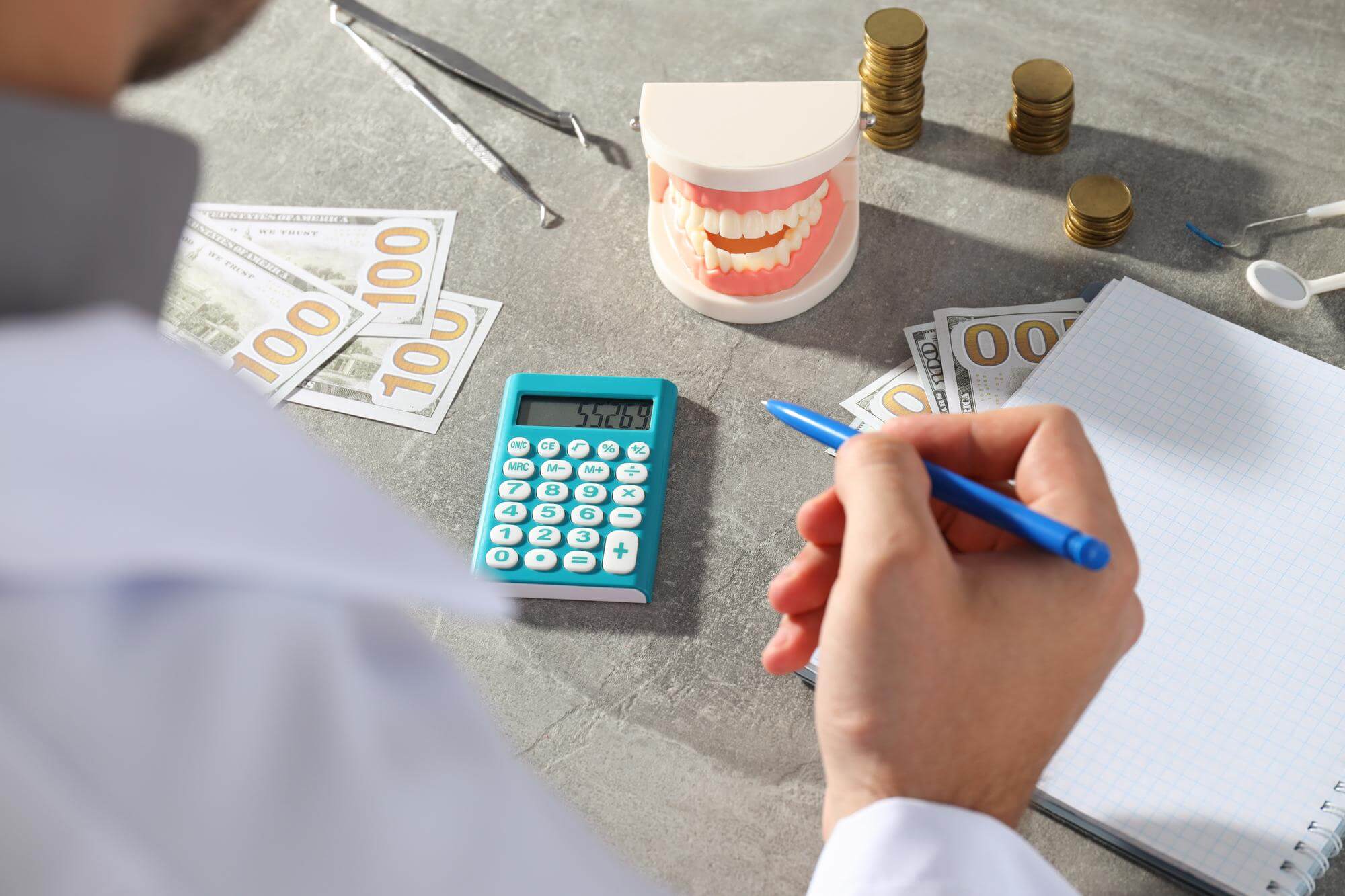
Provider expertise is a major factor. Implant treatment requires knowledge of oral surgery, bone biology, prosthetic design, bite dynamics, and complication management. A clinic investing in continuing education, specialist involvement, and digital systems naturally charges more than a practice offering only basic restorative care. The fee reflects not only chair time but also the ability to diagnose risks, prevent esthetic failures, manage grafting, and handle uncommon complications safely.
Laboratory work is another large component. A custom abutment and a high-quality ceramic crown or full-arch bridge are not mass-produced in a simple way. Digital design, milling, sintering, layering, staining, and finishing require skilled technicians and expensive machinery. In full-arch cases, the prosthetic process can involve thousands of dollars in lab work alone.
What feels expensive to patients often reflects the fact that implants are a high-skill, high-liability, long-term medical device treatment rather than a quick filling or routine extraction. The cost is driven by complexity, precision, and the expectation that the result should function for many years.
How Much Do Dental Implants Cost With Bone Grafting?
Dental implants with bone grafting cost more because grafting adds materials, surgical time, healing management, and sometimes a separate procedure stage. In a straightforward single-tooth case without grafting, the all-in price might be around $3,000 to $6,500. When grafting is needed, the total can increase to roughly $3,500 to $9,000 or more depending on the amount of bone deficiency and the technique used.
Small socket grafts are the mildest form of added expense. If a tooth is extracted and the dentist places graft material into the socket to preserve ridge volume, that often adds $300 to $1,200. In some situations, the implant can still be placed later without major delay. If the ridge has already collapsed and needs augmentation, the fee can rise substantially. Horizontal or vertical ridge grafting frequently costs $800 to $3,000 for localized cases, and advanced block grafting may exceed that.
In the upper back jaw, sinus lift procedures are common because the sinus floor can leave too little bone for stable implant placement. An internal sinus lift may add around $500 to $1,500, while a lateral window sinus lift often ranges from $1,500 to $5,000 depending on complexity, graft material, and whether multiple implant sites are involved. This can move a single upper-molar implant case well above the base average.
The type of graft material influences cost. Allograft, xenograft, synthetic substitutes, membranes, biologic enhancers, and autogenous bone harvesting each carry different fees. Resorbable collagen membranes and fixation tacks can add several hundred dollars. Healing also becomes longer. A simple graft may heal in 3 to 4 months, while larger augmentation may require 4 to 9 months before implant placement or final loading.
Patients should ask whether grafting is mandatory for implant survival or recommended mainly to improve esthetics and long-term tissue contours. Both can be valid reasons, though the financial impact differs. A written estimate should specify whether the graft is performed at extraction, at implant placement, or as a separate surgery. That timing affects both total cost and total treatment duration.
How Much Do Dental Implants Cost Near Me?
The cost of dental implants near you depends largely on local overhead, specialist availability, and how competitively the regional market is priced. In many parts of the United States, a single implant with abutment and crown falls between $3,000 and $6,500. Near large urban centers, totals of $5,000 to $7,500 are not unusual. In smaller cities or suburban areas, some straightforward single-tooth cases come in around $3,000 to $4,500 if no grafting or sedation is needed.
Location affects more than rent. Areas with a high concentration of oral surgeons, periodontists, and prosthodontists may show both higher-end specialist fees and more package competition. A city with many implant centers may advertise lower entry pricing but still charge separately for restoration, CBCT scans, and grafting. Rural or lower-density regions sometimes have fewer providers, which can limit price competition even if office overhead is lower.
The best way to understand “near me” pricing is to request local estimates using the same treatment assumptions. Ask each clinic for an itemized quote for consultation, scan, extraction if needed, grafting if needed, implant placement, abutment, crown, sedation, and follow-ups. One office may quote $1,999 for the implant placement only, while another quotes $4,750 for the complete case. Without matching categories, local comparisons are unreliable.
Travel distance can change the true cost too. A clinic one hour away may offer a fee that is $800 lower, but multiple visits for surgery, checks, impressions, and crown delivery can add fuel, parking, hotel expenses, and time away from work. A less expensive out-of-town option is most attractive when the office provides a clear schedule and local aftercare support.
If readers are comparing local providers, it helps to look beyond online price ads. Ask who performs the surgery, how many implant cases the team handles each month, whether CBCT planning is standard, which implant brands they use, and whether there is a written warranty or retreatment policy. Local pricing is meaningful only when the quality level and included services are also clear.
Frequently Asked Questions About Dental Implant Cost
Dental implant cost questions usually come down to a few practical concerns: what the advertised number really covers, why quotes differ so sharply, and how much of the bill can be spread over time. For a single missing tooth, many patients expect one simple number, though implant treatment is usually a sequence of services. A clinic may quote the implant post alone at $1,200 to $2,000, while the full finished case with abutment and crown ends up at $3,000 to $6,500. That difference causes a lot of confusion when readers compare providers online.
One common question is whether paying more always means better care. Not necessarily. Some offices charge more because they use specialists, guided surgery, premium zirconia, or more advanced planning tools. Other offices charge less because overhead is lower or because they perform a high volume of straightforward cases efficiently. A high price is not proof of better results, and a moderate price is not a warning sign by itself. What matters is the quality of diagnosis, materials, transparency, and follow-up.
Another frequent concern is timing. Patients often ask whether they can delay part of treatment to manage the cost. In many cases, yes. The implant can be placed, allowed to heal for 3 to 6 months, and restored with the final crown later. This staged approach spreads payments naturally, though delaying too long after extraction can increase the chance of bone loss and create future grafting costs.
People also ask whether overseas treatment is worth considering. It can reduce fees significantly, at times by 40% to 70%, though savings depend on travel expenses, complication handling, and the ability to return if the restoration needs adjustment. A cheaper price abroad is most attractive when the clinic provides detailed records, uses recognized implant systems, and has a clear aftercare plan.
The most useful rule for cost questions is simple: ask for a written treatment estimate with every component listed. If the office can explain exactly what you are paying for, how long treatment will take, which parts may change, and what maintenance will cost later, you can judge value much more accurately than by comparing one headline number alone.
How much should a single dental implant cost?
A single dental implant should usually cost somewhere between $3,000 and $6,500 in the United States when the full treatment is included. That total often covers the implant post, abutment, crown, imaging, surgical placement, and standard follow-up visits. In a straightforward case with healthy bone and no extraction or grafting, many patients fall around $3,500 to $5,000. In premium urban markets or specialist-led practices, fees closer to $5,500 to $7,000 are possible.
The reason this question is tricky is that many clinics advertise only one portion of treatment. A quote of $1,200 to $2,000 may refer only to the implant fixture placement. That number can be accurate for the surgical component, though the final crown, abutment, scan, and exams may still add $1,500 to $3,500. When readers ask what a single implant “should” cost, the fair answer is the complete functional tooth replacement price, not the bare surgical entry point.
Reasonable pricing also depends on tooth position. Front teeth often require more detailed cosmetic planning, temporary esthetic solutions, and soft tissue contouring, which can raise costs. Back teeth may require less cosmetic work but can need wider implants or more attention to heavy bite forces. If the missing tooth is in the upper molar region and a sinus lift is required, the total can increase substantially.
The provider type matters too. A general dentist may handle both surgery and crown in one office, while a specialist team may separate the surgical and restorative fees. Neither model is automatically better. What matters is transparency, experience, and whether the office has a clear plan for complications and maintenance.
If a single implant quote seems unusually low, ask these practical questions: Does it include the crown, is the abutment custom or stock, are CBCT scans included, what happens if grafting is needed, and who performs the surgery. A fair single implant fee is one that reflects complete treatment by a qualified team, not just the cheapest upfront number.
What is a reasonable price for full dental implants?
A reasonable price for full dental implants depends on whether the patient is receiving removable implant-retained dentures or fixed full-arch bridges. In the U.S., implant-retained overdentures commonly cost about $8,000 to $20,000 per arch. Fixed full-arch treatment such as All-on-4 or All-on-6 often ranges from $15,000 to $35,000 per arch. For both arches together, a realistic total is frequently $30,000 to $70,000, with more complex or premium cases exceeding that.
A quote near the lower end may be reasonable if it includes acrylic provisional and final teeth, limited sedation, minimal grafting, and a clinic model focused on high volume. A quote in the middle or upper end may still be reasonable if it includes extractions, CBCT planning, immediate temporary teeth, IV sedation, custom prosthetics, premium implant systems, and final zirconia bridges. Materials make a major difference. Zirconia full-arch restorations are more expensive than acrylic hybrids because lab fabrication, milling, and finishing costs are much higher.
Patients often see advertisements for “full mouth implants from $9,999” and assume that is the total for both upper and lower arches. In many cases, it is the starting price for one arch and may not include extractions, temporary conversion, sedation, or the final prosthesis. A reasonable full-mouth estimate should specify how many implants are placed per arch, whether the restoration is removable or fixed, what material the final teeth are made from, and whether aftercare is included.
Maintenance should be part of the discussion too. Full-arch fixed restorations may need periodic removal for cleaning, replacement of night guards, screw checks, and prosthetic servicing. Overdentures may need attachment insert changes and relines over time. A lower upfront fee can become less attractive if maintenance costs are frequent and not explained clearly.
A reasonable price is not just the cheapest package. It is one that matches the patient’s bone condition, health status, bite, esthetic goals, and long-term maintenance ability. A transparent written plan is the best way to judge whether a full implant fee is fair.
Can I get dental implants for less?
Yes, many patients can get dental implants for less than the highest private-practice prices, though the safest savings come from choosing the right treatment setting rather than chasing the lowest advertised figure. Lower cost may come from geography, educational clinics, package pricing, phased treatment, or selecting a restoration design that uses implants efficiently.
Dental schools are one of the most practical lower-cost options. Treatment may be 20% to 50% less than fees in private offices because care is provided by residents or supervised clinicians in training environments. The trade-off is time. Appointments tend to be longer, the process can involve several review steps, and scheduling may be less flexible. For patients who are not in urgent discomfort, that trade-off can be worthwhile.
Another way to pay less is to compare treatment designs. If several adjacent teeth are missing, an implant-supported bridge may cost less than replacing each tooth with a separate implant. If a full arch is missing, an overdenture retained by two to four implants may be much less expensive than a fixed zirconia bridge. This is not “settling” if the design still fits the patient’s functional and hygiene needs.
Travel dentistry can also reduce costs, with some countries offering rates 40% to 70% below U.S. averages. The real savings depend on airfare, hotel stays, meals, local transport, and the risk of needing future adjustments. Implant treatment often involves multiple stages. If the clinic abroad handles surgery but the crown later needs correction at home, the lower starting price may become less impressive.
Financing, HSA or FSA use, and staged treatment can make implants feel more affordable without reducing clinical quality. Membership plans may lower fees by 10% to 20% in participating practices. Some offices also offer lower fees when multiple implants are placed in one surgical session.
The key point is that paying less should not mean giving up diagnostics, sterile technique, proper implant planning, or clear accountability. You can reduce cost, though it is wiser to trim overhead and logistics than to cut corners on surgery, materials, or prosthetic quality.
Why do dental implant prices vary so much?
Dental implant prices vary so much because clinics are not always quoting the same treatment. One office may be pricing only the implant post placement, while another includes the consultation, CBCT scan, extraction, grafting, abutment, crown, temporary tooth, and follow-up visits. Two estimates can differ by several thousand dollars even when both are honest, simply because the scope is different.
Clinical complexity is one major reason for variation. A healthy patient with dense bone and one missing lower premolar is a relatively simple case. A patient with gum disease, bone loss, teeth grinding, and an upper front tooth in the smile zone is not. The more difficult case demands more planning, more surgical precision, and more prosthetic customization. Bone grafting alone can shift a single-tooth case by $500 to $3,000 or more.
Provider qualifications also affect cost. Oral surgeons, periodontists, prosthodontists, and experienced implant dentists often build fees around advanced training, sedation capability, and complication management. Some offices use surgical guides, digital smile design, in-house milling, and premium implant systems. Those technologies and workflows raise overhead, though they can also improve predictability and efficiency.
Geography explains part of the spread as well. Rent, staffing, insurance, and laboratory costs are much higher in many big cities. A single implant in San Francisco, New York, or central London may cost far more than the same implant in a regional town. Local competition matters too. Markets with many implant centers may produce broad price ranges, from budget surgery-only quotes to premium all-inclusive care.
Laboratory quality creates more variation than many patients realize. A custom zirconia crown, milled abutment, or full-arch prosthesis fabricated by an experienced lab costs more than basic stock components and lower-cost crown options. Brand choice matters as well. Premium implant systems with long clinical track records, broad component support, and stronger warranty structures tend to cost more than less-established systems.
Price variation is not random. It usually reflects differences in scope, complexity, location, provider model, and materials. That is why itemized written estimates are the only reliable way to compare implant costs fairly.
Are cheap dental implants worth it?
Cheap dental implants can be worth it in certain situations, though only when the lower price comes from efficiency, moderate overhead, or a simpler case rather than from missing steps or lower standards. A clinic may charge less because it operates in a lower-cost area, places implants frequently, negotiates strong lab pricing, or separates essential services from optional upgrades. Those are valid reasons for affordability. The risk appears when “cheap” means incomplete diagnostics, weak follow-up, or a quote that excludes key restorative components.
An unusually low single-implant price often raises one immediate question: what exactly is included. If a clinic advertises an implant for $999, that may cover only the titanium post, not the abutment, crown, CBCT scan, extraction, grafting, or sedation. By the time treatment is complete, the final cost may approach normal market rates. In that situation, the issue is not fraud. It is that the headline number is not the full treatment number patients expect.
Quality concerns matter because implants are long-term medical devices. Lower-cost systems may have less published research, fewer restorative component options, or weaker local support if a part breaks years later. A bargain fee can become expensive if the implant position is poor, the crown fails repeatedly, or another dentist cannot service the system easily. Correcting a failed implant can involve grafting, removal, healing time, and replacement costs that exceed the original savings.
Cheap treatment can still be good treatment if the clinic uses recognized implant brands, obtains proper imaging, explains maintenance clearly, and provides a written estimate plus follow-up policy. Many readers can find solid value through dental schools, supervised residency clinics, suburban practices with lower rent, or phased treatment plans. Those options lower cost without necessarily lowering standards.
The better question is not whether low-cost implants are always bad. It is whether the provider can show transparent planning, suitable materials, documented experience, and a complete restorative pathway. If the quote is low and the clinical process still looks thorough, it may be worth serious consideration. If the fee seems too good to be true and the details stay vague, caution is justified.