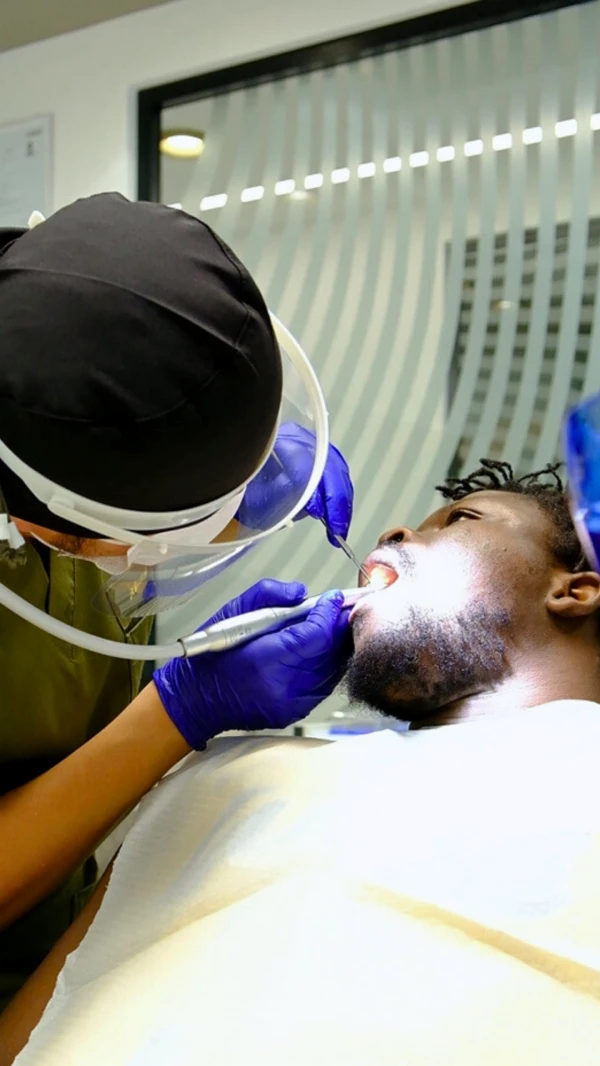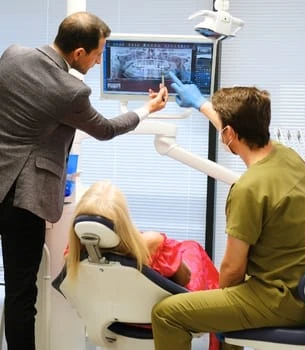
Dental implants are typically placed by dentists with surgical implant training, most often oral and maxillofacial surgeons, periodontists, prosthodontists, and some general dentists who have completed advanced education in implant dentistry. The exact provider depends on the complexity of the case, the amount of available jawbone, gum health, medical history, and whether bone grafting, sinus lifting, or full-mouth rehabilitation is needed.
A straightforward single-tooth implant may be handled from start to finish by an experienced general dentist with implant training. More complex cases are often shared between specialists. A common model looks like this: an oral surgeon or periodontist places the implant fixture into the jawbone, then a restorative dentist or prosthodontist designs and fits the crown, bridge, or full-arch prosthesis after healing. In some practices, one clinician completes both the surgical and restorative phases.
The title alone does not tell the whole story. A better way to evaluate a provider is to look at measurable qualifications such as implant-specific continuing education hours, the number of implant cases completed each year, use of 3D CBCT imaging, digital surgical planning, complication management experience, and before-and-after cases similar to your own. Many strong implant providers place 50 to 300 implants per year, while high-volume full-arch centers may handle far more.
Patients usually benefit from asking who will perform each stage, what brand of implant system is used, how long the treatment is expected to take, and whether fees include imaging, sedation, temporary teeth, abutments, and follow-up care. A single implant case may take about 3 to 9 months from consultation to final crown when healing is required, while immediate-placement or immediate-load cases can move faster in selected patients.
The best dental implant provider is not defined by job title alone. It is the clinician or team with the right training, planning tools, surgical judgment, restorative skill, and case experience for your specific mouth.
What Is a Dental Implant?
A dental implant is a small medical-grade post, usually made of titanium or a titanium alloy, that is placed into the jawbone to replace the root of a missing tooth. After the implant integrates with the surrounding bone through a biological process called osseointegration, it can support a crown, bridge, or denture. Modern implant diameters commonly range from about 3.0 mm to 5.5 mm, and lengths often fall between 6 mm and 13 mm depending on bone availability and treatment goals. Ceramic implants also exist, though titanium remains the most widely used material because of its long clinical history and broad evidence base.
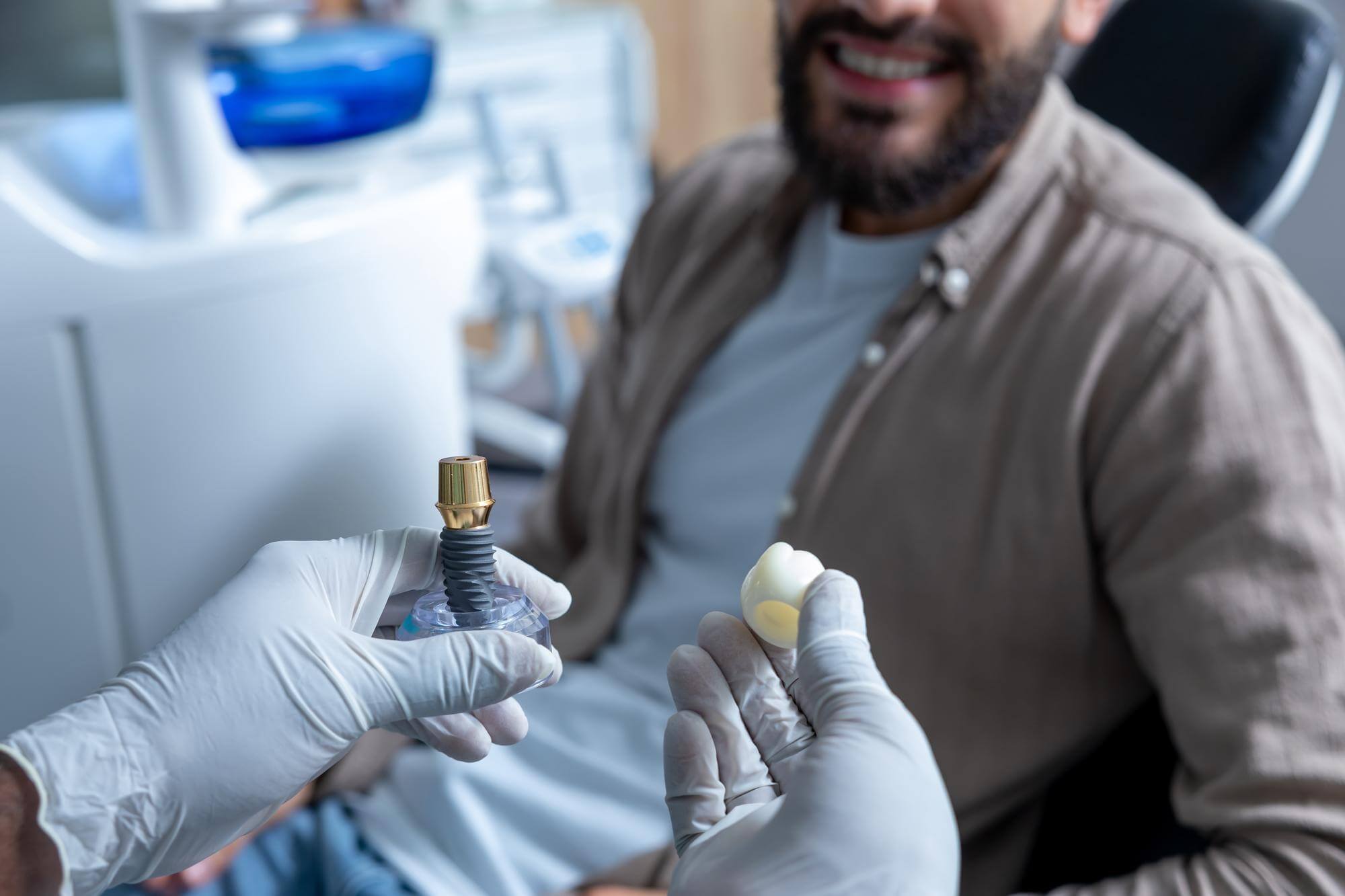
A complete implant restoration often involves three parts. The implant fixture is the portion placed inside the bone. The abutment is the connector attached after healing or at the time of surgery in selected cases. The visible tooth replacement is the crown, bridge, or full-arch prosthesis. Patients sometimes use the word implant to describe the whole system, but from a technical standpoint it refers to the root-like fixture anchored in bone.
Implants are used for one missing tooth, several missing teeth, or full-arch tooth replacement. A single missing tooth often needs one implant and one crown. Multiple missing teeth may be restored with two or more implants supporting a bridge. A full upper or lower arch may be supported by as few as four implants in some all-on-4 style designs, though many cases use four to six implants per arch depending on bone quality, bite force, and prosthetic planning.
One reason implants are widely recommended is that they do not rely on neighboring teeth for support. A traditional bridge usually requires reshaping adjacent teeth, while an implant-supported crown stands independently. Implants also help maintain bone volume in the jaw. After a tooth is removed, the bone in that area can shrink over time, often losing meaningful width during the first 6 to 12 months. An implant does not completely stop all remodeling, but it can reduce the degree of collapse compared with leaving the space empty.
Success rates are high when treatment is properly planned. Many studies report survival rates above 90% over 10 years for routine cases, with some modern systems showing 95% or higher in healthy, well-maintained patients. Long-term success still depends on gum health, bite balance, smoking status, diabetes control, oral hygiene, and regular professional care.
What Type of Dentist Does Dental Implants?
Several types of dentists provide dental implant treatment, and the right one depends on the stage of care and the complexity of your case. Implant dentistry is not limited to one specialty. A general dentist may diagnose the missing tooth, plan the restoration, and in some offices place the implant. A periodontist may focus on gum and bone conditions and place implants in patients with gum disease or soft-tissue concerns. An oral and maxillofacial surgeon often handles surgical placement, extractions, impacted teeth, sedation, and advanced grafting. A prosthodontist may design the final crown, bridge, or full-arch teeth and manage difficult bite, esthetic, or full-mouth reconstruction cases.
In practical terms, dental implant treatment can be divided into surgical and restorative roles. The surgical role includes imaging review, placement of the implant, bone grafting, sinus augmentation, and soft-tissue management. The restorative role includes impressions or digital scans, choosing the abutment, checking bite relationships, designing the visible tooth, and fitting the final prosthesis. One clinician may perform both roles, or the work may be split between two or more providers.
Training paths differ. General dentists complete dental school and may then pursue implant courses, mini-residencies, fellowships, or extensive continuing education programs that can add 100 to 1,000 or more hours of implant-specific training over time. Specialists receive formal residency training after dental school. Periodontal residencies usually last about 3 years. Prosthodontic residencies often take about 3 additional years. Oral and maxillofacial surgery training typically ranges from 4 to 6 years and includes extensive surgical experience.
Title matters less than competence for a given case. A highly trained general dentist who places 150 implants a year and uses CBCT-guided planning may be more suitable for a routine single-tooth implant than a provider who rarely performs implant cases. A patient with severe bone loss, uncontrolled gum disease history, or a need for zygomatic implants, IV sedation, or full-arch fixed teeth usually benefits from a specialist-led team.
When people ask what type of dentist does dental implants, the most accurate answer is this: implant care is often delivered by a coordinated group, and the strongest provider is the one whose training and case volume match your needs.
Can a General Dentist Do Dental Implants?
Yes, a general dentist can do dental implants if they have the training, clinical experience, and equipment needed to perform implant treatment safely. Dental school alone may not provide enough hands-on implant experience for independent placement in all cases, so many general dentists who offer implants pursue substantial postgraduate education. That may include live-surgery courses, year-long implant continuums, mini-residencies, mentorship programs, and continuing education in CBCT interpretation, guided surgery, grafting, and implant restoration.
A general dentist may provide one or more parts of implant treatment. Some restore implants only, meaning they place the crown or bridge after a surgeon places the implant. Some handle both surgical placement and restoration in-house. Others place implants in routine cases but refer difficult anatomy, major bone loss, sinus lifts, or medically complex patients to a specialist. That referral pattern is often a positive sign, because it shows judgment rather than overconfidence.
For a single missing tooth in a healthy adult with good bone volume, no active gum disease, and stable bite forces, an experienced general dentist may be entirely appropriate. In many communities, general dentists successfully place dozens or hundreds of implants per year. Success depends on planning quality, not only on license type. A provider who uses digital scans, surgical guides, and CBCT imaging may improve precision for angulation, depth, and avoidance of structures such as the maxillary sinus or inferior alveolar nerve.
Patients should still ask direct questions. How many implants do you place each month? Do you perform bone grafts? Do you use 3D imaging for every surgical case or only selected ones? Who handles complications if an implant does not integrate? What is your implant survival rate in your own practice over 3 to 5 years? What brand of implant system do you use, and will components be easy to service later? These details are often more revealing than the words general dentist or specialist.
A general dentist should not be judged as less qualified by default, and a specialist should not be assumed better for every routine case. The deciding factors are case complexity, verified training, restorative skill, judgment, and the ability to manage both ordinary healing and uncommon complications.
Specialists Who Perform Dental Implant Surgery
Dental implant surgery is commonly performed by oral and maxillofacial surgeons and periodontists, with some prosthodontists and general dentists also placing implants depending on their training and scope of practice. Each specialist brings a different emphasis. Oral surgeons are heavily trained in surgery, anesthesia, extractions, jaw anatomy, pathology, and reconstruction. Periodontists focus on gums, supporting bone, tissue preservation, and implant placement in esthetic or periodontally compromised cases. Prosthodontists are restoration-driven specialists who may also place implants in some practices, often with close attention to bite design and the final prosthesis.
Oral and maxillofacial surgeons are often involved when treatment includes impacted teeth, severe bone loss, intravenous sedation, multiple extractions, trauma, or extensive grafting. Their training usually covers hospital-based surgery and management of complex facial structures. If a patient needs a sinus lift, ridge augmentation, nerve positioning evaluation, or full-mouth implant surgery under deeper sedation, an oral surgeon is a common choice. Many oral surgery offices can complete high volumes of implant procedures and may manage emergency issues efficiently because surgery is the center of the practice.
Periodontists often become the preferred provider when gum disease history, recession, thin gum tissue, or esthetic soft-tissue shaping is a major concern. They routinely evaluate bone support and gum architecture around both natural teeth and implants. In the front teeth, where small changes in tissue contour can affect appearance, this focus can be valuable. Periodontists also perform grafting procedures such as connective tissue grafts and guided bone regeneration that may improve long-term tissue stability.
Some prosthodontists place implants themselves, while others collaborate with surgeons. Their expertise is often strongest in the design of crowns, bridges, implant-supported dentures, and complex full-arch reconstructions. Cases involving collapsed bite, multiple missing teeth, or previous restorative failures often benefit from prosthodontic planning even if another specialist performs the surgery.
Patients are rarely choosing only a title. They are choosing a treatment team. In many excellent practices, the surgeon and restorative dentist plan the implant position together because a well-placed implant is not just integrated in bone; it must also support a functional, cleanable, and esthetically appropriate final tooth.
Prosthodontist vs Oral Surgeon vs Periodontist for Dental Implants
Choosing between a prosthodontist, oral surgeon, and periodontist for dental implants depends less on which specialty is best in general and more on what your mouth needs. These specialists overlap in implant care, yet their main strengths are different. A prosthodontist is often the expert in designing and restoring the replacement tooth or full-arch prosthesis. An oral surgeon is often the expert in surgical placement, complex anatomy, sedation, extractions, and reconstruction. A periodontist is often the expert in gum health, bone support, tissue contours, and implant placement in patients with periodontal concerns.
If your case is a simple single-tooth replacement with healthy gums and enough bone, any of these providers may be capable if they regularly perform implant treatment. If your case involves severe bone deficiency, multiple failing teeth, same-day extractions with immediate implants, or a need for IV sedation, an oral surgeon may be the most logical surgical provider. If gum recession, active or previous periodontitis, soft-tissue thickness, or esthetics around the front teeth are central concerns, a periodontist may offer a more tissue-focused approach. If you need complex bite reconstruction, implant bridges across several teeth, or full-mouth rehabilitation where tooth position, facial support, and chewing function all need redesign, a prosthodontist may be the key planner even when another specialist performs surgery.
Patients often assume the surgeon should automatically lead the whole case. That is not always true. Implant position should be based on the final restoration, not only on where bone happens to be available. A prosthodontic perspective can prevent problems such as crowns that are hard to clean, bite overload, speech issues, or esthetic compromises. In strong multidisciplinary cases, the restorative endpoint is planned before surgery starts.
Here is a practical way to think about it. Oral surgeon: best known for surgical complexity. Periodontist: best known for gum and bone support. Prosthodontist: best known for the design and function of the final teeth. Many patients will see two of these providers, not one. That is common in quality implant care, not a sign that treatment is fragmented. It often means each phase is being handled by the clinician whose training fits it most closely.
A useful question is not “Which specialist is better?” but “Who on this team is responsible for surgery, who is responsible for the final teeth, and how are they planning the case together?”
How to Choose the Right Dental Implant Provider
Choosing the right dental implant provider starts with matching the clinician’s experience to your specific case rather than shopping by price or title alone. A good provider should be able to explain whether your treatment is routine, moderately complex, or high complexity. That classification affects who should perform surgery, whether grafting is needed, how long healing may take, and what the final cost range will be. For example, a straightforward single implant may involve 1 implant, 1 abutment, 1 crown, and 2 to 4 visits after surgery. A full-arch fixed case may require 4 to 6 implants, provisional teeth on surgery day or shortly after, a healing period of 3 to 6 months, and a final prosthesis made from zirconia, acrylic-titanium, or another material.
Verification matters. Ask how many implant cases the provider completes each year, not just whether they offer implants. Ask whether they use CBCT scans for planning and whether they fabricate or order surgical guides when appropriate. Ask what percentage of their work involves implants, what implant systems they use, and how they manage failed integration, which occurs in a small percentage of cases even with proper technique. For many routine patients, published implant survival rates are above 95% over several years, though individual practices vary.
Transparency is another strong sign. A reliable office should give a written breakdown of costs covering consultation, imaging, extraction if needed, grafting, implant placement, abutment, temporary prosthesis, final crown or bridge, sedation fees, follow-up visits, and maintenance recommendations. A quote that looks dramatically lower than others may omit major components. In some markets, a single implant from surgery to final crown may total roughly $3,000 to $6,500. Full-arch fixed treatment can range from about $15,000 to $35,000 or more per arch depending on materials, grafting, sedation, and prosthetic design.
Communication style matters just as much as credentials. You should know who places the implant, who restores it, how long treatment will take, what risks apply to your anatomy, and what alternatives exist if an implant is not the best fit. Patients often do best with providers who explain openly, document clearly, and avoid pushing immediate treatment decisions.
The right provider is the one who can show training, case experience, planning discipline, and a realistic treatment map for your mouth rather than a one-size-fits-all sales pitch.
Who Is a Good Candidate for Dental Implants?
A good candidate for dental implants is someone who is missing one or more teeth, has enough jawbone to support an implant or is willing to undergo grafting, maintains reasonable oral hygiene, and has medical conditions that are stable enough for healing. Age alone is not usually the limiting factor. Many healthy adults in their 60s, 70s, and 80s receive implants successfully. Skeletal growth should generally be complete before placement, so implants are not usually the first choice in younger teenagers.
Bone quality and volume are major factors. If the ridge has thinned after tooth loss, a patient may still qualify through bone grafting, ridge preservation, sinus lift procedures in the upper back jaw, or use of shorter or narrower implants in selected situations. A CBCT scan often helps measure available bone in millimeters and map critical structures such as nerves and sinus spaces. Good candidates also need healthy gums or a periodontal treatment plan before implant placement. Active gum infection around remaining teeth can raise the risk of peri-implant disease later.
Smoking, uncontrolled diabetes, heavy teeth grinding, and poor oral hygiene do not always rule implants out, though they can increase failure and complication rates. For example, a patient with HbA1c under better control may heal more predictably than one with uncontrolled blood sugar. A heavy smoker may face slower healing and greater risk of bone loss around the implant. Bruxism can overload implants, making night guard use and careful bite design more important.
Medication history also matters. Some antiresorptive drugs, prior radiation therapy to the jaws, immunosuppression, or untreated autoimmune and inflammatory conditions may affect planning. A provider should review medical history, current medications, prior extractions, and any history of delayed healing. Candidates for immediate implant placement after extraction need careful screening because infection level, socket shape, bone integrity, and bite conditions all affect whether immediate treatment is realistic.
The best candidates are not simply people with missing teeth. They are people whose bone, gum health, daily habits, and medical profile allow the implant to integrate and remain cleanable for years. Even when initial conditions are not ideal, a structured treatment plan can often make implant therapy possible.
What Happens During the Dental Implant Procedure?
The dental implant procedure usually happens in stages, though the exact sequence depends on whether the tooth is already missing, whether bone grafting is needed, and whether immediate placement is possible. Treatment often begins with consultation, examination, digital scans or impressions, and a CBCT scan. This planning stage helps the provider assess bone width, bone height, bite relationships, sinus location, nerve position, and gum condition. In many offices, this visit takes about 45 to 90 minutes.
If a damaged tooth still needs to be removed, extraction may happen before implant placement or on the same day. In selected cases with intact surrounding bone and low infection risk, the implant can be placed immediately into the extraction socket. In other cases, the site is allowed to heal for about 6 to 12 weeks or longer before surgery. If bone is thin or missing, graft material may be added at extraction or implant placement. Graft healing can take around 3 to 6 months depending on the extent of augmentation.
Implant placement itself is usually done under local anesthesia, with oral sedation or IV sedation available in many surgical practices. The surgeon makes a small opening in the gum, prepares the implant site using sequential drills, and places the implant into the bone with controlled torque. A single implant surgery may take about 30 to 90 minutes depending on complexity. Postoperative discomfort is often described as mild to moderate and may be managed with prescription or nonprescription medication, cold compresses, and a soft diet for several days.
After placement, the implant usually heals and integrates for about 2 to 6 months. During this period, the bone grows around the implant surface. Some cases receive a temporary tooth right away if initial stability is high enough, though not every site is suitable for immediate loading. Once healing is complete, the implant is uncovered if needed, an abutment is attached, and digital or physical impressions are made for the final tooth. The permanent crown, bridge, or denture is then fitted, adjusted, and checked for bite balance.
Follow-up is part of the procedure, not an afterthought. Providers usually recheck healing within 1 to 2 weeks after surgery, then monitor integration over time. Long-term success depends on plaque control, professional maintenance, and protecting the implant from overload or untreated gum disease.
How Much Do Dental Implants Cost?
Dental implant cost varies widely based on location, provider training, imaging, grafting needs, implant brand, prosthetic materials, and whether the quote covers only surgery or the complete treatment from start to finish. For one missing tooth, many patients are quoted a total somewhere between $3,000 and $6,500 for the implant, abutment, and crown. In some low-cost markets, fees may fall below that range. In high-fee urban practices or specialist offices using premium materials and complex digital workflows, costs can move above it.
Breaking the price into parts helps. A consultation and imaging package may range from about $150 to $600, though CBCT scans alone can cost more in some areas. Surgical placement of a single implant may be roughly $1,200 to $3,000. An abutment may add $300 to $800. A final crown often adds about $1,000 to $2,500 depending on material and lab quality. Bone grafting can increase the total by several hundred dollars to several thousand if major augmentation or sinus surgery is required.
Full-arch implant treatment is a different category. A removable implant overdenture supported by two to four implants may cost less than a fixed full-arch bridge. A fixed arch on four to six implants often ranges from about $15,000 to $35,000 per arch, with premium centers charging more when the package includes sedation, extractions, temporary teeth, zirconia finals, and prolonged follow-up. If both upper and lower arches are treated, total fees may reach $30,000 to $70,000 or higher.
Material choices affect long-term cost as well as upfront price. Zirconia final bridges usually cost more than acrylic-based prostheses, though the best option depends on bite force, esthetics, repairability, and budget. Maintenance should be included in planning. Implant restorations may eventually need screw replacement, relining of removable components, night guards, or crown repairs over the years.
One of the most common pricing problems is incomplete quoting. Some offices advertise the implant fixture price only and leave out the crown, abutment, graft, temporary tooth, or sedation. Patients should ask for a line-item estimate showing every expected phase. The lowest number is not always the lowest real cost once all required services are added.
Does Insurance Cover Dental Implants?
Insurance coverage for dental implants is mixed and often limited. Many traditional dental plans have historically excluded implants or covered only part of the process, though coverage has become more common in recent years. Some plans pay for the crown but not the implant fixture. Some cover extractions, bone grafting, or imaging while excluding implant placement itself. Annual maximums are a major limitation. A dental plan with a $1,500 or $2,000 annual maximum may cover only a small portion of a case that costs $4,500 or $20,000.
Medical insurance may contribute in unusual situations, such as trauma, pathology, congenital defects, or reconstruction after disease-related surgery, though approval is not automatic. If a tooth was lost in an accident and jaw repair is involved, the claim path may differ from a routine missing tooth case. Preauthorization is often worth pursuing when there is a medical component, but patients should expect paperwork, documentation, radiographs, and diagnostic codes.
Employers and carriers now offer wider variation in implant benefits than they did a decade ago. Some plans cover 50% of implant-related services up to the annual maximum after a waiting period of 6 to 12 months. Others classify implants as a major service with lower reimbursement and strict replacement clauses, such as no benefit if the tooth was missing before the policy began. Discount plans are different from insurance; they may reduce office fees by a contracted percentage but do not reimburse the patient directly.
Patients should ask for a benefits breakdown in writing before treatment starts. Useful questions include whether the implant fixture, abutment, crown, bone graft, CBCT scan, sinus lift, temporary prosthesis, and anesthesia are each covered or excluded. It also helps to ask whether out-of-network reimbursement is available and whether predetermination has been submitted. Offices with experienced treatment coordinators can often estimate patient responsibility, though final payment still depends on the insurer’s adjudication.
Financing frequently fills the gap. Many practices offer monthly payment plans, third-party healthcare financing, staged treatment, or health savings account and flexible spending account options. For patients comparing providers, insurance friendliness should include more than whether the office accepts the plan. It should include how accurately the office verifies benefits and how clearly it explains the likely out-of-pocket amount.
What Are the Risks and Benefits of Dental Implants?
Dental implants offer strong functional and structural benefits, though they also carry surgical and long-term maintenance risks that patients should understand clearly. The main benefit is stability. An implant-supported tooth is anchored in the jawbone, so it usually feels firmer than a removable denture and does not depend on adjacent teeth the way a bridge does. Chewing efficiency often improves, speech may feel more natural than with loose dentures, and many patients report better confidence in social settings. For a single missing tooth, an implant can preserve neighboring enamel because adjacent teeth usually do not need to be cut down for support.
Bone preservation is another major advantage. After tooth loss, the jawbone in that area often resorbs over time. An implant can help maintain load in the bone and reduce the rate of shrinkage compared with leaving the space empty. Full-arch implant solutions can also improve retention for patients who struggle with lower dentures, where movement is often more pronounced because of tongue activity and limited suction.
The risks begin with surgery. These include bleeding, infection, swelling, bruising, pain, delayed healing, and failure of the implant to integrate with bone. There is also anatomic risk. In the lower jaw, poor planning can threaten the inferior alveolar nerve and lead to numbness or altered sensation. In the upper back jaw, the maxillary sinus can be involved. That is one reason CBCT-based planning is widely valued for many implant cases.
Long-term risks include peri-implant mucositis and peri-implantitis, conditions involving inflammation and possible bone loss around implants. Smoking, uncontrolled diabetes, poor plaque control, and a history of periodontal disease can increase these risks. Mechanical problems can also occur, such as screw loosening, ceramic chipping, crown wear, bite overload, or fracture of prosthetic components. While implant survival rates are high, implants are not maintenance-free devices. They require hygiene, regular checks, and occasional repair work.
For many people, the benefits outweigh the risks because implants can last many years and provide a close substitute for natural teeth. The key is careful case selection, accurate placement, realistic expectations, and a maintenance routine that continues long after the surgery is over.
How Long Do Dental Implants Last?
Dental implants can last decades, and many function for 10 to 25 years or longer when placed well and maintained properly. It helps to separate the implant fixture from the visible restoration. The titanium implant in the bone may remain stable for many years, while the crown, bridge, denture attachment, or prosthetic screws may need maintenance, repair, or replacement earlier. A crown on a single implant may last roughly 10 to 15 years or more depending on material, bite force, hygiene, and wear. Full-arch prosthetic components may need periodic servicing even when the implants themselves remain integrated.
Published long-term studies often report implant survival rates above 90% at 10 years, with many routine cases reaching 95% or higher under favorable conditions. Survival does not always mean complication-free success. An implant may still be counted as surviving even if surrounding tissues have inflammation or the prosthesis has needed repairs. That is why patients should ask providers how they define success in their own follow-up data.
Several factors influence longevity. Daily cleaning is central, because plaque accumulation can lead to soft-tissue inflammation and bone loss around the implant. Smoking reduces blood flow and is associated with increased failure and peri-implant disease risk. Uncontrolled diabetes can impair healing and long-term tissue stability. Bruxism can overload implants because implants do not have the same periodontal ligament cushioning that natural teeth have. In those patients, night guards and careful bite design become more important.
Location also matters. Back teeth often carry heavier chewing loads than front teeth. Bone density tends to be higher in the lower front jaw than in the upper back jaw, where softer bone and sinus proximity may complicate treatment. The quality of the final restoration also affects longevity. A well-designed crown with proper emergence profile and cleansable contours can support healthier tissue than one that traps plaque or distributes force poorly.
Patients can improve lifespan with routine reviews every 6 to 12 months, professional cleanings suited to implant maintenance, and rapid attention to bleeding, mobility, bad taste, or discomfort. Dental implants are durable, but durability is not automatic. Their long life depends on planning, biology, bite control, and consistent maintenance over the years.
Dental Implants vs Dentures and Bridges
Dental implants, dentures, and bridges all replace missing teeth, though they differ significantly in stability, comfort, cost, maintenance, and effect on surrounding structures. A dental implant replaces the root and supports a crown, bridge, or denture through anchorage in the jawbone. A traditional bridge fills a gap by attaching a false tooth to crowns placed on adjacent teeth. A denture is a removable appliance that replaces multiple teeth or an entire arch and rests on the gums, sometimes with implant support.
For a single missing tooth, an implant often offers the most conservative approach for neighboring teeth because it usually does not require reshaping them. A bridge may be faster in some cases, often completed in a few weeks, but it commonly involves reducing healthy enamel on the teeth next to the gap. Bridges can work well for many years, though decay, gum recession, or root problems on the supporting teeth may affect long-term survival. A single implant usually takes longer from surgery to final crown, often 3 to 9 months when healing is needed, yet it can preserve independence of the adjacent teeth.
Dentures are usually the most affordable option for replacing many teeth, though they often provide the least stability. Lower dentures in particular may move during speaking or eating. Pressure spots, sore areas, reduced chewing strength, and gradual bone shrinkage are common complaints. Implant-supported overdentures can improve retention considerably, often using 2 implants in the lower jaw or more depending on design. Fixed implant bridges provide even greater stability but at a much higher cost.
Cost differences are substantial. A removable denture may cost a fraction of a full-arch implant case. A bridge for one missing tooth may be less expensive initially than an implant and crown, though long-term maintenance can change the equation. Implants usually have the highest upfront fee, yet many patients value the improved feel, function, and preservation of bone.
The right option depends on bone availability, budget, hygiene ability, medical conditions, esthetic goals, and tolerance for removable appliances. No method is universally best. A patient with limited finances may do very well with a quality denture or bridge. A patient who wants maximum stability and is medically suited for surgery may find implants the closest replacement to natural tooth function.
How to Find a Qualified Dental Implant Dentist Near You
Finding a qualified dental implant dentist near you involves more than searching by distance and office reviews. Start by identifying whether you need a routine single-tooth replacement or a more complex case involving grafting, multiple missing teeth, failed previous implants, or full-arch restoration. That distinction helps narrow the type of provider you should consult. A routine case may be managed by an experienced general dentist or specialist. A complex case often benefits from a surgeon and restorative dentist working together.
Look for measurable indicators of competence. Useful signs include regular use of CBCT imaging, digital planning, clear documentation of implant training, and a treatment process that includes surgical and restorative discussion rather than a quick sales presentation. You can ask how many implants the provider places or restores each month, whether they handle bone grafting in-house, and how often they treat cases like yours. A clinician who places 10 to 20 implants per month may have a different level of routine familiarity than one who performs only occasional cases.
Professional background can be checked through state dental boards, specialty listings, and office biographies describing residency training or implant-focused continuing education. That does not replace consultation, though it helps filter options. Before-and-after cases are useful when they resemble your own situation, such as front-tooth esthetics, lower molar replacement, or full-arch immediate-load treatment. Reviews should be read carefully. A large number of generic five-star comments is less informative than detailed feedback on communication, postoperative care, and long-term follow-up.
Consult more than one office if the case is costly or complex. A thorough implant consultation should usually include exam findings, imaging review, alternatives, timing, risk discussion, and a written estimate. If the office recommends immediate surgery without clear diagnostics or avoids answering who will restore the implant, that is a warning sign. If they explain who does each step, what materials are used, and what happens if grafting or integration becomes more complicated than expected, that is stronger evidence of quality.
Proximity still matters because implants require follow-up. A provider 5 minutes away is not automatically better than one 45 minutes away, though practical access for postoperative visits, maintenance, and emergencies should be part of the decision.
Questions to Ask Before Getting Dental Implants
Before getting dental implants, patients should ask questions that clarify diagnosis, provider qualifications, treatment steps, total cost, and long-term maintenance. Implant treatment is often marketed as routine, though the details vary greatly from one mouth to another. The right questions can reveal whether a plan is individualized or generic.
A good starting point is diagnosis and suitability. Ask whether you are a candidate now or whether gum treatment, extractions, or grafting are needed before implant placement. Ask how much bone is available in millimeters and whether a CBCT scan was used to evaluate the site. Ask whether the implant can be placed immediately or whether healing time is recommended. If front teeth are involved, ask how the provider plans to manage esthetics of the gumline and temporary tooth.
Questions about the provider are just as important. Who will place the implant? Who will make the final crown or bridge? How many similar cases have you completed in the past 12 months? What implant system do you use, and will replacement components be available in the future? What is your approach if the implant does not integrate or if the graft does not heal as planned? A provider should be able to answer these points directly.
Cost questions should be specific. Ask whether the quote includes consultation, CBCT scan, extraction, sedation, bone graft, membrane, implant, healing abutment, final abutment, temporary tooth, final crown, follow-up visits, and postoperative checks. Ask what costs might be added later. For larger cases, ask about the difference between provisional and final prostheses and whether remakes or repairs are included during the first year.
Long-term questions matter because implants require maintenance. Ask how often recalls are recommended, what cleaning methods are safest around the implant, whether a night guard is advised, and what signs of trouble should prompt an urgent visit. Patients who ask informed questions usually get clearer treatment plans, and clearer treatment plans usually lead to fewer unpleasant surprises later.
-
Am I a good candidate for an implant right now?
-
Do I need a CBCT scan, bone graft, or sinus lift?
-
Who performs the surgery and who performs the restoration?
-
How many cases like mine do you treat each year?
-
What is the total fee, and what is excluded?
-
How long will the whole process take?
-
What are the risks in my specific anatomy?
-
What happens if the implant fails to integrate?
-
What maintenance will I need after treatment?
FAQ About Who Does Dental Implants
People asking who does dental implants usually want a practical answer, not just a specialty label. The short answer is that several types of dentists perform implant treatment. Oral surgeons and periodontists commonly place implants surgically. Prosthodontists often focus on designing and restoring the replacement teeth. General dentists with advanced implant training may handle both surgery and restoration in selected cases. Many patients are treated by a team rather than one clinician.
A common question is whether you should choose a specialist automatically. Not always. For a routine case with healthy bone and no major medical or gum issues, an experienced general dentist may be a strong option. For advanced grafting, severe bone loss, IV sedation, sinus-related concerns, or full-arch reconstruction, a specialist-led approach is often more appropriate. Complexity should drive the referral pattern.
People also ask whether the same dentist should place the implant and make the crown. That can work very well when the provider is trained and experienced in both phases. In other cases, separating surgery and restoration improves outcomes because each part is handled by a clinician with a narrower focus. What matters most is communication between the surgical and restorative sides. Implant position should support the final tooth, not just fit into bone.
Another frequent concern is how to judge qualifications. Ask about formal training, years of implant experience, the number of implants placed or restored annually, use of 3D imaging, availability of guided surgery, and management of complications. A patient should also ask for a written plan covering timing, grafting, total cost, and maintenance. If a provider avoids specifics, that is useful information in itself.
Patients comparing offices often focus on price first. That is understandable, though implant value depends on the completeness of planning and the clarity of what is included. The best answer to who does dental implants is not a single job title. It is the clinician or coordinated team with verified training, suitable experience, proper diagnostics, and a realistic plan for your exact case.