
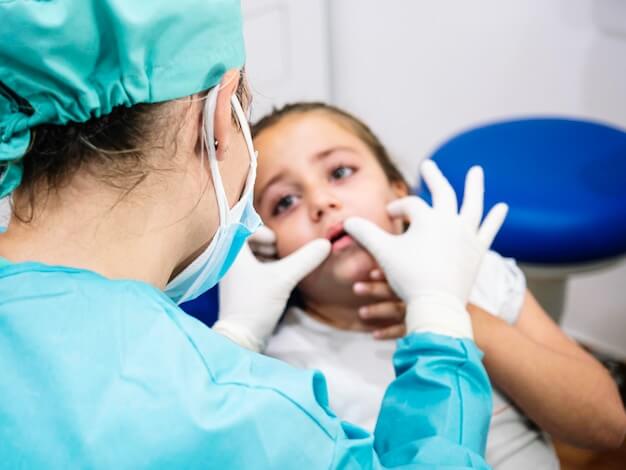
Minor oral surgery encompasses small surgical procedures performed inside or around the oral cavity, typically under local anesthesia, completed in a short time, and often allowing a return to daily activities the same day. The term “minor” denotes that these procedures are mostly limited to a specific area and planned with less tissue trauma compared to major surgical operations; this does not imply that the procedure is insignificant. Since the oral tissues have dense vascularization and sensitive anatomical proximities, even a minor intervention requires accurate diagnosis, sterile technique, and careful follow-up. Common procedures within minor oral surgery include simple tooth extractions, removal of root fragments/broken roots, frenectomy (tongue-tie or lip-tie correction), excision of small soft tissue lesions (such as fibromas, mucoceles), biopsy sampling, abscess drainage, minor suturing, alveoloplasty (bone edge reshaping after extraction), small pre-prosthetic adjustments, and in some cases, soft tissue modifications over implants. The scope of the procedure is determined based on the patient’s needs and clinical findings.
The primary goal in such surgeries is to eliminate the problem with a minimally invasive approach, control pain and infection, support function (chewing, speaking), and clarify the diagnosis of any pathological formation if necessary. For example, taking a biopsy from a lesion that has been present for a long time, growing, or recurring inside the mouth is important for accurate treatment planning and patient safety. Frenectomy in an individual with a short lingual frenulum can help reduce tension contributing to speech difficulties, feeding issues, or gum recession in some cases. Abscess drainage aims to rapidly alleviate pain and reduce the risk of infection spreading.
The process in minor oral surgery usually follows a standard sequence: examination and necessary imaging, medical evaluation (medications, allergies, systemic diseases), explanation of the treatment plan, local anesthesia, surgical application, bleeding control and suturing if needed, followed by written and verbal postoperative care instructions and control appointments. Healing is generally quick; however, factors such as clot stability, oral hygiene, nutrition, and smoking significantly affect the quality of recovery. Sutures may be removed around 7 to 10 days after the procedure depending on the materials used.
What Is Minor Oral Surgery?
Minor oral surgery refers to small surgical interventions performed on the soft tissues inside the mouth (mucosa, frenula, areas around minor salivary glands) and limited bone/dental regions. These procedures usually are brief, done under local anesthesia, and do not require hospital admission for most patients. Their key feature is being targeted and limited in scope. Nonetheless, due to the high vascular and nerve density and bacterial load in the oral cavity, infection control and tissue-respecting surgical technique are critically important.
Procedures performed under this scope can be categorized into two main groups: diagnostic and therapeutic interventions. Biopsy is a primary diagnostic procedure. It is performed when there is a non-healing wound, recurring ulcer, enlarging mass, color changes, or unexplained tissue alterations inside the mouth, providing essential pathological examination for accurate diagnosis and correct treatment. Therapeutic procedures include abscess drainage to evacuate infections, removal of redundant tissues (such as fibroma excision), correction of tongue or lip ties (frenectomy), and alveoloplasty to smooth bone edges after extractions—directly eliminating symptoms and causes.
The boundaries of minor surgery may differ between clinics; some procedures might be considered minor in one clinic but listed separately as “surgical extractions” in another. The important aspect here is the scope and risk profile of the procedure. Deciding which procedure to perform under which conditions depends on the patient’s medical status, lesion size and location, imaging findings, and the clinician’s judgment.
How Is Oral Surgery Performed?
The procedure begins with a detailed examination and planning. The patient’s complaint and goal determine the type of procedure: in patients presenting with pain and swelling, the source of infection is evaluated; if a lesion is suspected, the size, borders, color, surface, and whether it is trauma-related are analyzed; when planning a frenectomy, the range of tongue/lip movement and the tension caused by the tissue are assessed. Radiographs are requested when necessary; imaging ensures safe execution of the procedure if there is a condition related to the bone or suspicion of a tooth root.
A medical history is taken, including regular medications, blood thinners, allergies, diabetes, and diseases affecting the immune system. Then the steps of the procedure are explained, and the consent process is completed. Most procedures are performed under local anesthesia. After local anesthesia, the patient does not feel pain but may experience sensations of touch and pressure.
The surgical step varies depending on the type of procedure. During biopsy, an appropriately sized tissue sample is taken from the lesion and sent for pathology; bleeding is controlled and suturing may be performed. In mucoceles/fibromas and similar lesions, the lesion is excised with controlled precision; if necessary, it is removed with a small safety margin from the surrounding tissue and closed. In frenectomy, connective tissue is cut to reduce tension, and sutures ensure proper healing. The goal of abscess drainage is to evacuate accumulated pus and reduce pressure; drainage may be placed if required, and antibiotics may be prescribed. If there is bone irregularity after extraction, alveoloplasty can smooth the bone edge; this benefits prosthesis fit and wound healing.
Post-procedure, the patient is given care instructions. In the first 24 hours, management of bleeding and clotting, dietary recommendations, oral hygiene protocols, medication use, and follow-up appointments are planned. If sutures are placed, follow-up and suture removal generally occur around 7–10 days, depending on the suture material used.
Who Is Suitable for Minor Oral Surgery?
Minor oral surgery can be performed on a wide range of patients when the correct indications are met. Suitability is determined by evaluating the type of procedure and the patient’s general health together. Candidates may include those who have a small intraoral lesion, functional restrictions caused by the frenulum, bone irregularities that impede healing after extractions, or abscesses requiring drainage. Intraoral tissue changes that require biopsy for diagnosis also fall under this scope.
Systemic diseases and medications play a key role in determining eligibility. Patients using blood thinners require planning before the procedure due to bleeding risks; decisions about whether to discontinue medication must be coordinated with the patient’s relevant physician. In diabetic patients with uncontrolled blood sugar, healing may be delayed and infection risk increased; therefore, procedures are planned once metabolic control is achieved as much as possible. In immunosuppressed patients, infection control and follow-up plans are more stringent. Some medications used for osteoporosis treatment can affect jawbone healing, so detailed evaluation is necessary for procedures involving bone.
Procedures such as frenectomy can be performed in children with appropriate indications; however, speech therapy needs, dentition development stage, and functional evaluation should be planned together. In elderly patients, wound healing and drug interactions require more careful consideration. A suitable candidate is a person who can comply with recommended care instructions, maintain oral hygiene, and attend follow-up appointments regularly. Smoking is discouraged as it can negatively affect healing, especially in procedures involving sutures; quitting or reducing smoking is advised.
What Should Be Considered Before Minor Oral Surgery?
Preparation before the procedure reduces the risk of complications and accelerates healing. The first step is the complete sharing of medical information: medications used (especially blood thinners), allergies, systemic diseases such as diabetes/hypertension, pregnancy status, and any other relevant health conditions.
Preoperative Considerations
Previous surgical complications must be reported to the dentist beforehand. In some procedures, radiographs or additional imaging may be required; planning the procedure blindly without these records is not advisable.
Good oral hygiene is essential. The plaque load and gingival inflammation in the mouth can increase the risk of postoperative infection. Before the procedure, regular brushing, interdental cleaning, and antiseptic oral care support may be planned according to the dentist’s recommendation. If a procedure targeting infection (such as abscess drainage) is to be performed, prescribed medications must be taken regularly; if swelling rapidly increases or mouth opening becomes significantly restricted, the procedure should be planned urgently.
On the day of the procedure, typically, patients do not need to fast excessively for procedures done under local anesthesia, but if sedation is planned, a fasting protocol is applied, and an accompanying person is arranged. Wearing comfortable clothing and planning rest after the appointment is particularly beneficial for procedures involving stitches. If the patient smokes, reducing smoking before the procedure and refraining after it will support healing. Additionally, the dentist must be informed about any possible interactions between the medications likely to be prescribed after the procedure (painkillers/antibiotics) and the patient’s current medications.
If a biopsy is planned, details such as whether the lesion has previously been traumatized, any changes in growth rate, or tendency to bleed should be shared. This information can affect both the sampling technique and the follow-up plan.
Postoperative Care After Minor Oral Surgery
Postoperative care depends on the type of procedure but shares common goals: controlling bleeding, reducing infection risk, and ensuring comfortable tissue healing. The first 24 hours are critical for clot stability. Especially after extractions or soft tissue excisions, behaviors that may disturb the clot—such as vigorous spitting, early rinsing, or drinking through a straw—should be avoided. Slight oozing of blood may continue for a while; continuous fresh bleeding or failure for a clot to form requires contacting the clinic.
Swelling and sensitivity are expected; if recommended by the dentist, cold applications during the first 24–48 hours can be beneficial. Pain control medications should be used as prescribed. If antibiotics were given, the full course must be completed. Oral hygiene should be maintained without traumatizing the surgical area; teeth should be brushed but the wound area should not be subjected to harsh contact. Gentle mouth rinsing should begin as advised by the dentist. If sutures are present, avoid pulling movements and consumption of hard foods near the suture site.
Diet usually starts with lukewarm, soft foods. Very hot foods can increase bleeding; highly spicy or acidic foods may irritate the wound area. Adequate fluid intake supports healing. Smoking can impair wound healing and increase infection risk; it is especially important to refrain during the first days.
If a biopsy or lesion excision was performed, follow-up is based on the pathology report. Until the pathology results are available, the healing process of the region should be monitored; signs such as bad odor, increasing pain, fever, or rapidly enlarging swelling require evaluation. After frenectomy, speech and tongue exercises may be recommended in some cases; performing these exercises regularly helps proper tissue healing. Sutures are usually removed within 7–10 days, depending on the material used.
Indications for Minor Oral Surgery
Minor oral surgery is applied in many cases requiring surgical intervention confined to a limited area inside the mouth. These include fibroma-like tissue overgrowths caused by trauma inside the mouth, lesions resulting from frequent lip/cheek biting, mucoceles (small salivary gland cysts), and similar formations. Performing a biopsy for color changes, growth, bleeding tendency, or ulcers that do not heal over a long period is also considered a minor surgical procedure. This is a critical step for definitive diagnosis.
If frenulum problems (tongue-tie, lip-tie) are related to speech, feeding, or gum recession, frenectomy may be planned. Minor bone spurs or sharp edges that hinder the use of dentures may also be addressed surgically. Sharp bone edges formed after extraction can be corrected with alveoloplasty. Removal of remaining root fragments or fractured roots after extraction can be considered minor surgery as an extension of simple extraction.
Minor surgery also plays an important role in infection management. In cases of dental abscess, drainage can be performed to evacuate accumulated pus. This quickly reduces pain and decreases the risk of infection spread. Additionally, in some cases, soft tissue adjustments around implants or minor soft tissue contouring can be planned within this scope.
The determination of which procedures fall under minor surgery depends on the size and location of the lesion, the patient’s health status, and clinical conditions. Even a lesion that appears “small” inside the mouth may require a more cautious approach and different planning if located in a risky area.
Why is Minor Oral Surgery Performed?
Minor oral surgery is performed to eliminate symptoms, improve function, control infection sources, and when necessary, to establish a definitive diagnosis. Even a small lesion inside the mouth can bleed, grow, or cause discomfort if it is continuously exposed to trauma. Removal of such a lesion increases patient comfort and helps the oral tissues to become healthy. In lesions such as mucoceles, surgical removal and appropriate follow-up are important due to the tendency to recur.
Biopsy is one of the most critical purposes of minor surgery. It is not safe to classify a suspicious tissue change visually as “benign” or “malignant”; pathological diagnosis determines the treatment direction. Therefore, clarifying the diagnosis with a biopsy in cases of non-healing wounds, growing masses, or unexplained color changes is a fundamental approach for patient safety.
Procedures like frenectomy aim at functional improvement. In individuals with tongue-tie, tongue mobility may be restricted, which can impair speech, swallowing, or oral hygiene. Lip-tie in some cases can contribute to gum recession or affect orthodontic stability. Surgical adjustment of the connective tissue can reduce this tension. Abscess drainage aims to relieve pressure from the infection, rapidly control pain, and prevent the spread of infection.
Minor bone adjustments before prosthesis can prevent the denture from causing trauma and sores. Correction of sharp bone edges after extraction improves the quality of healing. Although these procedures may seem “small,” if not performed correctly, they can lead to long-term discomfort and recurrent trauma; thus, planning and follow-up are important.
How Long Does Minor Oral Surgery Take?
The duration varies depending on the type of procedure, anatomical region, and any additional procedures performed in the same session. Small biopsies or frenectomies can often be completed quickly. As the lesion size increases, operation time may lengthen due to the need for bleeding control and suturing. In abscess drainage, infection spread and drainage requirements also affect the duration. Procedures such as root fragment removal or post-extraction bone contouring may vary in length depending on tooth position and bone density.
The total time spent in the clinic should also be considered. The time needed for local anesthesia administration and its onset, post-procedure bleeding control, and explaining care instructions to the patient increase the total time. Preparation and recovery times are added when sedation is planned.
The healing timeline should be considered separately from the procedure duration. Soft tissue healing usually becomes noticeable within a few days; if sutures are placed, follow-up and suture removal are typically planned between 7 and 10 days. The pathology report turnaround for biopsies depends on laboratory processes; the physician finalizes the follow-up plan after receiving the report.
Minor Oral Surgery Prices
Prices vary depending on the type of procedure to be performed (biopsy, frenectomy, lesion excision, abscess drainage, alveoloplasty, root removal, etc.), the degree of difficulty of the procedure, lesion size, and the patient’s general health condition.
The cost varies depending on the location of the operation, required imaging and diagnostic procedures, consumables to be used, suture requirements, anesthesia choice, and the need for post-procedure follow-up. In biopsy procedures, pathological examination is also part of the process and may affect the overall plan. In the presence of infection, additional medication and follow-up may be necessary.
To get up-to-date and personalized information about minor oral surgery prices, you should contact us. Once the procedure to be performed after the examination is clarified, a treatment plan tailored to you along with the associated cost information will be transparently shared.