
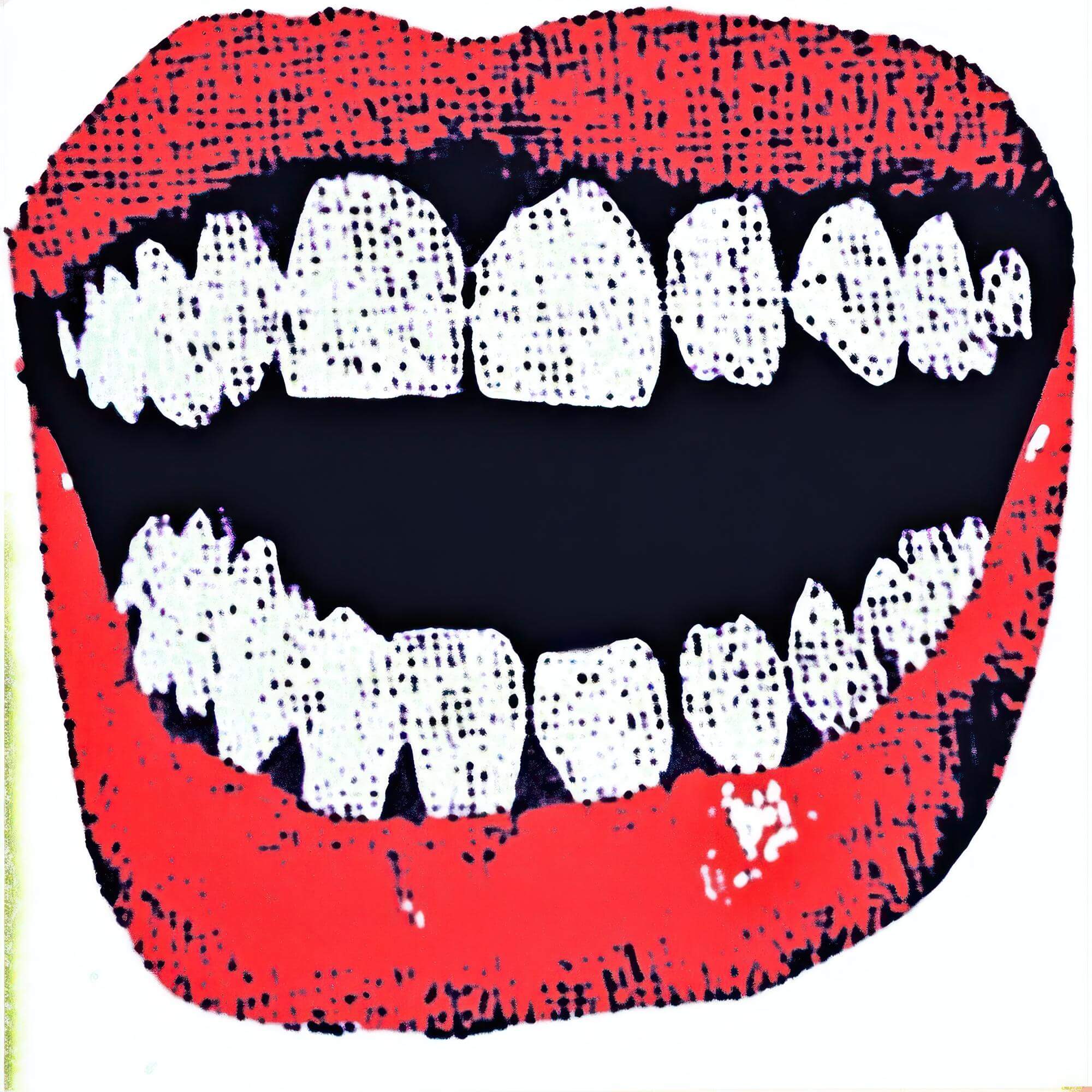
Mick Jagger’s teeth are famous because they are instantly recognizable, imperfect in a memorable way, and closely tied to his long public career as the frontman of the Rolling Stones. His smile has never followed the polished, ultra-white celebrity standard that became common in later decades. Instead, it has remained relatively natural-looking, with visible individuality in shape, alignment, and overall character. That difference made his teeth part of his public identity rather than something hidden or aggressively corrected.
People search for Mick Jagger’s teeth for a few main reasons. Many want to know whether he ever had dental work such as veneers, braces, whitening, crowns, or cosmetic reshaping. Others are interested in before-and-after changes because photographs from the 1960s, 1970s, 1980s, and recent years show small shifts in color, wear, and alignment that can happen over decades. There is also strong interest in how his smile contributed to his rebellious rock image. In celebrity dentistry, a highly individualized smile can have as much branding power as a conventionally perfect one.
From a dental perspective, the most realistic assessment is that Jagger’s smile appears to have been maintained rather than dramatically redesigned. Publicly available images suggest natural teeth with possible routine restorative or cosmetic care over time, which may include professional cleaning, whitening, bonding, or small repairs. There is no widely confirmed evidence that he underwent a full veneer transformation of the kind often seen in Hollywood smile makeovers. If a patient wanted to recreate a smile with similar character today, costs could range from about $300 to $1,500 for whitening and bonding, $1,000 to $2,500 per veneer, $900 to $3,000 per crown, and $3,000 to $7,000 for orthodontic alignment depending on the country, clinic, and treatment complexity.
Why Are Mick Jagger’s Teeth So Famous?
Mick Jagger’s teeth are famous because they became part of one of the most recognizable faces in music. For more than 60 years, audiences have seen him in close-up on album covers, concert footage, magazine shoots, documentaries, and interviews. When a public figure remains visually present across six decades, even small facial details become part of cultural memory. His mouth, lips, jaw movement, and smile all contributed to the image. The teeth were never isolated from the rest of his stage persona; they worked as part of the full expression.
His fame grew in the 1960s, a period when the music industry did not demand the same highly standardized cosmetic look often expected today. Jagger’s appearance communicated attitude, movement, and confidence rather than perfection. His smile looked real, lived-in, and distinctive. That matters because symmetry is common, but recognizability is rare. Many celebrity smiles are technically attractive yet interchangeable. Jagger’s was not. People could identify him quickly from a partial image, even from black-and-white photos with lower resolution than modern digital portraits.
There is also a contrast effect at work. Modern celebrity dentistry often prioritizes ultra-bright shade ranges such as BL1 or BL2 in whitening systems, paired with extremely even incisal edges and carefully controlled tooth proportions. Jagger never became closely associated with that type of makeover. His smile retained irregularities that made it more human and more memorable. Research in facial recognition and branding repeatedly shows that unusual but harmonious features improve recall. A person with a slightly uneven yet expressive smile is often remembered more easily than someone with textbook alignment.
Public discussion around his teeth also reflects broader interest in authenticity. Fans often see uncorrected or lightly corrected features as proof that a star did not erase personality for cosmetic convention. In entertainment branding, that can carry real value. A full smile makeover in a major celebrity clinic may cost $20,000 to $60,000, while preserving a recognizable smile through selective maintenance may involve smaller interventions over time, such as cleanings every 6 months, whitening every 12 to 24 months, and occasional bonding repairs costing a few hundred dollars each. Jagger’s teeth became famous not because they were “perfect,” but because they remained unmistakably his.
Has Mick Jagger Had Dental Work?
It is reasonable to assume that Mick Jagger has had some form of dental work over the course of his life, simply because most people do. By the time someone reaches their 70s or 80s, routine dental treatment usually includes a combination of examinations, scaling, fillings, possible crowns, minor restorations, and preventive care. Publicly available images of Jagger do not provide enough clinical detail to confirm specific procedures, yet it would be unusual for any adult with decades of constant public visibility to have had no dental maintenance at all.
Dental work does not always mean dramatic cosmetic redesign. In many cases, it means conservative care aimed at preserving natural teeth. A person with a recognizable smile may choose maintenance rather than transformation. Typical treatments in that category include composite bonding for chips, replacement of old fillings, enamel polishing, gum care, whitening, and crowns on weakened teeth. These procedures can improve comfort and longevity without changing the core identity of the smile. Costs vary widely. In the UK, a private composite bonding repair may range from £150 to £400 per tooth, a ceramic crown from £700 to £1,500, and whitening from £250 to £600. In the US, those figures often rise to $250 to $700, $1,000 to $2,500, and $300 to $1,000.
Looking at photos over the years, Jagger’s teeth appear more maintained than heavily reconstructed. There is no strong public evidence of a sudden switch from one smile design to another, which is often seen when celebrities get a full set of veneers. Instead, his dental appearance seems to have changed gradually, which is consistent with aging plus routine care. Teeth naturally darken over time due to enamel thinning, diet, medication history, and dentin exposure. Wear can shorten edges by fractions of a millimeter each decade. Minor movement can also occur as bone and gum support change with age.
Public speculation often confuses “had dental work” with “had a cosmetic makeover.” Those are not the same. Most likely, if Jagger received treatment, it was selective and practical enough to keep his smile healthy and functional without removing the character people already associated with him. That approach is common among performers who want to look well cared for on camera but not artificial. A maintenance-oriented dental plan over 20 to 30 years can easily total several thousand to tens of thousands of dollars without ever producing a dramatic before-and-after transformation.
Did Mick Jagger Ever Get Veneers or Braces?
There is no widely verified public record confirming that Mick Jagger had veneers or braces. Based on photographs available across multiple decades, his smile does not strongly suggest a full veneer case of the modern celebrity type. Veneers often create visible changes in brightness, uniformity, surface reflectivity, and edge symmetry. In high-profile cases, the shift can be obvious within a short time frame. Jagger’s teeth appear to have evolved more gradually, which points more toward natural aging, routine dentistry, and possibly limited cosmetic maintenance than a complete veneer transformation.
Veneers are thin shells, usually porcelain or composite, bonded to the front surfaces of teeth. They are commonly used to change color, shape, length, spacing, or minor alignment issues. A full smile design can involve 6 to 10 veneers on the upper front teeth and sometimes the same number on the lower arch. In top cosmetic clinics, costs commonly range from $800 to $2,500 per tooth, with premium porcelain cases in large cities climbing higher. If Jagger had undergone a full upper veneer case, many observers would expect more obvious uniformity than what his public photos generally show.
Braces are harder to assess because orthodontic treatment can be completed long before the public notices a final result. Traditional metal braces usually last 12 to 24 months. Clear aligners often run from 6 to 18 months depending on complexity. Yet when adults receive alignment treatment, there is often a visible improvement in crowding, rotations, bite relationship, or spacing. Jagger’s teeth have not displayed the kind of dramatic alignment correction that fuels strong orthodontic speculation. If he ever had minor orthodontic work, it may have been limited, discreet, or aimed at function rather than cosmetic perfection.
For readers wondering what would be clinically typical for someone wanting “Mick Jagger style” character without losing individuality, dentists often recommend conservative options before veneers. Those may include whitening, enamel contouring of less than 1 millimeter, small bonding additions, and targeted orthodontics for one or two rotated teeth. That kind of treatment may cost between $1,000 and $6,000 total, far less than a full veneer smile. Jagger’s public image supports the idea that a distinctive smile can remain famous without being pushed into strict symmetry. Whether he ever had veneers or braces remains unconfirmed, and the visible evidence does not clearly point to an extensive cosmetic overhaul.
What Makes Mick Jagger’s Smile Unique?
Mick Jagger’s smile is unique because it combines movement, expression, and imperfection in a way that feels unmistakably personal. A smile is not just a static arrangement of teeth. It includes lip line, cheek tension, jaw shape, facial asymmetry, muscle activity, and the way someone speaks or performs. Jagger’s smile has always existed in motion. During performances, his mouth opens wide, the lips stretch dramatically, and the teeth become part of a high-energy visual identity. That made the smile memorable beyond purely dental features.
From an aesthetic perspective, uniqueness often comes from controlled irregularity. Dental professionals evaluate smiles using factors such as midline position, incisal display, tooth proportion, buccal corridor width, shade, texture, and gingival symmetry. A conventionally ideal smile may aim for central incisors with balanced width-to-length ratios near 75% to 80%, mild embrasures, and highly aligned edges. Jagger’s smile has never seemed designed around that textbook formula. It has character lines rather than cosmetic standardization. For branding, that can be more powerful than perfection.
Age also adds complexity. Someone photographed from their 20s into their 80s will naturally show shifts in enamel luster, edge wear, tooth shade, and soft tissue support. Yet Jagger’s smile retained a recognizable structure over time. That continuity matters. Many celebrities become difficult to identify after major cosmetic redesigns, but his smile remained connected to the same public persona. Fans still see the same expressive face rather than a reset version. That degree of continuity is relatively rare in entertainment, where image management can become highly interventionist.
There is also a cultural layer. Jagger emerged from an era when charisma often mattered more than cosmetic conformity. His smile fit the rebellious, playful, and slightly provocative image associated with rock culture. A perfectly calibrated set of porcelain veneers might have softened that edge. Today, patients increasingly ask dentists for “natural but improved” results instead of obvious celebrity whiteness. In clinical terms, that might mean staying within natural tooth shade ranges such as A1 to B2 rather than moving to extremely bright bleached shades, preserving slight asymmetries, and limiting tooth lengthening to 0.5 to 1.5 millimeters. Jagger’s smile stands out because it looks lived-in, expressive, and attached to identity rather than detached from it.
Mick Jagger Teeth Before and After
When people search for “Mick Jagger teeth before and after,” they are usually looking for evidence of cosmetic treatment or age-related change. Public images from the 1960s through recent years show that his teeth have changed, but not in the dramatic, makeover-style way often seen with celebrities who choose full porcelain veneers or extensive orthodontic correction. The differences appear gradual. That pattern is much more consistent with the natural passage of time, routine dental care, and selective maintenance than with a one-time smile overhaul.
In earlier photographs, Jagger’s teeth appeared youthful, with slightly brighter enamel, sharper edges, and the kind of natural irregularity common in untreated adult smiles. Over time, it is normal for enamel to lose translucency, incisal edges to wear by fractions of a millimeter, and tooth color to shift darker due to internal dentin changes and external staining from tea, coffee, wine, or tobacco exposure. A public performer may offset some of that with periodic professional whitening or polishing, which can brighten teeth by several shades without changing shape or arrangement. Whitening alone can create a “before and after” effect in photos, particularly under studio lighting.
Facial aging also changes how teeth are seen. Lip position lowers with age in many people, reducing upper tooth display at rest. Gum contours may shift slightly, and the visual balance between lips and teeth changes. That means two photos from different decades can look more different than the teeth themselves actually are. Camera technology matters too. A 1968 black-and-white image, a 1985 concert still, and a high-definition digital portrait from 2024 will not show enamel color, texture, and alignment in the same way.
If one of our readers wanted a similar “natural before and after” rather than a fully redesigned smile, a dentist might recommend a conservative treatment plan such as examination with digital imaging, hygiene cleaning, whitening, replacement of old fillings in visible areas, and minor composite bonding. That could cost roughly $800 to $4,000 depending on the number of teeth treated. By contrast, a full celebrity makeover might reach $15,000 to $50,000 or more. Jagger’s before-and-after story is interesting because it reflects continuity. The smile changed enough to show time, but not so much that it stopped looking like Mick Jagger.
How Have Mick Jagger’s Teeth Changed Over the Years?
Mick Jagger’s teeth appear to have changed in the same broad ways most natural teeth change over many decades: mild wear, shade variation, subtle positional shifts, and the visual effects of aging in the lips and surrounding facial structures. That may sound simple, but when a person has been photographed consistently from early adulthood into later life, those changes become highly noticeable. The public compares images from different eras and often expects a hidden cosmetic explanation, even when the differences are completely normal.
In youth, teeth usually have more defined enamel edges, a smoother light reflection pattern, and stronger contrast between translucent edges and the body of the tooth. As time passes, enamel thins through normal function. Grinding, clenching, acidic drinks, and mechanical wear can shorten front teeth gradually. Clinical studies often estimate average wear rates at small fractions of a millimeter per year, though the exact amount varies greatly. Over 40 or 50 years, even a conservative wear pattern can noticeably soften the outline of a smile. Jagger’s later photos suggest the kind of mature wear expected in a person of his age group.
Color changes are also common. Natural teeth darken over time because dentin becomes more prominent and enamel can stain externally. If someone whitens periodically, the teeth may still appear lighter in some years than others. Public photos of Jagger suggest variation in brightness, but not a permanent ultra-white result. That supports the idea of limited maintenance rather than a full prosthetic transformation. Restorative work, if present, may have been blended carefully enough that it did not change the overall signature of the smile.
Alignment can shift slightly throughout adulthood. Lower front crowding is one of the most common age-related dental changes, and upper teeth can rotate or settle subtly as well. Bone density, gum support, bite force, and missing posterior support all affect long-term tooth position. Even in people who had straight teeth in early adulthood, mild movement over decades is routine. Jagger’s smile still looks coherent and recognizable, which suggests any changes remained within a natural range. The overall story is less about reinvention and more about preservation. His teeth changed because all real teeth do, yet the features people associate with his face were retained across the years.
Mick Jagger’s Teeth and His Public Image
Mick Jagger’s teeth played a meaningful role in his public image because they reinforced a persona built on confidence, rebellion, sensuality, and individuality. In celebrity culture, a smile can either support a brand or compete with it. Jagger’s smile supported his image by looking authentic to the world he represented. He did not project the polished, controlled, high-gloss aesthetic associated with television hosts, pop idols, or actors whose appearances were shaped to feel universally agreeable. His visual identity leaned toward energy and character. The teeth fit that perfectly.
Public image is not created by one feature alone. It comes from a consistent mix of facial expression, body language, wardrobe, media presence, and cultural timing. Jagger’s wide mouth, animated lips, and visible teeth became central to performance footage and publicity photography. The camera often caught him mid-expression rather than posed in a static smile. That gave his teeth a kind of functional fame. They were part of the action, part of the performance, part of the attitude. In branding terms, this matters because dynamic recognizability often leaves a stronger impression than conventional attractiveness.
There is a useful comparison with modern celebrity smile design. Today, many public figures choose highly symmetrical veneers, bright whitening to BL shades, gum contouring, and edge alignment that photographs cleanly under close-up HD video. That look can be effective, but it also reduces visual unpredictability. Jagger’s smile retained irregularity, which made him feel less manufactured. Fans often read that as honesty or edge, even if they are not consciously thinking about dental aesthetics. A distinctive smile can strengthen emotional connection because it looks specific to one person rather than exchangeable.
For public figures, cosmetic decisions can affect long-term recognizability. A dramatic change may refresh an image, but it can also disconnect a celebrity from the face audiences remember. Jagger’s likely choice, whether intentional or simply practical, seems to have favored continuity. From an image-management perspective, that was effective. His teeth never distracted from the brand; they became part of it. Readers interested in celebrity dental strategy can take a useful lesson from this: not every famous smile needs to be “perfect.” Sometimes a smile with visible personality has greater cultural value than one that meets every cosmetic benchmark.
FAQs About Mick Jagger’s Teeth
People ask many of the same questions about Mick Jagger’s teeth, and most of them can be answered with a mix of visual observation, dental logic, and caution about what has not been publicly confirmed. One common question is whether his teeth are real. Based on available photographs, they appear largely natural in overall character, though routine dental work over a lifetime would be very normal. Another frequent question is whether he had veneers. There is no strong public evidence of a full veneer makeover. His smile does not show the abrupt shift in shape and uniformity that often follows large cosmetic veneer cases.

People also want to know why his teeth look so recognizable. The answer lies in facial identity. His smile combines slightly irregular features, expressive movement, and decades of public exposure. A distinctive smile becomes famous when it remains visible in films, concerts, interviews, and photographs over a long period. His teeth are not famous because they match a cosmetic ideal. They are famous because they became inseparable from one of the most recognizable frontmen in music history.
A question we often hear from readers is whether he should have “fixed” them. That depends on the goal. If the goal was technical dental perfection, many cosmetic options would have been available by the 1980s, 1990s, and 2000s, from bleaching and bonding to crowns and veneers. If the goal was preserving identity, there may have been little reason to erase what already worked. Cosmetic dentistry is not only about making teeth straighter or whiter. It is also about deciding what to keep. In many smile design consultations, the most valuable part is identifying which imperfections actually carry personality.
There is also curiosity about cost. If someone wanted a smile inspired by Jagger’s natural character rather than a Hollywood transformation, a dentist might suggest cleaning, whitening, conservative bonding, and possibly light alignment. Depending on the country and complexity, that could range from about $1,000 to $8,000. A full cosmetic recreation with porcelain veneers on 8 to 10 upper teeth could cost $8,000 to $25,000 or more. The key point behind most questions is simple: Mick Jagger’s teeth matter because they show how a world-famous smile can remain memorable without becoming artificially standardized.
Are Mick Jagger’s Teeth Natural?
Mick Jagger’s teeth appear natural in overall presentation, though “natural” can mean different things in dentistry. It may mean untreated teeth, mostly original teeth with routine maintenance, or natural teeth that have received conservative restorative work. Looking at public images, his smile does not strongly resemble a full cosmetic reconstruction. There is visible individuality in shape, spacing, and expression that many full veneer cases tend to reduce. That does not prove there has been no treatment. It suggests that if work was done, it was likely selective enough to preserve the original character.
By the time a person reaches later adulthood, it is common to have at least some dental intervention. Fillings, crowns, whitening, hygiene treatment, and minor repairs are routine. Around the world, adults aged 65 and older often have a history of restorative care simply because teeth face decades of chewing, wear, and exposure to temperature changes, acids, and plaque. If Jagger has received treatment, that would not make his smile “fake.” It would place him in the same category as millions of people who maintain natural teeth with professional help.
Natural-looking teeth usually have small differences in contour, surface texture, and translucency. They reflect light unevenly, and their color sits within believable ranges rather than a flat bright white. Jagger’s smile generally fits that profile. In modern cosmetic dentistry, some patients specifically request this effect. Labs may be instructed to preserve micro-texture, use layered ceramics with variable translucency, and avoid excessive brightness. Those cases can still be artificial from a material standpoint, but they are designed to look natural. With Jagger, public images more strongly support the idea of natural teeth maintained over time than a deliberately fabricated “natural style” veneer set.
For readers trying to interpret celebrity smiles, the safest rule is this: natural appearance does not equal no dentistry, and dental treatment does not automatically remove natural character. If a patient wanted to keep their smile authentic while improving health and appearance, a clinician might recommend exams every 6 to 12 months, professional cleaning 2 times a year, whitening when needed, and small repairs before larger damage develops. Annual maintenance costs could range from $300 to $2,000 depending on location and treatment needs. Jagger’s smile appears natural because it still reads as personal, variable, and consistent with age rather than cosmetically manufactured.
Why Didn’t Mick Jagger Fix His Teeth?
The question assumes there was something that needed fixing, and that is exactly why it remains so interesting. In cosmetic dentistry, “fixing” is subjective. A dentist may identify treatable features such as discoloration, wear, spacing, or minor misalignment, yet the patient may see those same features as part of identity. For a public figure like Mick Jagger, individuality can have more value than textbook symmetry. If his teeth were healthy, functional, and recognizably his, there may have been little incentive to replace them with a more standardized celebrity smile.
Public figures often make appearance choices strategically, even when the decision is simply to leave something alone. A dramatically improved smile can look attractive, but it can also alter the emotional memory fans have of a face. Jagger built his image in an era when raw charisma, attitude, and physical distinctiveness mattered enormously. His smile matched the rebellious, energetic image of rock music. A set of highly polished veneers might have looked cleaner on camera, yet it may also have softened the exact edge that made him stand out.
There are practical reasons too. Extensive cosmetic dentistry is not always the right treatment. Veneers require enamel modification in many cases, crowns require more reduction, and full smile makeovers involve long planning, temporary restorations, lab work, and maintenance. Porcelain restorations often last around 10 to 15 years, sometimes longer with excellent care, but they are not one-time permanent solutions. A person who values natural teeth may prefer whitening, bonding, or periodic maintenance over irreversible cosmetic redesign. For a patient with an established public identity, conservative care can be a very rational choice.
There is also the possibility that he did “fix” what mattered, just not in a dramatic way visible to the public. Many people maintain oral health through routine dentistry without chasing cosmetic perfection. That may include replacing old restorations, treating gum issues, smoothing chips, and preserving bite function. Those interventions can protect the teeth while leaving the smile’s character intact. If a modern patient asked whether they should correct every irregularity, many experienced cosmetic dentists would answer carefully: not every feature is a defect. Jagger’s case is a good reminder that a memorable smile does not need to be remade in order to work.
How Much Would It Cost to Get Teeth Like Mick Jagger?
The cost depends on what “like Mick Jagger” means. If someone wants the overall feel of a natural, expressive, slightly imperfect smile with healthy maintenance, the price can be modest compared with a full celebrity makeover. If they want a professionally designed smile inspired by his look but tailored to their own face, the cost rises based on diagnostics, materials, and how many teeth need treatment. A dentist would usually begin with photographs, bite analysis, X-rays, and a clinical exam. That initial stage may cost anywhere from $100 to $500, or more in premium cosmetic clinics.
For a conservative plan, the most common treatments are hygiene cleaning, whitening, minor edge reshaping, and composite bonding for chips or shape adjustments. A typical price range might look like this:
-
Professional cleaning: $80 to $300
-
Whitening: $300 to $1,000
-
Composite bonding: $250 to $700 per tooth
-
Enamel contouring: $100 to $400 per tooth
-
Night guard for wear protection: $200 to $800
A patient making subtle changes to 4 to 6 visible front teeth might spend roughly $1,500 to $5,000 total. That approach is often enough to create a smile with personality rather than a fully engineered cosmetic look. If mild alignment is needed, clear aligners may add $2,000 to $6,000 depending on complexity and region.
A more extensive redesign, even if intended to stay “natural,” can become much more expensive. Porcelain veneers usually cost $800 to $2,500 per tooth, and many smile plans involve 6 to 10 upper teeth. Ceramic crowns may range from $900 to $3,000 each. A full upper cosmetic case can easily land between $8,000 and $25,000, while premium cases in major cities may exceed that. Readers should know that trying to copy a celebrity smile exactly is rarely the best goal. Tooth size, arch width, lip mobility, facial proportions, and gum display differ from person to person.
The more realistic route is to ask for the same qualities: natural texture, moderate brightness, preserved individuality, and healthy function. In many practices, a digital mock-up helps patients see the result before treatment starts. That kind of planning can reduce the risk of over-treatment and usually adds a few hundred dollars to the process. A smile inspired by Mick Jagger’s character may cost far less than a Hollywood veneer package because the aim is not perfection. The aim is personality that still looks believable on your own face.