
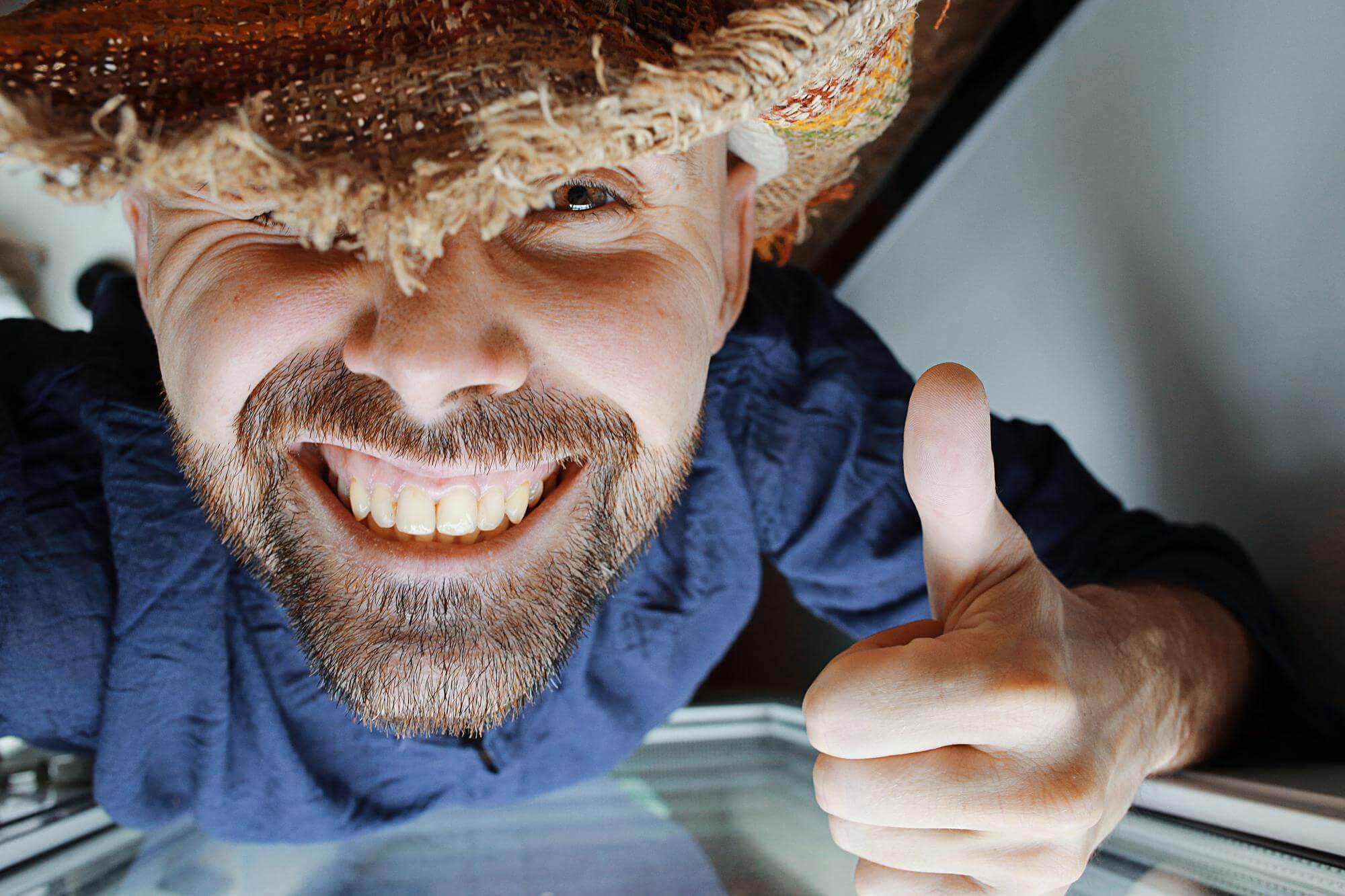
Adam Driver’s teeth attract attention because they do not match the highly standardized, ultra-white smile often seen in Hollywood. Viewers notice a look that appears natural rather than heavily cosmetically altered: slightly uneven alignment, distinct tooth shape, and a smile that fits his angular facial structure. That contrast has made his teeth a recurring topic in entertainment coverage, fan discussions, and appearance analysis.
From an objective standpoint, the interest is less about a dramatic dental issue and more about individuality. His smile is often described as unconventional, which can make it more memorable on screen. In celebrity image culture, where veneers, whitening, and orthodontic refinement are common, a natural-looking smile stands out. Public curiosity usually centers on a few questions: whether he has had cosmetic dental work, whether his teeth changed over time, and how his smile contributes to his recognizable presence.
Available public images across film premieres, interviews, red carpets, and editorial shoots suggest that any changes have been subtle rather than transformative. There is no widely confirmed record of major cosmetic dental procedures. Minor differences seen in photographs can result from lighting, facial hair, camera angle, expression, lip position, and routine dental maintenance such as cleaning or whitening. A full veneer makeover often creates a highly uniform appearance; Driver’s smile has generally retained natural variation.
For readers comparing celebrity smiles, Adam Driver is a useful example of how strong public image does not depend on perfectly symmetrical teeth. In cosmetic dentistry, procedures such as whitening can cost roughly $300 to $1,000, bonding around $300 to $800 per tooth, orthodontics from $3,000 to $8,000, and veneers from about $900 to $2,500 per tooth depending on material and location. His appearance does not clearly signal a broad, obvious smile redesign in that range. What people respond to most is the fact that his teeth look like part of a real face rather than a manufactured feature.
Why Are Adam Driver’s Teeth a Topic of Interest?
Adam Driver’s teeth are a topic of interest because his appearance resists the polished formula that audiences often associate with leading men. In modern celebrity culture, smiles are frequently brightened, straightened, and reshaped to the point of near-uniformity. Driver’s smile looks more natural, and that difference becomes noticeable in close-up film shots, press interviews, and red-carpet photography. People tend to focus on features that break visual expectations, and his teeth are part of that pattern.
There is also a strong screen-related reason for the attention. Driver has worked in roles that rely heavily on intense facial expression, long close-ups, and emotionally charged dialogue. In that setting, teeth become more visible than many viewers realize. High-resolution cinema cameras, 4K streaming formats, and tightly framed promotional portraits reveal details that might have gone unnoticed in earlier decades. A small asymmetry, a slight irregularity in alignment, or a natural tooth shape can become a recurring point of discussion once millions of viewers see the same face repeatedly.
Public curiosity is fueled by comparison. When fans look at celebrity photos side by side, they often ask whether a person had braces, whitening, contouring, or veneers. Cosmetic dental treatment is common in entertainment circles, with porcelain veneers often requiring 2 to 3 appointments over 1 to 3 weeks and costing several thousand dollars for a visible smile zone. Since Driver’s smile does not obviously display the ultra-even edges and identical shade associated with a full veneer case, people speculate about whether he chose to keep his natural look or whether changes have simply been conservative.
His broader image contributes as well. Driver is often described as charismatic, striking, and unconventional rather than classically polished. That framing encourages audiences to examine the details that make him distinctive. Teeth are one of those details because they sit at the intersection of health, grooming, attractiveness, and personality. A smile can soften a face, sharpen a persona, or make an actor seem more approachable. In Driver’s case, interest in his teeth is really part of a larger conversation about authenticity, masculine image, and why some public figures become more memorable precisely because they do not look overly perfected.
What Is Unique About Adam Driver’s Teeth?
What stands out about Adam Driver’s teeth is not an extreme dental characteristic but a combination of natural traits that remain visible in an industry where cosmetic uniformity is common. His smile appears to have mild irregularity in alignment, subtle variation in tooth size and contour, and a shade that reads natural rather than aggressively whitened. Those elements can make his teeth look more real and less engineered than many celebrity smiles.
One point people often notice is proportion. Teeth do not exist in isolation; they are read in relation to jaw width, lip movement, facial height, and cheek structure. Driver has a strong jawline, long facial proportions, and expressive lips, so even small dental irregularities may seem more visually prominent. A smile that might look ordinary on another face can appear highly distinctive when paired with bold facial architecture. That is why discussions about his teeth are often really discussions about total facial harmony.
Another distinctive element is the absence of obvious cosmetic standardization. In many celebrity veneer cases, the front six to eight upper teeth take on a consistent width, length, and brightness. The result can be visually striking but also very polished. Driver’s teeth do not typically show that ultra-uniform pattern in public images. Natural teeth often have small asymmetries, slight edge differences, and tonal depth rather than a flat bright white. Those characteristics are normal and common in healthy dentition, yet they become notable when they remain visible on a famous actor.
Uniqueness also comes from expression. Some smiles are built for broad posed photography, while others are more compelling in motion. Driver’s smile often appears dynamic rather than static. It changes with speech, laughter, and emotion, which can make it seem more personal and less cosmetic. In aesthetic dentistry, smile design frequently evaluates incisal display, gum exposure, midline, and buccal corridor. Even a well-executed makeover can look less distinctive if it reduces variation too much. His appearance suggests a smile that retains individual character.
From a practical point of view, there is nothing in widely available imagery that clearly indicates severe dental anomaly. The “unique” quality comes from subtle nonuniformity, not dramatic damage or obvious dysfunction. That distinction matters because online commentary can exaggerate normal variation. Many healthy adults have minor crowding, natural color range between A1 and A3 on common dental shade guides, and edges shaped by normal wear over years. On a major star, those ordinary features become part of a recognizable brand.
Did Adam Driver Fix His Teeth?
There is no widely confirmed public evidence that Adam Driver underwent a major visible dental makeover. Based on photographs from different stages of his career, any changes that may have occurred appear subtle. That usually points to routine dental care, possible whitening, standard cleanings, minor contouring, or small maintenance procedures rather than a dramatic full-smile reconstruction. Without confirmation from the actor or a treating clinician, strong claims about extensive work would be speculative.
When people ask whether a celebrity “fixed” their teeth, they often mean one of several different things. They may be referring to orthodontic alignment, professional whitening, bonding to smooth edges, gum reshaping, or porcelain veneers. These treatments vary greatly in visibility and cost. Whitening may be completed in a single visit of 60 to 90 minutes or through take-home trays over 1 to 2 weeks. Bonding often takes 30 to 60 minutes per tooth. Clear aligner treatment may run 6 to 18 months. Veneers usually require tooth preparation, temporary restorations, and a final placement phase. A dramatic change often leaves clear before-and-after markers, and those markers are not obvious in Driver’s public image history.
Small differences in photos can be misleading. Lighting temperature can make teeth appear several shades brighter or darker. Matte editorial photography differs from flash photography. Facial hair changes how the mouth area is framed. Weight fluctuation, lip posture, and expression can also alter the apparent alignment of front teeth. A red-carpet smile captured at one angle may look sharper and more symmetrical than a candid interview frame recorded from below. These variables are enough to create the illusion of dental correction even when the underlying teeth are largely the same.
It is also possible for someone to improve dental appearance without changing the signature look. A person might have professional cleaning every 6 months, occasional whitening, replacement of old fillings, enamel polishing, or conservative reshaping of a chipped edge. Those are common adult dental choices and often have low visibility. In celebrity circles, subtle maintenance is often preferred because it preserves recognizability. If Driver had any work done, the available visual record suggests that it was restrained and aimed at maintenance rather than image reinvention. That distinction fits his public persona, which has generally leaned toward authenticity and understated grooming instead of high-gloss cosmetic transformation.
Are Adam Driver’s Teeth Natural?
Adam Driver’s teeth appear natural in the sense that they do not show the most obvious hallmarks of heavy cosmetic redesign. Public photos and film appearances generally suggest a smile with normal variation in shape, contour, and brightness. That does not prove that no dental work has ever been done, since natural-looking cosmetic dentistry can be very conservative, though it does indicate that his smile has not been transformed into the uniform, highly stylized format often associated with celebrity veneers.
Natural teeth usually show slight differences from one tooth to the next. Central incisors may not be perfectly identical, lateral incisors can vary subtly in width or edge shape, and canine prominence may affect the smile line. Enamel also reflects light unevenly, which creates depth rather than a single flat tone. Driver’s smile tends to retain those characteristics in publicly available imagery. The overall effect reads as authentic rather than manufactured.
People sometimes assume that any attractive celebrity smile must be cosmetic, but that is not a reliable standard. Routine dental care can preserve a naturally good smile for decades. Most adults who maintain oral health with regular checkups every 6 to 12 months, scaling and polishing, cavity treatment when needed, and occasional whitening can look camera-ready without major aesthetic intervention. If someone avoids smoking, limits staining beverages, uses fluoride toothpaste, and addresses wear or decay early, the results can be significant without drawing attention.
It is worth separating “natural” from “untreated.” Many natural-looking smiles include some level of professional care. A minor chip may be polished. Surface stains may be removed. A nighttime guard may reduce grinding wear. Bonding may be applied to a small defect without changing the smile’s identity. In that sense, a smile can remain natural in appearance even if it has received maintenance. For public figures who are photographed under studio lighting and high-definition cameras, that kind of upkeep is common and sensible.
In Driver’s case, the key point is visual consistency. Across years of appearances, his teeth have looked recognizably like his own. There is no clear period where they suddenly became much larger, much whiter, or perfectly symmetrical. That continuity supports the idea that his smile is either largely natural or enhanced only in small, conservative ways. Readers looking for certainty should keep in mind that only a direct statement or clinical record could confirm the exact history, and those details are not generally public.
Has Adam Driver Had Veneers or Cosmetic Dental Work?
There is no verified public confirmation that Adam Driver has had veneers. Based on image analysis alone, his smile does not strongly resemble a classic full-veneer case. Full veneer transformations often create very even incisal edges, consistent tooth width across the visible upper front teeth, and a noticeably brighter shade that stays stable across most appearances. Driver’s teeth usually show enough natural variation that many observers conclude he has either had no major cosmetic treatment or only minimal, carefully restrained work.
Veneers are thin shells, commonly porcelain or composite, placed on the front surface of teeth to improve color, shape, length, and sometimes mild alignment. Porcelain veneers often cost about $900 to $2,500 per tooth in many markets, with premium urban practices charging more. A visible smile makeover using 6 to 10 veneers can therefore range from roughly $5,400 to $25,000 or higher. The process generally takes 2 to 4 visits over 1 to 3 weeks, though treatment can be longer when planning is extensive. Because the result is often highly polished, fans tend to spot veneer cases quickly.
There are more conservative options that could alter a smile without producing that unmistakable veneer look. Teeth whitening can lift shade several levels depending on baseline color and enamel characteristics. Composite bonding can repair edge irregularities or refine shape in one appointment. Enameloplasty, which involves slight reshaping, can smooth small uneven areas within minutes. Clear aligners can improve position over several months while preserving natural tooth anatomy. If Driver has had cosmetic work, these lower-visibility options would fit the visual evidence better than an aggressive veneer makeover.
It is also possible that what people interpret as cosmetic dentistry is simply the effect of production styling. Professional makeup teams reduce shine around the lips, lighting crews control contrast, and photographers retouch images to varying degrees. Even a healthy, untreated smile can look more refined in magazine shoots than in candid street photos. The same actor may appear to have different teeth across interviews and premieres due to lenses, shadows, and expression.
From an editorial perspective, the responsible answer is that veneers are unconfirmed and not clearly indicated by available images. Cosmetic dental work in some minor form cannot be ruled out, because routine appearance maintenance is common among public figures. What can be said with more confidence is that his smile has retained individuality. That makes it a poor example of an obvious “Hollywood teeth” transformation and a stronger example of how subtle or natural dental presentation can remain effective on screen.
How Adam Driver’s Teeth Affect His Appearance and Public Image
Adam Driver’s teeth influence his appearance by reinforcing the qualities that audiences already associate with him: intensity, individuality, and realism. His smile does not soften his features into a generic leading-man look. Instead, it adds contrast. He has a strong bone structure, deep-set facial expression, and a presence that often reads as serious or commanding. A more standardized cosmetic smile might shift that balance. The natural variation in his teeth helps preserve a face that looks distinctive rather than interchangeable.
Public image is built through repetition. Fans, journalists, casting directors, and photographers see the same features again and again across interviews, film stills, posters, and event coverage. If one detail consistently stands out, it becomes part of the celebrity’s visual identity. Teeth can play that role because they are linked to speech, laughter, confidence, and approachability. In Driver’s case, his smile tends to register as genuine. That matters in an era when over-enhanced features are widely discussed online and often criticized for making public figures appear less human.
There is also a branding element. Actors who work in prestige drama, independent cinema, historical storytelling, or psychologically complex roles can benefit from faces that feel textured and believable. Driver’s dental appearance aligns with that perception. He does not project the polished image of someone designed by cosmetic templates. For some audiences, that adds credibility. It can make period roles easier to accept and emotionally demanding scenes more convincing. Casting often depends on these subtle visual cues even when no one says them aloud.
From a media standpoint, his teeth help generate conversation because they challenge a narrow idea of attractiveness. Many fan discussions frame his appeal as proof that symmetry is not the only route to charisma. That is valuable in public discourse around beauty standards. Cosmetic dentistry remains a significant global market, estimated in the tens of billions of dollars, and the pressure to perfect one’s smile is real. Seeing a major actor succeed without an obviously idealized smile can broaden what audiences consider compelling.
His public image benefits from that authenticity. The effect is not that people focus on his teeth in isolation every time they see him. The effect is that his overall look feels less manufactured. That can foster stronger audience recall, more discussion, and a sense that his face belongs to a real person rather than a polished archetype. For celebrity image, memorability often matters more than perfection.
Adam Driver Teeth Before and After
When readers search for “Adam Driver teeth before and after,” they are usually looking for evidence of major change. The available public record does not show a dramatic transformation. Earlier photos and more recent appearances suggest continuity rather than a clear cosmetic reset. His teeth appear broadly similar over time, with any visible differences likely falling into the category of normal maintenance, slight lighting variation, aging, or image quality changes between older and newer media.
Older photos of public figures are often lower resolution, less color-accurate, and less uniformly lit than current red-carpet or studio images. A photo from 2012 viewed beside a 2024 event image may appear to show whiter, straighter, or more even teeth, though that can be due to camera sensor improvements, retouching standards, and stronger event lighting. Modern beauty photography increases contrast and sharpness, which affects how edges and enamel reflections are perceived. Small natural tooth contours become more visible, and shade can shift depending on white balance.
If there has been any change, it appears modest. Teeth may look a bit cleaner, slightly brighter, or smoother in some newer appearances. Those outcomes can come from routine professional hygiene visits, bleaching, or very minor reshaping. A standard cleaning and polishing appointment typically lasts 30 to 60 minutes. In-office whitening commonly takes about 1 hour. Light bonding on one edge can be completed in a single visit. These are ordinary interventions that would not erase the core character of a smile.
What is not strongly visible is the kind of “after” result associated with six to ten upper veneers or major orthodontic refinement. Those procedures often create a markedly more even smile arc, highly matched tooth dimensions, and a brighter, more uniform enamel appearance. Driver’s smile has retained enough irregular natural detail that a major overhaul seems unlikely based on visuals alone.
For readers trying to assess celebrity before-and-after dental claims, the best approach is caution. Compare images from similar angles, similar lighting, and similar expressions. A broad laugh can expose more teeth and make alignment look different from a half smile. Facial hair can change visual framing around the mouth. Even lip dryness or makeup styling can alter perceived tooth display. In Driver’s case, the before-and-after story is less about obvious correction and more about consistency. That consistency is part of why his smile remains recognizable.
Fans’ Reactions to Adam Driver’s Smile
Fans’ reactions to Adam Driver’s smile are often intensely positive, though not in a conventional “perfect smile” way. A large share of commentary focuses on how distinctive, real, and unexpectedly attractive it looks. Viewers frequently describe his appeal as unusual or magnetic rather than polished. His smile becomes part of that discussion because it contrasts with celebrity standards that prioritize flawless symmetry, bright white shade, and uniform tooth shape.
One common reaction is that his smile feels authentic. Fans often respond warmly to facial features that seem untouched by trend-driven cosmetic pressure. In online discussions, people may disagree about whether his teeth are “ideal,” though many agree that his smile suits his face. This is an important distinction. A smile does not need to meet textbook cosmetic preferences to be effective. In fact, features that create personality can generate stronger emotional response than features that simply look standardized.
There is also a noticeable split between viewers who focus on traditional aesthetics and those who value character. Some people prefer highly refined celebrity smiles and may view any irregularity as something to correct. Others see those same irregularities as part of his charm. That divide mirrors a broader cultural conversation about attractiveness. Cosmetic dentistry has grown rapidly, and treatments such as whitening, aligners, and veneers are more visible than ever. Public reactions to Driver’s smile show that many audiences still appreciate individuality over formula.
Fan response is shaped by context as well. In interviews, his smile often appears fleeting and spontaneous, which can make it feel more personal. In film roles, it can read as disarming or intense depending on the character. That flexibility gives his smile expressive value. A broad, heavily engineered smile can sometimes deliver one dominant impression: polished friendliness. Driver’s smile can move between warmth, awkwardness, irony, and emotional openness, which makes it more interesting to watch.
Some reactions are playful, some analytical, and some highly admiring. What they share is attention. People remember it. In celebrity culture, that level of recognition is meaningful. The response suggests that audiences do not only reward perfection. They also reward coherence, where a feature fits the person so well that changing it too much might reduce the impact. Driver’s smile often receives that kind of response: not perfect by narrow commercial standards, though memorable in a way many perfected smiles are not.
FAQs About Adam Driver’s Teeth
Readers usually have a tight set of recurring questions about Adam Driver’s teeth, and the most accurate answers depend on sticking to what is publicly visible rather than guessing. The biggest question is whether his teeth are “bad” or unhealthy. There is no clear public evidence of serious dental disease or major functional problem. What people notice is mild natural irregularity, not obvious pathology. Healthy teeth do not need to look identical to be functional or attractive.
A second frequent question is whether he wears veneers. There is no confirmed public record showing that he does. His smile does not strongly display the most recognizable signs of a full veneer makeover, such as highly uniform size, very bright color, and perfectly consistent edge shape. If any cosmetic work exists, it appears restrained enough that his natural dental character remains visible.
People also ask whether his teeth changed over time. The answer seems to be only slightly, if at all. Photos across different years show continuity. Differences are usually subtle and can be explained by camera angle, lighting, whitening, grooming, or ordinary dental care. A real major dental makeover often produces a much sharper visual break between older and newer images.
There is interest in whether his teeth affect his career. In practical terms, they likely help rather than hurt. Casting does not always reward conventional perfection. A distinct face can make an actor more memorable across dozens of auditions, scenes, and publicity appearances. His smile fits the broader image that has made him stand out in both blockbuster and prestige projects.
Many readers ask if his teeth are natural. They appear natural or at least naturally presented. That means they either have not been heavily altered or any treatment has been conservative. A smile can receive maintenance without losing its natural appearance. Cleanings every 6 months, whitening once every 1 to 3 years, or small repairs as needed are common among adults and do not automatically create a “cosmetic” look.
One more common question is whether a person should copy this kind of smile or correct a similar one. That depends on oral health, bite function, and personal preference. Cosmetic changes should be based on enamel condition, gum health, jaw relationship, and budget. Minor enhancements can cost a few hundred dollars, while full veneer cases can reach five figures. Driver’s example shows that a recognizable smile does not need extreme correction to be effective or appealing.