
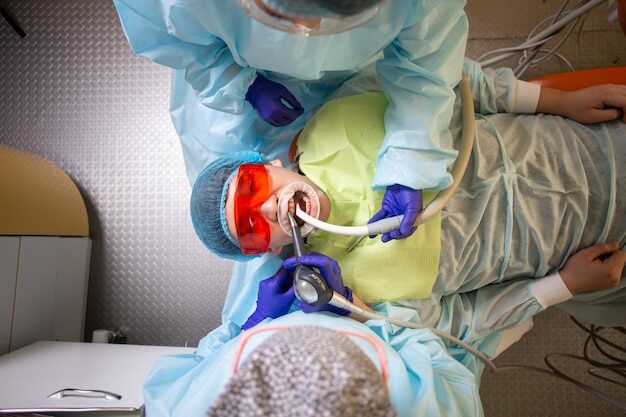
Dental treatment under general anesthesia is the application of dental procedures in a fully sedated environment controlled by an anesthesia specialist, during which pain, anxiety, and reflexes (such as gagging) are suppressed, allowing treatments to be completed in a single session or planned manner. The primary goal of this approach is to safely and controllably complete oral and dental treatments in patients who cannot tolerate conventional clinical conditions (local anesthesia), making the treatment feasible without physically or psychologically burdening the patient. General anesthesia is not a routine choice for convenience; when applied with correct indications, appropriate settings, and a skilled team, it significantly enhances patient comfort and treatment efficiency.
This treatment approach is mostly carried out in operating room conditions or in environments equipped for general anesthesia. The team includes dentists as well as an anesthesia specialist and anesthesia technician/nurse. Prior to the procedure, the patient’s overall health status is assessed, necessary blood tests and anesthesia consultations are performed, and risk classification (such as ASA) is reviewed. Vital signs such as heart rate, blood pressure, oxygen saturation, and respiratory parameters are continuously monitored during general anesthesia. In this respect, general anesthesia is not “sleep” but a medically controlled anesthesia state.
The range of dental procedures that can be performed under general anesthesia is broad: multiple fillings and extractions, root canal treatments, surgical extractions, some periodontal procedures, comprehensive caries treatment in children, and oral rehabilitation for individuals with special needs. The critical point here is that the treatment is not a “package procedure” but applied based on a pre-planned treatment list, according to oral examination and imaging findings. In some cases, alternative plans are prepared considering the possibility that intraoral conditions on the day differ from expectations; however, these possibilities must be communicated to the patient and their caregiver beforehand.
The advantages of dental treatment under general anesthesia include completing procedures that would require multiple appointments in a single session, no patient movement during treatment, a safe working area in patients with strong gag reflexes, and prevention of traumatic experiences in highly anxious patients. On the other hand, disadvantages and risks include the need for medical evaluation because general anesthesia is a medical procedure, pre-procedure fasting rules, post-procedure observation, and rare but possible anesthesia-related complications. Therefore, the decision should be made jointly by the dentist and anesthesia specialist based on medical indications.
What Is Dental Treatment Under General Anesthesia?
Dental treatment under general anesthesia involves performing dental procedures at an anesthesia level where the patient’s consciousness is completely unconscious, pain perception is absent, and protective reflexes are suppressed. The patient remains asleep throughout the procedure and is monitored in the recovery room afterward. This method is especially preferred for patients who cannot cooperate with local anesthesia, have severe anxiety, strong gag reflexes, or require multiple procedures in a single session.
The concept of general anesthesia should not be confused with “sedation.” Sedation usually refers to a state where consciousness is partially retained and the patient often maintains spontaneous breathing. In contrast, general anesthesia involves more advanced respiratory and airway management; therefore, the presence of an anesthesia specialist and full monitoring is standard. Since elements such as water, blood, and materials accumulate in the oral cavity during dental treatments, airway security is critically important. General anesthesia aims to ensure this safety through medical protocols.
This approach can transform the patient’s treatment experience from traumatic to manageable. Particularly for individuals with previous negative dental experiences or phobias, postponing treatment can lead to more significant problems over the years. The general anesthesia option breaks this cycle and enables the restoration of oral health control.
How Is Dental Treatment Performed Under General Anesthesia?
The process begins with detailed planning. During the initial examination, an intraoral assessment is conducted, radiographic planning is prepared (periapical/panoramic, in some cases CBCT), the procedures to be performed are listed, and alternative scenarios are determined. Next, an anesthesia consultation is carried out: the patient’s medical history, medications used, allergies, previous anesthesia experiences, and any complication history are evaluated. Necessary blood tests and additional consultations (cardiology, etc.) may be requested. At this stage, fasting duration, preparation for the day of the procedure, and accompaniment plans are clarified.
On the day of the procedure, the patient is evaluated by the anesthesia team, and an intravenous line is established. Monitoring starts (ECG, blood pressure, oxygen saturation, respiratory parameters). After anesthesia induction, airway security is ensured (different methods may be used depending on the case), and the dentist begins treatment. If multiple procedures are performed in the same session, the priority order is planned: infection foci, extractions, restorative treatments, root canals, and other necessary applications are completed in the determined sequence. At the end of the procedure, bleeding control is performed, the oral cavity is cleaned, and the patient is taken to the recovery room.
During recovery, the patient is monitored for a certain period. Temporary complaints such as nausea, dizziness, or mild throat irritation may occur. Once vital signs stabilize, discharge planning begins. Discharge criteria are determined based on parameters such as general condition, control of nausea and vomiting, pain management, bleeding status, and presence of an accompanying person. The first 24 hours at home generally include rules such as rest, no driving, and not being alone; details are clarified by the physician according to the patient’s condition.
Who Is Suitable for Dental Treatment Under General Anesthesia?
Dental treatment under general anesthesia is appropriate for specific indications. The most common suitable groups are:
- Individuals with severe dental phobia or anxiety who cannot tolerate treatment under local anesthesia
- Patients with an extremely strong gag reflex where a safe working area cannot be provided
- Patients with intellectual/physical disabilities or neurodevelopmental differences who cannot cooperate in the clinic
- Patients requiring multiple dental procedures needing completion within a short time
- Children with extensive decay burden and cases where behavior management and sedation options are insufficient
- Some cases requiring multiple interventions after trauma (evaluated on a case-by-case basis)
Suitability is determined not only by “request” but also by medical safety. The patient’s systemic diseases (uncontrolled diabetes, serious cardiopulmonary problems, obesity, sleep apnea, etc.) may increase anesthesia risk. In such cases, the anesthesiologist performs risk assessment and may plan additional tests, consultations, or alternative anesthesia methods if necessary. Sedation might be sufficient for some patients; for others, general anesthesia may be safer and more predictable. The decision is made based on clinical needs and risk balance.
What Should Be Considered Before Dental Treatment Under General Anesthesia?
The most important issue before general anesthesia is anesthesia safety. Therefore, the medical history must be shared completely: regularly used medications (especially blood thinners, diabetes drugs, blood pressure medications), allergies, asthma/COPD, sleep apnea, epilepsy, thyroid diseases, and any problems experienced during previous anesthesia must be reported. The anesthesia team creates a risk plan based on this information.
Fasting rules are critically important. Before general anesthesia, intake of solid foods and liquids is restricted for a certain period; these durations may vary depending on age, planned anesthesia, and institutional protocols. Non-compliance with fasting rules may increase the risk of aspiration and cause the procedure to be postponed. Therefore, fasting and medication instructions given prior to the procedure must be followed exactly.
Smoking and alcohol use can negatively affect anesthesia and the healing process. Especially smoking poses risks in terms of airway irritation and wound healing; if possible, the procedure should be postponed or adjusted accordingly.
It is Recommended to Avoid or Reduce Intake During the Pre-Procedure Period
If there is an infection or upper respiratory tract illness (fever, cough, throat infection), the anesthesia plan may be affected; in this case, the clinic should be informed in advance.
Logistical preparation is also important: rules such as having a companion, post-procedure home care, refraining from driving or making significant decisions within the first 24 hours should be planned. In pediatric patients, detailed written instructions regarding post-procedure nutrition and medication use must be provided to the family.
What to Consider After Dental Treatment Under General Anesthesia
In the first hours after the procedure, symptoms such as drowsiness, sleepiness, nausea, or dizziness may be observed due to the awakening process. These symptoms generally diminish within the same day for most patients. Mild sore throat or dryness in the throat can occur temporarily due to airway management during anesthesia. Fluid intake and rest as recommended by the physician support recovery. It is generally important not to drive, avoid being alone, and refrain from coordination-requiring activities in the first 24 hours.
Oral care varies depending on the treatments performed. If multiple extractions were done, the blood clot should be preserved; strong mouthwash should be avoided for the first 24 hours, straws should not be used, and smoking must be avoided. If fillings or root canal treatments were performed, it is beneficial to avoid biting the cheek or tongue until the anesthesia effect wears off and to avoid hard foods on the first day. If sutures were placed, the suture area must not be traumatized and a follow-up appointment should be kept. Pain medications should be used within the safe dosage limits.
Bleeding, swelling, and pain can be expected up to a certain level; however, increasing pain, persistent fresh bleeding, high fever, increasing facial swelling, difficulty swallowing or breathing are signs that require urgent evaluation. Post-procedure feeding planning is especially important in children; start with light and lukewarm foods in the first hours, advancing according to tolerance. Families should observe the child to prevent unnoticed biting inside the mouth until anesthesia wears off.
In the long term, the most critical point is the completion of restorative treatments and control planning. For example, the restorations on teeth that have undergone root canal treatment should not be delayed; wound healing in extraction sites should be monitored. Treatments performed under general anesthesia are seen as a step that “resets” oral health, but without regular care and follow-up, new problems may develop afterward.
In Which Cases is Dental Treatment Under General Anesthesia Applied?
General anesthesia is applied when treatment cannot be safely and comfortably performed with local anesthesia in the clinic. The most common indications include:
- Treatment plans requiring multiple procedures or long durations (multiple fillings/extractions/root canals)
- Severe dental phobia and anxiety at the level of panic attacks
- Uncontrollable strong gag reflex
- Inability to cooperate in individuals with special needs
- Comprehensive treatment needs in young children and inability to proceed with behavior management
- Multiple interventions required in trauma or emergency cases (case-based)
This decision is always made not because it is “the most comfortable option,” but because it is “the safest and most predictable option.” In some patients, sedation may be sufficient; in others, general anesthesia provides better risk management. The clinical and anesthesia teams explain the options and determine the appropriate method.
Why is Dental Treatment Performed Under General Anesthesia?
Dental treatment under general anesthesia is performed to eliminate factors that delay or make treatment impossible. When treatment cannot be done with local anesthesia due to severe fear, lack of cooperation, strong gag reflex, or special needs, oral health problems accumulate. This accumulation may increase pain attacks, infection risk, feeding, and sleep problems. General anesthesia breaks this vicious cycle and enables the safe completion of treatments.
For patients requiring multiple procedures, advancing session by session can be challenging for both the patient and the dentist. When multiple treatments are completed on the same day under general anesthesia, the total treatment time can be shortened and the patient experiences less traumatic procedures.
The Approach Can Help Rapid Dental Rehabilitation, Especially in Children with Extensive Decay
One other reason is safety. In some patients, uncontrolled movements, sudden jaw closure, or gag reflex can pose risks due to instruments used inside the mouth. General anesthesia provides an environment with controlled airway and patient movement, contributing to safer procedures.
How Long Does Dental Treatment Under General Anesthesia Take?
The duration varies depending on the number and type of dental procedures to be performed. Planning general anesthesia for a single procedure is rare; usually, multiple procedures are performed in the same session. Therefore, the total duration includes anesthesia preparation, anesthesia induction, implementation of dental treatments, awakening, and observation time in the recovery room. The procedure time may be longer in cases involving multiple fillings and extractions; if root canal treatments or surgical extractions are added, the duration increases further.
The observation period after awakening depends on the patient’s general condition. Some patients are discharged on the same day; in some cases, longer observation may be necessary. Recovery process in children may vary individually. Rest and monitoring with a caregiver during the first 24 hours at home are part of the process plan.
The “total process” of dental treatment under general anesthesia is not limited to the day of the procedure. It also includes anesthesia evaluation, tests, and planning beforehand; and follow-up appointments, suture removal (if any), and restorative completions afterward. After examination, the doctor will clearly inform you about the estimated duration of the procedure day as well as the timing of follow-up appointments.
Prices of Dental Treatment Under General Anesthesia
Prices vary according to the scope of the procedures (fillings, extractions, root canals, surgical procedures, etc.), the number of procedures, anesthesia team and operating room/equipment requirements, medications and consumables used, procedure duration, necessary tests and consultations, follow-up appointments, and possible additional sessions. Planning and monitoring protocols may differ in children and individuals with special needs, affecting the overall plan.
To get up-to-date and personalized information about the prices of dental treatment under general anesthesia, you should contact us. When the treatment scope is clarified after preliminary examination and anesthesia evaluation, cost information is shared transparently.