
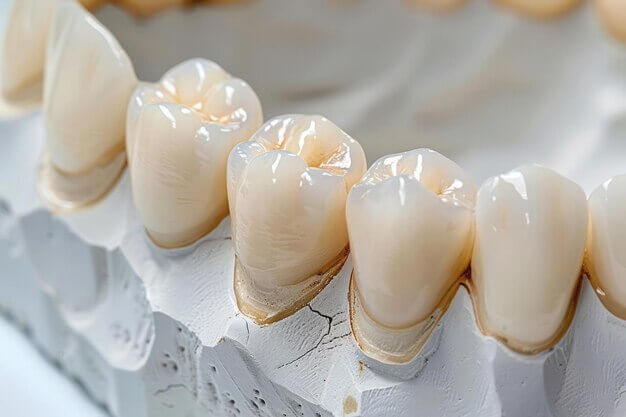
Zirconia dental treatment is one of the modern fixed prosthetic applications that aim to combine aesthetics and durability. When people refer to “zirconia teeth,” they usually mean zirconia-based crowns; that is, the substructure of the crown placed over the tooth is made from zirconia, and in most cases, it is completed with a porcelain or monolithic zirconia superstructure. Zirconia is a material that stands out for its high biocompatibility, being metal-free, and its durability. Therefore, it is frequently preferred both in the anterior region for aesthetic needs and in the posterior region where chewing forces are more intense.
When planning zirconia treatment, it can be misleading to think of “one type of zirconia.” Clinically, different zirconia options exist: some are more opaque and focused on strength, while others provide higher translucency, offering an advantage in aesthetics. Additionally, the indications for systems where porcelain is layered over a zirconia substructure differ from those for monolithic (single-piece) zirconia restorations. For example, in patients with very strong chewing forces, monolithic zirconia can be considered to reduce the risk of porcelain chipping. In the anterior region, material selection and characterization are done more meticulously to achieve a natural look.
Zirconia crowns aim to restore the tooth’s form, color, and function. In teeth with large fillings, root canal treatment, or increased fracture risk, protection of the tooth with a crown is targeted. Aesthetically, teeth that have permanently changed color, have incompatible shapes, disrupted symmetry, or have aesthetically insufficient old crowns can be planned for a more balanced appearance with zirconia. Moreover, the metal-free characteristic of zirconia can reduce the risk of dark reflections on the gum line, which sometimes occurs with metal-supported crowns in certain patients. Nevertheless, gum health and margin adaptation remain the foundation of long-term success, regardless of the material.
The treatment process includes examination, tooth preparation, impression taking, temporary crown placement, try-in, and final bonding. Impressions can be taken through conventional methods or digital scanning. Zirconia restorations can be produced with high precision using CAD/CAM systems; however, aesthetic characterization, contact points, and occlusion adjustments are finalized clinically during the try-in. The bonding protocol for zirconia restorations varies depending on the type of restoration and tooth retention (such as resin cements or conventional cements). Therefore, the clinical protocol is customized for each patient.
Zirconia dental treatment, when performed with the correct indication, is a solution that can be safely used for many years in terms of both aesthetics and durability. The key factors determining success are the proper material selection, excellent tooth preparation, precise impression taking, high-quality manufacturing, correct cementation, and the patient’s regular maintenance and control discipline.
What Is Zirconia Dental Treatment?
Zirconia dental treatment is an approach where zirconia-based materials are used in fixed restorations placed over the teeth. The most common form of use is zirconia-based crowns. In these crowns, zirconia serves as the substructure, and the superstructure can be completed with porcelain or monolithic zirconia. One of the most important features of zirconia is that it is a metal-free ceramic with high biocompatibility. As a result, it has good compatibility with the gum tissue, and problems related to color reflections commonly seen in metal-supported crowns are less frequent in some patients.
The goal of zirconia treatment is to restore the tooth’s aesthetic appearance and chewing function. When there is significant tooth substance loss, the tooth can be strengthened with a crown, reducing the risk of fracture. In aesthetic concerns, color, shape, and symmetry can be adjusted to enhance smile harmony. Due to its durability, zirconia is also frequently preferred in the posterior region; however, in the anterior region, zirconia options with high translucency values and good characterization are important for a natural look.
This treatment can be applied to a single tooth or as part of restorative plans involving multiple teeth. However, every case requires individualized planning.
Zirconia Type Is Not Uniformly Selected
Material selection is made by considering occlusal forces, tooth position, gingival level, and patient habits (such as bruxism). Therefore, zirconia dental treatment is not merely “material” but a restorative rehabilitation requiring accurate planning.
How Is Zirconia Dental Treatment Applied?
Zirconia dental treatment is a process demanding precision in planning and production. The first step is the examination: the state of tooth decay, existing fillings/crowns, gum health, and occlusion relationship are evaluated. If necessary, a radiograph is taken to examine the root condition and surrounding bone tissue. If there is active decay, suspected cracks, or root canal treatment need in the tooth to be crowned, these issues are treated first; because zirconia crowns must be seated on a healthy foundation.
The second step is tooth preparation. Under local anesthesia, controlled tooth reduction is performed to create the shape that will fit the crown. The preparation margin (finish line) is clarified; the correct planning of this margin is critical for both gingival health and margin adaptation. Although zirconia restorations have high durability, proper thickness and preparation geometry are essential for the material to function healthily.
Next, an impression is taken. The impression can be performed with a conventional method or a digital scanner. Digital impressions, especially in CAD/CAM production, can provide speed and precision. The zirconia restoration is designed and milled from a block using laboratory or clinic CAD/CAM systems. After milling, the sintering (firing) phase allows the material to reach its final hardness. Then, according to aesthetic requirements, staining/characterization and glazing procedures are performed. In zirconia-based porcelains, there may also be a porcelain layering step; this offers an aesthetic advantage but requires management of porcelain chipping risks.
During the trial appointment, the fit of the restoration, margin adaptation, contact points, and occlusion are checked. If appropriate, cementation is performed. The type of cement used is determined by the restoration type, retention geometry, and physician protocol. Finally, occlusal adjustment and polishing are done. The patient is given hygiene instructions and follow-up appointments are scheduled.
Who Is Suitable for Zirconia Dental Treatment?
Zirconia dental treatment can be suitable for many patients seeking both aesthetics and durability; however, suitability is assessed considering tooth structural status, gum health, and occlusal forces. Zirconia is often preferred in the posterior region due to its resistance to high masticatory forces; in the anterior region, options with higher translucency zirconia can provide successful aesthetic results.
The typical suitable patient profile includes: stable gum health, good oral hygiene, presence of material loss requiring crowns or aesthetic/functional needs, and manageable occlusal relationships. Zirconia crown reinforcement can be planned for root canal-treated teeth, teeth with large fillings, or teeth at risk of fracture. Zirconia restorations may also be preferred for teeth with permanent color changes or altered shape from an aesthetic perspective.
Zirconia can be a good option for patients with bruxism (teeth grinding/clenching); however, more precise planning is required here. Bruxism produces repetitive and lateral forces on restorations. In this case, material selection (such as monolithic zirconia), occlusal adjustment, and night guard usage can become integral parts of treatment. Additionally, in very long-span bridges or advanced occlusal disorders, different prosthetic strategies may be needed; the approach that zirconia alone “solves everything” is incorrect.
Patients with active periodontal disease, poor hygiene habits, or uncontrolled systemic diseases need to manage these issues beforehand. Although zirconia has good biocompatibility, if gingival inflammation continues, problems may develop at the crown margin. The most accurate suitability decision is made after examination and radiological assessment, personalized for the patient.
What to Consider Before Zirconium Dental Treatment
The first issue to pay attention to before zirconium treatment is addressing existing problems inside the mouth. If the tooth to be crowned has decay, leaking fillings, suspected fractures/cracks, or requires root canal treatment, these must be completed first. Since a crown is a restoration that covers the tooth, placing it without treating underlying issues increases the risk of pain, infection, or decay beneath the crown in the long term. Therefore, radiographic evaluation and necessary restorative procedures are planned prior to treatment.
Gum health is also a critical step. If there is gum bleeding, swelling, periodontitis, or heavy tartar buildup, periodontal treatment should be performed first and the hygiene routine stabilized. This is because the marginal fit of the crown is directly related to gum health; taking impressions and making a crown while gum health is poor can negatively affect the marginal adaptation and long-term aesthetics. Especially in the aesthetic zone, if gum levels are not stable, achieving symmetry after the crown becomes difficult.
Occlusion and bruxism assessment are important in zirconium planning. If there is teeth grinding or clenching, the forces on the crowns increase, raising the risk of fractures or cracks. Although zirconium is durable, improper occlusal contacts or excessive lateral forces can cause problems. Therefore, the dentist performs an occlusal analysis and discusses the plan for a night guard if necessary before treatment. Additionally, if multiple teeth are planned to be crowned, aesthetic planning should be done according to the facial line and smile dynamics: color selection, tooth shape, midline, and tooth lengths are clarified.
From a practical standpoint, the zirconium crown process usually requires several appointments and may involve a temporary crown period. During this period, avoiding hard and sticky foods is important to prevent displacement of the temporary restoration. Correctly setting expectations before treatment (for example, “how white” and “how natural”) is also a critical step for patient satisfaction.
What to Consider After Zirconium Dental Treatment
The primary consideration after zirconium crown placement is occlusal harmony. After the crown is cemented, the dentist performs an occlusion check; however, the patient may feel high contacts in daily activities (for example, night grinding). If there is a sensation of the crown “being too high,” pressure on a single point during chewing, or muscle fatigue in the jaw, the follow-up appointment should not be delayed. This is because high contacts can create unnecessary stress on the zirconium restoration and increase the risk of tooth sensitivity or damage to the restoration over time.
Oral hygiene is a determining factor for the longevity of zirconium restorations. Although the zirconium surface is smooth and relatively resistant to plaque accumulation, the crown margins and gum line remain vulnerable to plaque buildup. Therefore, brushing at least twice a day and using dental floss or interdental brushes are essential. Especially when multiple crowns are present, interdental cleaning must be performed regularly. Otherwise, there is an increased risk of gum bleeding, recession, and marginal leakage in the long term.
Diet and usage habits are also important. Zirconium is a durable material; however, habits such as chewing ice, cracking nuts with teeth, or biting hard objects pose risks as with any restoration. Additionally, using teeth as tools (opening packages, etc.) can shorten the restoration’s lifespan. For patients with bruxism, the use of a night guard is very effective in protecting zirconium crowns because it reduces lateral forces on the restorations.
During regular check-ups, the marginal fit of the crowns, gum health, occlusal balance, and any surface wear are monitored. With proper care and correct usage, zirconium restorations can remain aesthetically pleasing and functionally stable for many years.
In Which Situations Is Zirconium Dental Treatment Applied?
Zirconium dental treatment is applied in restorative cases requiring both aesthetics and durability. One of the most common situations is teeth with extensive fillings or structural weakness. If a large portion of the tooth is lost or the tooth is prone to fracture… If the tooth structure is weakened, protecting the tooth peripherally with a zirconium crown can be targeted. Root canal treated teeth also fall into this group; especially in the posterior region, strengthening root canal treated teeth with crowns is frequently preferred.
In aesthetic indications; zirconium restorations can be planned for teeth with permanent color changes, form irregularities, symmetry issues, or aesthetic incompatibility of old crowns. Especially in patients experiencing dark reflections at the gum line with metal-supported crowns, zirconium options without metal can provide aesthetic advantages. If a natural appearance is desired in the anterior region, zirconium materials with higher translucency values and good characterization can yield successful results.
Zirconium treatment can also be used in short bridge plans; however, as the bridge length and occlusal forces increase, planning becomes more critical. In patients with bruxism, although zirconium’s durability is advantageous, problems may occur if the restoration design and occlusal adjustment are not done correctly. Therefore, in patients suspected of teeth grinding, monolithic zirconium along with force management and night guards are evaluated together.
Additionally, zirconium is a frequently used material in implant-supported restorations. Zirconium can be preferred for crowns or bridges placed on implants due to its aesthetic and biocompatibility advantages. The appropriate type of zirconium for each condition is determined through examination and planning.
Why Is Zirconium Dental Treatment Performed?
Zirconium dental treatment is performed to increase the durability of the tooth, restore its function, and improve its aesthetic appearance. Zirconium material holds an important place in modern dentistry with its high durability and biocompatibility. Zirconium restorations can be preferred especially in posterior regions where chewing forces are intense, aiming for long-term stability. In cases where the tooth structure is weakened, a crown that surrounds the tooth completely aims to reduce the risk of fracture.
One of the reasons for preferring zirconium aesthetically is its metal-free nature. In metal-supported crowns, some patients may develop dark lines or gray reflections at the gum margin. This risk is lower with zirconium. In addition, with appropriate material selection and laboratory characterization, light transmission and color depth close to the natural tooth can be achieved. This is especially important for patients aiming for a “natural yet orderly” smile in the front region.
Functionally, zirconium restorations can improve chewing efficiency by restoring the anatomical form and contact points of the tooth. When tooth form deteriorates, food impaction and gum problems may occur; these contacts can be regulated with a crown. Also, when renewing old, incompatible crowns, zirconium can be planned targeting better marginal adaptation and a more cleanable design.
Zirconium treatment is also frequently chosen for implant-supported crowns and bridges. Implants do not flex like natural teeth; therefore, the material’s durability and occlusal adjustment are very important. With proper design and correct occlusion, zirconium can provide long-term use in implant-supported restorations as well. In summary, zirconium is performed for restorative needs that simultaneously target durability, aesthetics, and biological compatibility.
How Long Does Zirconium Dental Treatment Take?
The duration of zirconium dental treatment varies depending on the number of teeth to be treated, the difficulty of tooth preparation, the impression method (digital/classical), CAD/CAM production planning, laboratory workflow, and additional treatments. If a zirconium crown is to be made for a single tooth, treatment can usually be completed in 2–3 appointments. In the first appointment, the tooth is prepared and impressions are taken; a temporary crown is made. In the second appointment, try-in and cementation can be performed; in some cases, try-in may be scheduled as a separate appointment.
If zirconium restorations are to be placed on multiple teeth, especially in the anterior region, try-in processes are more detailed to achieve aesthetic harmony. Since color matching, tooth form, symmetry, and gum level are evaluated together, additional try-in appointments may be necessary. Also,
Zirconium Dental Treatment Prices
Zirconium dental treatment prices vary depending on the number of crowns to be made, the type of zirconium selected (durability-focused or higher translucency), whether the restoration is monolithic or layered with porcelain, the impression method (digital or traditional), the level of laboratory detail (characterization, surface texture), the current condition of the tooth (removal of old crowns, need for fillings/root canal treatment), and any additional procedures that may be necessary. Therefore, it is not healthy to provide an exact price without an examination; under the same “zirconium” category, the scope of cases can differ significantly.
For example, a single zirconium crown on a posterior tooth requires different production and fitting stages than an aesthetic-focused multiple crown plan in the anterior region. Some patients may need additional steps such as gum treatment, teeth whitening, temporary crowns to guide gum contour, or night guards for bruxism. These steps improve the quality and long-term success of the treatment and accordingly affect the cost plan.
To get up-to-date and personalized information about zirconium dental treatment prices, you should contact us. After examination and necessary evaluations, we transparently share which type of zirconium is most appropriate for you, how many teeth require treatment, and the corresponding cost plan.