
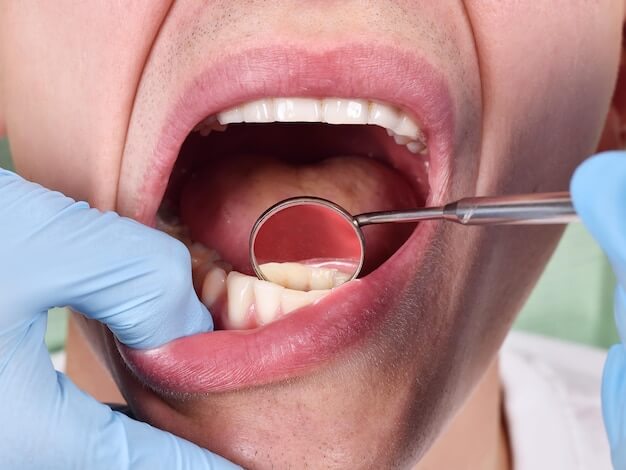
Gingivectomy is a procedure involving the controlled removal of a specific portion of gum tissue and the reshaping of the gingival contour. The purpose is to create healthier, easier-to-clean, and more aesthetically balanced gum levels. In some cases, gum tissue excessively covers the tooth surface; teeth appear short, the smile line becomes uneven, and plaque accumulation increases. Gingivectomy aims to improve both the aesthetic appearance and hygiene access by removing this excess tissue.
This procedure is often planned for aesthetic purposes in cases commonly known as a “gummy smile,” where excessive gum display makes teeth appear shorter and less balanced. Additionally, it can be applied as part of periodontal treatment, especially in cases appropriately selected according to the structure of periodontal pockets, with the goal of reducing pocket depth and facilitating plaque control. However, not every excess gum tissue can be resolved with gingivectomy. The underlying cause may be gingival enlargement (inflammation), drug-induced hyperplasia, tooth eruption position, jaw-lip relationships, or bone levels. Therefore, an accurate diagnosis before the procedure is crucial for aesthetic and functional success.
Measurement and limits are very important in gingivectomy planning. The gum is not merely a visible tissue; the biologic width between the tooth and the gingiva must be preserved. Otherwise, there may be risks of gum recession, the need for crown lengthening, or chronic inflammation. For this reason, the clinician evaluates pocket depths with probing, measures gingival levels, and if necessary, analyzes bone levels with radiographic examination. If soft tissue adjustment alone is insufficient and bone reshaping is required, crown lengthening surgery (osseous surgery) may be planned instead of or alongside gingivectomy. Making this distinction correctly determines long-term stability.
The procedure is mostly performed under local anesthesia. The instrument used may be a scalpel, electrocautery, or laser. The selected method depends on bleeding control, healing comfort, and the clinician’s approach. Following the procedure, the gum tissue enters a healing phase. In the first days, sensitivity, mild soreness, and temperature sensitivity may occur; with proper care and follow-ups, healing progresses predictably. In gingivectomies done for aesthetic purposes, the final shape of the gum line becomes clearer within a few weeks; in some cases, tissue maturation may take longer. Therefore, especially if restorations such as crowns or veneers are planned, the timing of impressions after gingivectomy is scheduled according to biological healing.
What Is Gingivectomy?
Gingivectomy is the process of removing excess gum tissue and reshaping the gingival margin. This procedure can make teeth appear longer and more symmetrical; it can also reduce periodontal pockets, improving cleaning access. If gum tissue is swollen, thick, or excessively covering the tooth surface, the bristles of a toothbrush cannot adequately reach the tooth-gingiva junction, facilitating plaque accumulation. When this area becomes easier to clean through gingivectomy, it contributes positively to gum health.
From an aesthetic perspective, gingivectomy helps create a more balanced smile in individuals with asymmetrical gum levels in the anterior region. Teeth appearing short does not always mean the tooth itself is short; sometimes excess gum tissue makes the tooth appear smaller. In this case, gingivectomy reveals the actual clinical length of the tooth more clearly.
From a periodontal perspective, gingivectomy can be used to reduce periodontal pockets in selected cases. The most important criterion here is that the bone level and pocket structure are suitable for this procedure. In unsuitable cases, simply removing gum tissue does not resolve the underlying problem, so diagnosis and determining the indication are critically important.
How Is Gingivectomy Performed?
Gingivectomy begins with examination and measurement. The dentist evaluates gingival levels, gingival thickness, pocket depths, and the esthetic outlines of the teeth.
Evaluation and Planning
The tissue is assessed. If necessary, radiographic examination is performed to review bone levels. In cases aimed at esthetics, photographic analysis, smile line evaluation, and sometimes mock-up planning are carried out. This allows the exact amount of tissue to be removed to be planned millimetrically.
On the day of the procedure, local anesthesia is administered. Then, depending on the chosen technique (scalpel, electrocautery, or laser), the gingival tissue is carefully shaped. Bleeding control is established, and tissue margins are recontoured smoothly. In some cases, a periodontal dressing may be applied; in others, it may not be necessary. The procedure is usually performed under clinical conditions, and most patients can return to their daily lives the same day.
Managing the healing process is crucial for the success of the procedure. In the first days, sensitivity and mild bleeding of the gums may occur. Following the dentist’s recommended oral care protocol, using antiseptic mouthwash if necessary, and avoiding trauma support healing. During follow-up appointments, tissue healing and the stability of the gingival margin are evaluated. If gingivectomy was performed before an esthetic restoration, the timing of the final impression is determined according to tissue healing.
Who Is Suitable for Gingivectomy?
Gingivectomy can be an appropriate option for individuals experiencing esthetic or hygiene problems due to excessive gingival tissue. Suitable candidates typically include:
- Those with asymmetric gingival levels in the anterior region
- Those whose teeth appear short due to excess gum tissue
- Individuals with gingival hyperplasia causing difficulty in cleaning
- Periodontal patients with gingival pockets suitable for gingivectomy in selected cases
- Those requiring gingival contour adjustment in smile design planning
The most important factor determining suitability is the accurate diagnosis of the underlying cause. If gingival excess is related to bone levels or conditions such as “passive eruption,” soft tissue correction alone may not be sufficient. In some cases, a surgical approach involving bone resection, such as crown lengthening, might be required.
Patients with active periodontal infection, poor oral hygiene, or uncontrolled systemic conditions must first undergo initial periodontal treatment and hygiene control. Gingivectomy planned on a healthy tissue base provides more predictable outcomes. Additionally, smoking habits are considered in risk assessment as they may affect healing.
Precautions Before Gingivectomy
It is important to stabilize gingival health as much as possible before gingivectomy. If there is excessive plaque or calculus accumulation, professional cleaning and hygiene instructions should be done first to reduce inflammation. Shaping on swollen and bleeding gums may cause misleading measurements and less comfortable healing. Therefore, the pre-procedure phase is often a “preparation and stabilization” period.
The patient’s medical history must be thoroughly evaluated. Blood thinners, diabetes, hypertension, immune system disorders, and allergies should be disclosed. Although gingivectomy appears as a minor surgical procedure, systemic factors are important for bleeding control and healing. The dentist may consult with relevant specialists if deemed necessary.
Esthetic expectations should be clear. The patient’s expectations regarding the gingival margin and tooth length must be discussed; if possible, the target line should be shown using photos and measurements. Some patients may want “more tooth to show,” but excessive tissue removal beyond biological width limits can cause long-term problems. Thus, the dentist aims for the most esthetic result within safe boundaries.
Regarding the procedure day, factors such as whether the patient is hungry or full, the type of anesthesia to be used, post-operative diet plan, and social schedules should be reviewed. Usually, patients can resume routine life the same day; however, it is more comfortable not to schedule intense physical activity on the same day.
Precautions After Gingivectomy
In the first days following gingivectomy, gum sensitivity, mild pain, and occasional bleeding may be observed. During this period, it is important to avoid mechanical trauma.
It is important.
Hard-shelled foods, very hot drinks, and spicy-acidic foods can increase sensitivity; warm and soft nutrition is generally more comfortable in the first days. If there is a painkiller protocol recommended by the physician, it should be applied as prescribed.
Oral hygiene should be maintained carefully; however, aggressive brushing in the treatment area should be avoided. Gentle cleaning with a soft-bristled brush, the use of antiseptic mouthwash according to the dentist’s advice, and a care approach that does not irritate the area support healing. Temporary color changes (redness) and sensitivity on the tissue surface during gum healing are considered normal; the progress of healing is evaluated at control appointments.
Smoking can negatively affect healing and increase the risk of bleeding/infection; therefore, avoiding smoking during the post-procedure period improves the quality of recovery. In addition, patients with a teeth grinding (bruxism) habit may experience more pronounced sensitivity in the anterior region; the dentist may plan protective measures if deemed necessary.
If gingivectomy was performed for aesthetic purposes, the “settling” of the gum line may take time. The contour seen in the first days may not be the same as the final result. As tissue maturation progresses, the gum line becomes more stable. Therefore, especially if procedures such as crowns or veneers are planned, the timing of the final impression and bonding is adjusted according to tissue stability.
In Which Cases Is Gingivectomy Applied?
Gingivectomy can be performed for both aesthetic and periodontal reasons. The most common application areas are:
- Cases where excessive gum display in the smile makes the teeth appear short
- Asymmetry between gum levels in the anterior region
- Gingival overgrowth (hyperplasia) due to medication use or inflammation
- Need to reduce pockets appropriately in selected periodontal cases
- Irregularities in gum contour after orthodontic treatment
- Need to adjust the gum line before aesthetic restorations
Not every gum appearance problem can be solved with gingivectomy. If the issue relates to lip movements, jaw relationships, or bone levels, different treatments may be required. Therefore, indications are clarified through examination and measurements.
Why Is Gingivectomy Performed?
Gingivectomy is performed to reduce excess gum tissue, create a symmetrical gum line, make teeth appear more balanced, and facilitate oral hygiene. In cases with excessive gum tissue, plaque retention areas increase, which can raise the risk of gum bleeding and inflammation. Adjusting the gum contour can support gum health by improving cleaning access.
From an aesthetic perspective, gingivectomy is an important step in smile design. When tooth lengths and gum levels are balanced, the smile appears more harmonious. Even millimetric differences in the anterior area can affect aesthetic perception. Therefore, when planned correctly, gingivectomy can provide rapid and effective aesthetic improvement.
Functionally, it may also contribute. Irregular gum contours can affect speech and lip-tooth relationships in some patients; although not always pronounced, this can be considered within the aesthetic-functional balance. The main goal is to establish a healthy and stable gum line in the long term.
How Long Does Gingivectomy Take?
The duration of gingivectomy depends on the number of teeth to be treated, the thickness of the gum tissue, the technique used (scalpel, electrocautery, laser), and whether additional procedures are performed in the same session. If only the gum line of a few teeth is corrected, the duration may be shorter; if symmetry and contour planning are performed in a wider area, the duration may increase.
The total appointment time is not only the procedure itself. Preparation, measurements, anesthesia application, the procedure, and sharing post-procedure care instructions are included in the duration. Control appointments are planned after the procedure; tissue healing and contour stability are monitored. If an aesthetic restoration plan exists, the final impression may need to be taken after gum maturation is complete. Therefore, the “settling of the final aesthetic result” can take time.
Gingivectomy Prices
Gingivectomy prices vary depending on the extent of the treated area, the number of teeth involved, the technique used (laser/surgical method), and whether additional periodontal procedures (such as cleaning, root planing, crown lengthening) are required during the same session. They also depend on examination and imaging needs as well as follow-up appointments. In cases where gingivectomies are planned as part of an aesthetic smile design, case analysis and digital planning steps may also influence the overall plan.
For up-to-date and personalized information regarding gingivectomy prices, you should contact us directly. Once the treatment area and technique to be applied are clarified after the examination, the treatment plan and associated cost information will be shared transparently.