
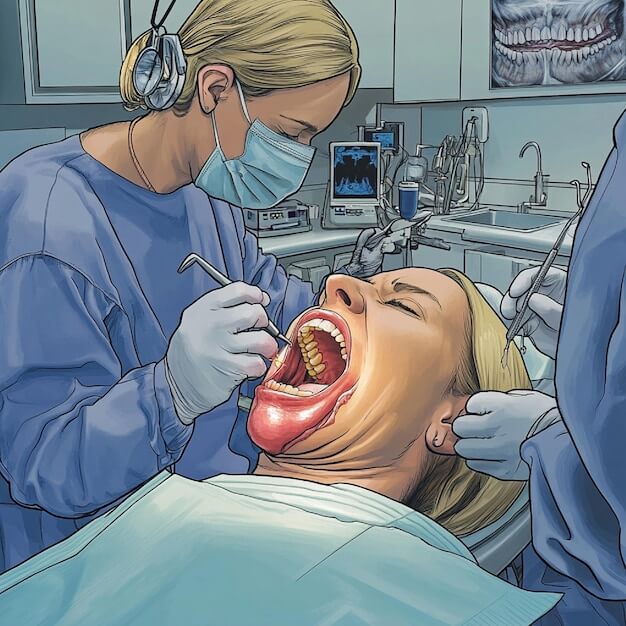
Emergency dental treatment is a rapid intervention approach aimed at safely stabilizing the patient and controlling pain in oral and dental problems that start suddenly, significantly disrupt daily life, or carry a high risk of rapid worsening due to infection, bleeding, or trauma. The goal here is often not to “complete everything in a single appointment,” but primarily to manage pain and infection, protect the tooth and surrounding tissues, halt the risky condition, and then plan permanent treatment. Therefore, the emergency approach should be considered as a “triage and stabilization” process.
The majority of emergency cases include severe tooth pain, abscess and swelling, pulpitis requiring root canal treatment, fractured tooth/filling, sudden pain during chewing (suspected cracked tooth), persistent bleeding after tooth extraction, tooth displacement/loosening after trauma, and irritation caused by orthodontic appliances. Some conditions and signs are considered more critical: rapid facial swelling, difficulty swallowing, significant limitation in mouth opening, fever, general weakness, and other systemic symptoms suggest the risk of infection spreading and make emergency planning more urgent.
In emergency dental treatment, the dentist first clarifies the diagnosis. The source of pain is not always “the aching tooth”; conditions such as sinusitis-related referred pain, temporomandibular joint/masticatory muscle pain, periodontal abscess, or cracked tooth may cause similar complaints. Therefore, a brief but targeted examination is performed, and diagnosis is made with necessary radiographs and clinical tests. Then, the most accurate and safest intervention is chosen: pain control, drainage, temporary filling, intracanal medication, temporary repair of broken restoration, trauma stabilization, or extraction if necessary.
The emergency approach is also an information process for the patient. The patient needs to know the “now” and “later” steps: the procedure done today mainly reduces symptoms; however, additional sessions may be required to permanently resolve the underlying cause. For example, in pulp-related pain, a root canal initiation may be performed today to reduce pain, but completion of the root canal treatment and placement of the final restoration are planned for subsequent appointments. If there is an abscess, drainage can be provided, but permanent treatment of the infection source (root canal treatment or extraction) should not be postponed.
What is Emergency Dental Treatment?
Emergency dental treatment is an urgent intervention process aimed at relieving pain, reducing the risk of infection spread, controlling bleeding, and stabilizing trauma-related damage in suddenly occurring or rapidly worsening oral and dental problems. The most important aspect of this approach is “prioritization.” That is, the dentist first addresses conditions that may pose a life-threatening risk or rapidly develop complications: extensive swelling, difficulty swallowing, persistent bleeding, severe trauma, and similar issues.
Emergency dental treatment is not a one-step process like prescribing antibiotics and sending the patient home. The source of infection is often the canal system inside the tooth or the periodontal tissues. Antibiotics can support treatment when correctly indicated but do not eliminate the source. Therefore, emergency treatment involves source-targeted interventions whenever possible: abscess drainage, root canal initiation, cleaning of infected tissue, sealing leakage of broken restoration, etc.
At the end of the emergency approach, the patient is always given a permanent treatment plan and a follow-up appointment. Although the emergency procedure alleviates symptoms, the problem is not considered “completed.” For example, a tooth with a temporary filling may experience pain or infection again within a few days if permanent filling or root canal treatment is not completed. Consequently, emergency dental treatment is often the first step of a planned treatment.
How is Emergency Dental Treatment Applied?
Emergency dental treatment begins with a rapid but controlled evaluation. First, the patient’s complaint and history are taken: when the pain started, whether it worsens with hot or cold stimuli, if it wakes the patient at night, if it occurs when biting, the presence of swelling, fever, or previous similar attacks. Then a clinical examination is performed; assessing the condition of the tooth decay/filling, swelling or fistula in the gums, bite sensitivity, and other findings. Appropriate radiographs and clinical tests are used when necessary to finalize the diagnosis and establish a safe and effective emergency treatment plan.
Evaluation and Intervention
The mobility of the tooth, its looseness, and surrounding tissues are examined. If necessary, periapical or panoramic radiographs are taken. In some cases, quick tests such as cold testing, percussion, and palpation are performed to clarify the source of the pain.
The intervention varies according to the diagnosis. In severe pain originating from the pulp (irreversible pulpitis), after local anesthesia, the tooth is accessed to reach the canal system; pressure and inflammation are reduced to control the pain. If there is infection and an abscess, drainage may be required; drainage can be performed through the canal or via the gum tissue. The cavity opened due to decay can be temporarily filled. If there is a broken filling or fractured tooth, sharp edges are smoothed and the tooth is protected with a temporary restoration. If the tooth has been displaced following trauma, repositioning and splinting (fixation to adjacent teeth) can be done at the appropriate time; the splint duration varies from days to weeks depending on the trauma type, and follow-up appointments are scheduled.
In emergency situations, pain management is supported with a safe medication plan. The dentist plans analgesic or anti-inflammatory treatments according to the patient’s medical history. Antibiotics are not necessary for every toothache; they are prescribed if there is fever, widespread swelling, tenderness of lymph nodes, or signs of spread, based on the dentist’s indication. At the final stage, the patient is given a clear follow-up plan: the procedure performed today, what will be completed at the next appointment, and which symptoms require a prompt return.
Who Is Suitable for Emergency Dental Treatment?
Emergency dental treatment is suitable for anyone experiencing sudden tooth pain affecting daily life, signs of infection, trauma, or bleeding. The following complaints especially require urgent evaluation: severe tooth pain waking the patient at night, swelling of the face or gums, bad taste and discharge in the mouth, sharp pain when biting, a broken tooth cutting the tongue or cheek tissue, bleeding after extraction that does not stop, looseness or displacement of a tooth after trauma.
Emergency treatment is even more priority for certain patients. Those with uncontrolled diabetes, immunosuppressed individuals, patients with special conditions such as heart valve disease, and those showing signs of widespread infection require more careful infection control and follow-up planning. Severe pain and infection in pregnancy should not be delayed either; emergency interventions can be planned with a safe approach according to the trimester. In these groups, sharing the complete medical history is essential.
Suitability assessment is performed even in emergencies: the source of pain and prognosis of the tooth are determined. For example, in a tooth with a vertical root fracture, temporary treatments may be limited and extraction may be considered. Prognosis is also evaluated in teeth with advanced periodontal loss and marked mobility. The goal is to refer the patient to the safest and most realistic treatment plan.
What to Pay Attention to Before Emergency Dental Treatment
The most important issue before an emergency appointment is to describe symptoms clearly and share medical information accurately. Noting the pain character (throbbing or stabbing), triggers (hot, cold, biting), duration (instant or several minutes), whether it wakes the patient at night, and presence of swelling or fever accelerates diagnosis. If painkillers have been used, it is important for the dentist to know which medication and dose were taken.
Regular medications (including blood thinners), allergies, pregnancy status, and chronic diseases such as diabetes or hypertension must be reported. Especially bleeding disorders or blood thinner use affect planning for extractions and surgical procedures. If there is acute swelling and fever with signs of spread, seeking care without delay is necessary; rapidly increasing facial swelling, difficulty swallowing, or breathing problems are considered more urgent.
Starting antibiotics arbitrarily in emergency cases is not correct. The dentist must decide if antibiotics are needed, since many toothaches can be managed without antibiotics by targeting the source. Applying heat at home can increase swelling in some infections and should not be done without a dentist’s recommendation. If there is swelling, cold application may be soothing in some cases; however, the most accurate guidance should always be provided by the dentist.
Post-Examination Instructions
When coming to your appointment, if possible, sharing any previously taken X-rays or information regarding past dental treatments can expedite the diagnostic process. Additionally, since anesthesia effects may persist after emergency procedures, especially if a lengthy treatment is expected, having an accompanying person for comfort might be beneficial for some patients.
What to Pay Attention to After Emergency Dental Treatment
Post-emergency care varies depending on the procedure performed; however, the common goal is to prevent the recurrence of symptoms and to prepare for permanent treatment. If root canal access or a temporary filling has been done, avoid biting hard foods with that tooth and ensure the temporary filling does not dislodge. If the temporary filling falls out, the canal system may become contaminated, causing pain or swelling to recur; in such cases, schedule a check-up without delay. If there is a feeling of filling height or increased pain when biting, a brief adjustment can provide relief.
If an abscess drainage was performed, slight discharge and sensitivity during the first few days is normal. Swelling should tend to decrease within 48–72 hours. If the swelling progressively increases, fever develops, or there is significant restriction in mouth opening, re-evaluation is necessary. If the dentist prescribed medication, it is important to follow the usage instructions; if antibiotics were given, they should not be discontinued early without the dentist’s advice. Painkillers should also be used regularly within safe dosage intervals.
If an extraction was done, protecting the blood clot is critical: in the first 24 hours, spitting, using straws, or vigorous rinsing can dislodge the clot, increasing the risk of “dry socket” pain. Smoking negatively affects healing and should be avoided, especially during the initial days. If splinting was performed after trauma, maintaining the cleanliness of the splint area and attending follow-up appointments is essential; the splint duration is determined by the dentist according to the trauma type.
The most important step after emergency treatment is to complete permanent treatment. Even if the pain decreases today, if the underlying problem persists, the risk of recurrence is high. Therefore, punctual attendance to scheduled control and treatment appointments determines the success of the process.
In Which Cases is Emergency Dental Treatment Applied?
Emergency dental treatment is applied in situations requiring rapid intervention such as severe pain, infection, trauma, and uncontrolled bleeding. The most common scenarios include:
- Severe toothache: pain that wakes you at night, worsens with heat, or throbbing pain (suspicion of pulpitis)
- Gum or facial swelling: suspicion of abscess or spreading infection
- Broken tooth/filling: sharp edges causing soft tissue trauma, leakage, and pain
- Suspected cracked tooth: sharp, brief pain on biting, sensitivity at a specific point
- Trauma: tooth displacement, looseness, avulsion (tooth knocked out)
- Post-extraction bleeding: prolonged bleeding that does not stop despite pressure
- Orthodontic emergencies: injuries caused by wires poking or broken brackets
Some signs are considered more urgent: widespread facial swelling, difficulty swallowing, fever, general deterioration of condition, and marked limitation in mouth opening. These cases may require faster evaluation and, if necessary, a multidisciplinary approach.
Why is Emergency Dental Treatment Performed?
Emergency dental treatment is performed to quickly control pain, prevent the spread of infection, protect teeth and surrounding tissues after trauma, and reduce the risk of complications. Severe toothache is often related to pulp pressure and inflammation; when the underlying cause is untreated, analgesics alone may not suffice. In infections such as abscesses, the goal is to drain pus and control the infection focus; this reduces pain and lowers the risk of spread.
In trauma cases, timing is very important. Early intervention in displaced or avulsed teeth can increase their chances of remaining in the mouth long-term. In cases of persistent bleeding after extraction, the primary aim is to stabilize the clot and control bleeding. In fractured teeth, preventing soft tissue trauma and further tooth fracture is the objective.
Emergency treatment stabilizes the patient and prepares for permanent care.
How Long Does Emergency Dental Treatment Take?
The duration varies depending on the type of emergency and the scope of the procedure to be performed. Some problems can be managed with short interventions: smoothing a sharp fracture edge, placing a small temporary filling, or adjusting an orthodontic wire irritation. For infections and root canal-related pain, procedures such as anesthesia and root canal treatment may take longer. In trauma cases, the appointment time may be extended due to evaluation, X-rays, and splinting if necessary.
The overall concept of “duration” in emergency treatment includes not only the procedure performed on the day but also follow-up appointments. For example, if a temporary filling is placed today, permanent treatment should be completed within a few days to weeks. If an abscess drainage is performed, clinical response should be evaluated within 2–3 days. After splinting for trauma, follow-up appointments and the duration of splint retention are planned according to the type of injury.
After the examination, the dentist will clearly inform you about both the procedure duration on that day and the timing of the follow-up plan.
Emergency Dental Treatment Prices
Emergency dental treatment prices vary depending on the type of problem (pain, infection, trauma, bleeding), the scope of the procedure to be performed (examination, X-rays, temporary filling, root canal entry, drainage, extraction, splinting, etc.), the materials used, the number of sessions, and necessary follow-up appointments. In some emergency situations, a single intervention is sufficient, while in others, additional sessions for permanent treatment are required; this also affects the overall plan.
To receive up-to-date and personalized information about emergency dental treatment prices, you should contact us. After your examination, once the scope of emergency intervention and follow-up plan are clarified, cost information will be shared transparently.