
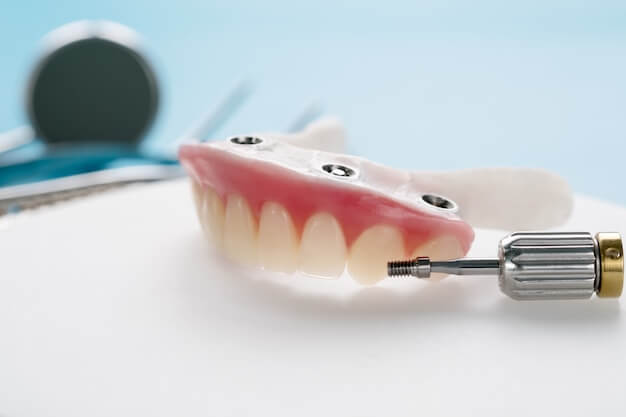
Implant-supported bridge treatment is a restorative treatment in which the replacement of multiple missing teeth is completed not with individual crowns, but with a fixed bridge supported by implants. In classic bridges, the healthy teeth on both sides of the gap are reduced in size and used as “abutments” to close the space. In an implant-supported bridge, however, the supporting structure is not natural teeth but implants placed in the jawbone. In this way, it is often not necessary to cut down adjacent healthy teeth, which makes it a more biologically conservative approach.
This treatment can provide significant advantages especially in posterior regions, where chewing forces are high, both in terms of function and comfort. When planned correctly, a fixed bridge increases chewing efficiency, makes speaking easier, and eliminates the feeling of a “moving prosthesis.” In addition, in long edentulous spaces, placing individual implants may sometimes be unnecessary; in suitable cases, bridge plans can be made in which a certain number of implants support a greater number of teeth.
The critical point here is that the number of implants and the bridge design must be planned biomechanically correctly: force distribution, bridge span length, material selection, and bite adjustment are all considered as one system. Implant-supported bridges can be designed in different ways. In some plans, one implant is not needed for every missing tooth; for example, in a 3-tooth gap, a 3-unit bridge may be made on 2 implants. However, this is not a scheme that can be applied automatically to every patient.
Parameters such as bone quality, the ideal positions where implants can be placed, the condition of the opposing teeth, the patient’s clenching habit, and the length of the bridge span change the supporting strategy of the bridge. Especially in long spans, the correct number and positioning of implants are decisive for longevity. The treatment consists of two main phases: the surgical phase (placement of the implants and healing) and the prosthetic phase (fabrication and delivery of the bridge). Regular check-ups, soft tissue health, and hygiene education should not be neglected throughout the process.
Because implant-supported bridges are fixed, the patient must clean under the bridge and around the implants more consciously. A routine is established using special flosses, interdental brushes, and in most patients an oral irrigator. In short, implant-supported bridge treatment aims to achieve a fixed dental arch without cutting neighboring teeth, and when properly planned it can be a very comfortable and long-lasting treatment.
What Is Implant-Supported Bridge Treatment?
Implant-supported bridge treatment is the completion of one or more missing teeth with a fixed bridge carried by implants. The term “bridge” refers to a fixed restoration that spans the missing tooth space and is supported by two or more abutments. In a traditional bridge, these abutments are natural teeth; in an implant-supported bridge, the abutments are implants integrated into the jawbone. As a result, there is usually no need to reduce adjacent teeth to replace the missing teeth.
The basic logic of this treatment is this: the implants carry the bridge thanks to their stability in the jawbone, and the bridge completes the missing tooth space both esthetically and functionally. In bridge design, there is a section called the “pontic,” which represents the visible part of the missing tooth. The length of this pontic, together with the number and position of the implants, is calculated biomechanically. The goal is to distribute chewing forces evenly to the implants, prevent loosening of screws/abutments, and reduce the risk of superstructure fracture.
Implant-supported bridges can also be planned with two different connection concepts: screw-retained (removable) or cement-retained (generally less removable). Which design is chosen depends on factors such as implant angulation, esthetic requirements, ease of cleaning, and clinical preference. From a clinical perspective, screw-retained systems may provide practical advantages because they can be removed for regular checks and maintenance; however, in every case, the screw access channel may not be esthetically ideal. For this reason, the choice is not “one correct answer,” but a case-based optimization.
This treatment aims to provide the patient with the comfort of fixed teeth. When planned correctly, the patient feels confidence while chewing; speech and smile esthetics improve. That said, implant-supported bridges require a different cleaning routine. The underside of the bridge and the area around the implants can be prone to plaque accumulation. Therefore, an inseparable part of treatment is teaching the patient how to clean under the bridge and ensuring regular follow-up visits.
How Is Implant-Supported Bridge Treatment Performed?
Implant-supported bridge treatment is a multi-stage process that begins with planning and is completed with surgical and prosthetic phases. During the initial examination, the number of missing teeth, the length of the span, the condition of the opposing teeth, the bite relationship, gingival health, and the patient’s expectations are evaluated. In radiological examination, a panoramic X-ray is often not sufficient as a starting point; in implant planning, CBCT is frequently used to measure bone width/height and anatomical limits (such as the sinus and nerve canal).
Using these images, the number and position of the implants are planned; at the same time, the number of bridge units and force distribution are calculated. During the surgical phase, the implants are placed under local anesthesia. After the implants are placed, the healing phase begins. During healing, the integration of the implants with the bone (osseointegration) is followed.
During this period, temporary solutions may be planned for some patients; for example, in the esthetic zone, a temporary tooth or temporary bridge design may be considered. However, how the temporary restoration is designed and whether it will load the implants is determined according to the case plan. The aim is to protect the healing period from mechanical risks. Once the implants achieve sufficient stability, the prosthetic phase begins. Implant abutments (such as abutments/multi-unit components) are selected, impressions are taken, and the laboratory stage starts.
During the bridge try-in appointments, the tooth shape, color, gingival fit, speech (phonetics), and bite contacts are evaluated. Bite adjustment is especially critical in implant-supported restorations; because implants do not flex like natural teeth, and improper bite contacts can lead to problems such as screw loosening, porcelain fracture, or increased stress around the implant. At bridge delivery, the patient receives maintenance education: special flosses, interdental brushes, and in most patients an oral irrigator are recommended for cleaning under the bridge. A regular follow-up plan is also established.
At these check-ups, the bridge screws, bite balance, and soft tissue health are evaluated; professional cleaning is performed when necessary. Implant-supported bridge treatment is a system that can be used comfortably for many years with correct planning and disciplined maintenance.
Who Is Suitable for Implant-Supported Bridge Treatment?
Suitability for an implant-supported bridge is not determined only by the question “how many teeth are missing?”; bone condition, gingival health, bite forces, and the patient’s maintenance capacity are all evaluated together. The most basic criterion is sufficient bone volume and quality in the area where the implants will be placed. Bone width and height are measured with CBCT; anatomical limits such as the sinus space (in the upper jaw) or the nerve canal (in the lower jaw) are taken into account.
If bone is insufficient, the plan may be redesigned with bone-supportive procedures or alternative restorative options. Gingival health is also an important criterion. It is not correct to plan implants without controlling active gum disease (periodontitis). Because the presence of uncontrolled inflammation in the mouth can negatively affect the long-term health of tissues around the implants. Therefore, the suitable patient is one who is willing to undergo periodontal treatment, can establish a hygiene routine, and does not miss follow-up appointments.
Systemic health factors are also evaluated. Diabetes and hypertension that are under control can often be managed; however, uncontrolled diabetes, immunosuppressive therapies, or certain medications affecting bone metabolism may increase healing risk. Smoking is also an important risk factor that can negatively affect both wound healing and peri-implant tissue health. For this reason, in smokers the risks are discussed clearly and the goal of reduction/cessation is set when possible.
Bite and force management are decisive in implant-supported bridges. If there is clenching or grinding (bruxism), the forces on the bridge increase; this raises the risk of screw loosening or porcelain fracture. In such patients, appropriate material selection, correct bite adjustment, and often a night guard plan become important. In addition, in very long edentulous spans, if the number and position of implants are not planned correctly, a “lever effect” may occur in the bridge; therefore, the same number of implants cannot be used for every bridge.
In conclusion, the suitable person for an implant-supported bridge is a patient whose bone and gingival conditions are adequate, who can tolerate surgery systemically, and who can maintain maintenance discipline. The most accurate decision is made after examination and imaging with a personalized plan.
What Should Be Considered Before Implant-Supported Bridge Treatment?
The first thing to consider before implant-supported bridge treatment is correct planning and correct indication. How many implants are needed, how many units should the bridge have, and where should the implants be placed? The answers to these questions depend on the length of the gap, the condition of the opposing jaw, the bone volume, and the patient’s chewing forces. For this reason, in most cases 3D measurement with CBCT reduces anatomical risks and helps place the implants in ideal positions.
Intraoral preparation must include infection control. Caries, broken fillings, tartar accumulation, and gingival inflammation should be treated before implants are placed. If active periodontitis is present, stabilization with periodontal treatment should be done first. Because placing implants does not mean ignoring inflammation in the mouth; on the contrary, the health of the tissues around the implants is directly related to the quality of oral hygiene. In addition, bone healing in old extraction sites and the quality of the soft tissue are also evaluated.
Medical preparation should not be neglected. The patient’s medications (especially blood thinners), allergies, chronic diseases, and previous surgical experiences should be shared in detail. If necessary, consultations with relevant physicians are arranged. If the patient smokes, the goal of reducing or pausing smoking should be discussed. Smoking may negatively affect especially soft tissue healing and peri-implant tissue health.
From the patient’s side, it is important to understand that treatment is not a “single-visit” procedure. There are stages such as implant healing, impression/try-in appointments, and bridge delivery. Temporary solutions may be planned during this period; however, the temporary restoration may need to be designed so that it does not load the implants. In addition, the patient should be ready to use the tools required for cleaning under the bridge (such as superfloss, interdental brushes, and an oral irrigator). When these habits are discussed before surgery, adaptation after treatment becomes easier.
What Should Be Considered After Implant-Supported Bridge Treatment?
After implant-supported bridge treatment, the things to consider should be thought of in two phases: early healing after surgery and long-term use after bridge delivery. If new implants were placed, swelling and tenderness may be seen in the first days; the medications and care instructions given by the dentist should be followed regularly. If there are signs such as increasing pain, bad odor, discharge, fever, or uncontrolled bleeding within the first 24–72 hours, the clinic should be contacted. The goal is to catch possible complications early.
After bridge delivery, the most critical issue is cleaning. The implant-supported bridge is fixed, meaning the patient cannot remove it to clean underneath. Therefore, the underside of the bridge pontic and the area around the implants can become prone to plaque accumulation. A daily routine should be established using special bridge flosses (superfloss), interdental brushes, and in most patients an oral irrigator. The aim of cleaning is to remove food debris under the bridge and prevent bleeding/swelling around the implants.
If bleeding increases during brushing, odor develops, or food constantly gets trapped under the bridge, a follow-up visit is needed; sometimes the contours under the bridge must be adjusted to make cleaning easier. Eating habits are also important. Even though the bridge is fixed, biting hard foods with a single point of force can increase the risk of cracks or fractures, especially on porcelain surfaces. In patients with clenching or grinding habits, the use of a night guard is strongly recommended; because bruxism increases the risk of screw loosening and superstructure fracture in implant-supported restorations.
It should not be forgotten that the bite can change over time; therefore, bite adjustment should be re-evaluated during regular check-ups. Follow-up and professional maintenance are the insurance of long-term success. In clinical check-ups, bridge screws, connections, soft tissue health, and radiographic evaluation when needed are performed. Regular professional cleaning sessions help keep peri-implant tissues healthy. Implant-supported bridge treatment is a restoration that can be used stably for years with proper cleaning, proper use, and regular follow-up.
In Which Situations Is Implant-Supported Bridge Treatment Applied?
Implant-supported bridge treatment can be applied in many clinical situations where there are multiple missing teeth and the patient wants a fixed solution. Especially in cases where 2–3 teeth are missing in the posterior region, planning a bridge with an appropriate number of implants instead of placing a separate implant for each missing tooth may provide both biomechanical and practical advantages. For example, in a 3-tooth gap, a 3-unit bridge supported by 2 implants may be suitable for some patients. However, this decision is made considering bone conditions, the opposing teeth, and chewing forces.
This treatment is also frequently preferred when neighboring teeth need to be preserved. In a classic tooth-supported bridge, the teeth on either side of the gap must be reduced in size. If these teeth are healthy, cutting them down just to use them as bridge abutments may be biologically undesirable. An implant-supported bridge makes it possible to create a fixed restoration without touching the neighboring teeth.
In long edentulous spans, it is also an important option for patients who do not want removable dentures. For some patients, removable dentures create gag reflex, speech difficulty, or retention problems. A fixed bridge supported by implants can reduce these complaints and improve the patient’s quality of life. In addition, in some patients, implant-supported solutions may be planned to improve the retention of an existing removable prosthesis, or a transition to a fixed bridge may be the goal.
That said, the “let’s make a bridge” approach is not correct for every long span. If too few implants are planned in a very long gap, there is a risk of excessive flexing in the bridge and excessive loading on the implants. Therefore, whether a bridge, individual restorations, or another plan should be selected is determined by biomechanical calculation. Factors such as clenching habits, bone quality, and hygiene capacity also affect the indication. In conclusion, implant-supported bridges are applied as a fixed, comfortable solution that protects neighboring teeth in suitable cases.
Why Is Implant-Supported Bridge Treatment Performed?
Implant-supported bridge treatment is performed to provide the patient with a fixed and functional chewing system in cases of multiple missing teeth. Missing teeth are not only an esthetic problem; chewing efficiency decreases, in some patients speech is affected, and over time neighboring teeth may drift into the empty space. The opposing teeth may also erupt into the space. These movements can disturb the bite and create a basis for joint and muscle complaints. The implant-supported bridge aims to reduce this chain reaction by completing the missing tooth space in a fixed way.
An important reason for doing this treatment is to preserve the adjacent healthy teeth. In a traditional bridge, the two neighboring teeth are reduced in size; this may sometimes increase the risk of root canal treatment or affect the long-term durability of the teeth. In an implant-supported bridge, because the support is provided by implants, restorations can often be made without touching the neighboring teeth. This is a biologically valuable advantage, especially in younger patients or individuals with healthy adjacent teeth.
Another reason is fixed prosthetic comfort. Some patients who use removable dentures experience “movement,” “sore spots,” “the feeling that it will come out while eating,” or “lack of confidence while speaking.” An implant-supported fixed bridge can significantly reduce these complaints. The patient’s social life, freedom to eat, and overall quality of life may improve. In addition, when planned correctly, chewing forces are distributed more evenly; this may reduce unilateral chewing habits.
A practical reason for choosing an implant-supported bridge is that in some cases implant number can be optimized. It is not always necessary or possible to place one implant for each missing tooth. Bone volume may be limited, anatomical boundaries may restrict implant placement, or a more balanced plan may be desired for the patient. A bridge planned with the correct biomechanical rules can carry more teeth with fewer implants. However, this does not mean that “fewer implants are always better”; if the indication and design are not correct, the risk increases.
In conclusion, an implant-supported bridge is a treatment that protects neighboring teeth, provides fixed comfort, and restores chewing function. Success becomes sustainable through correct planning, proper bite adjustment, regular hygiene, and follow-up.
How Long Does Implant-Supported Bridge Treatment Take?
The total duration of implant-supported bridge treatment is formed by the combination of the surgical phase, the healing period of the implants with the bone, and the prosthetic fabrication and delivery appointments. The main factors determining duration are the area where the implants will be placed (upper jaw/lower jaw), bone quality, extraction requirements, additional surgical needs (such as bone-supportive procedures), the patient’s systemic condition, and how many implants/how many bridge units the treatment includes. Therefore, the exact duration is determined individually after examination and imaging.
The first stage is planning and preparation. Examination, CBCT, intraoral impressions, and bite analysis are performed. During the surgical appointment, the implants are placed. Afterwards, the osseointegration process is monitored. During this period, temporary restorations may be planned in some cases; however, whether the temporary restoration applies controlled load to the implants is determined on a case-by-case basis. The aim is to manage the patient’s esthetic and functional needs without risking implant healing.
Once the implants have achieved sufficient stability, the prosthetic phase begins. Impressions are taken, laboratory production begins, and trial appointments are held. The shape of the bridge, gingival fit, phonetics, and bite contacts are checked. Because bite adjustment is critical for the long-term success of implant-supported bridges, additional adjustment appointments may sometimes be necessary. After bridge delivery, the follow-up program continues; in the first months, soft tissue adaptation, hygiene performance, and bite balance may be monitored more closely.
A practical factor affecting duration is the patient’s appointment compliance and maintenance discipline. Missing check-ups, loading the bridge too much with hard foods during the temporary period, or failing to establish the cleaning routine may prolong the process or create a need for additional intervention. For this reason, the most accurate answer to the question “How long will it take?” is the personalized schedule created after examination according to your clinical plan.
Implant-Supported Bridge Treatment Prices
The prices of implant-supported bridge treatment vary depending on the number of implants to be placed, how many units the bridge will have, the material of the superstructure used (for example different ceramic options), implant abutment components (such as abutments/multi-units), imaging requirements (in most cases CBCT), laboratory processes, and any additional surgical procedures (such as extraction, bone-supportive procedures, soft tissue corrections). Since the term “bridge” can mean a completely different clinical plan in two different patients, it is not healthy to give a definite price without examination.
The connection type in the bridge design (screw-retained/cement-retained) can also affect the cost. In addition, for long spans, it may be necessary to increase the number of implants, which changes the cost items. In some patients, the need for a temporary restoration, more trial appointments, and a more extensive laboratory phase may expand the plan. Therefore, to determine the price correctly, the patient’s oral conditions, bone status, and target bridge design must first be clarified.
To get up-to-date and personalized information about implant-supported bridge treatment prices, you should contact us. After the examination and the necessary imaging, we create the plan suitable for you and clearly explain step by step which procedures are needed and how the cost is formed.