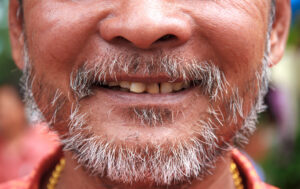

Chris Rock’s teeth have drawn public attention for years because his smile has appeared different across older stand-up specials, red-carpet photos, film appearances, and more recent interviews. People often notice changes in tooth color, edge shape, spacing, gum display, and overall alignment, then wonder whether those differences came from natural aging, lighting, grooming, orthodontics, whitening, veneers, bonding, or other cosmetic dental work. Public interest is high because celebrities are photographed under very different conditions, and even small dental changes become obvious in close-up images.
From an objective dental perspective, a smile can look different over time for many reasons that do not always involve major treatment. Camera resolution has changed sharply since the 1990s, studio lighting is brighter, HD and 4K formats reveal more detail, and routine maintenance such as professional cleanings or whitening can make a smile appear noticeably refreshed. Minor cosmetic procedures can also produce visible results without dramatically changing a person’s facial identity. These may include enamel contouring, composite bonding, porcelain veneers, teeth whitening, or orthodontic refinement.
There is no confirmed public record that clearly documents every dental procedure Chris Rock may or may not have had. That means any discussion should stay in the realm of visual observation rather than claim certainty. What viewers tend to notice most is that his smile in recent years can appear cleaner, brighter, and more even than in earlier footage. In celebrity dentistry, this kind of change often points to conservative aesthetic work rather than extensive reconstruction. Whitening may cost roughly $300 to $1,200 in the United States, bonding often ranges from $300 to $800 per tooth, and porcelain veneers commonly range from $900 to $2,500 per tooth, depending on city, dentist experience, and lab quality.
This article looks at the most searched questions around Chris Rock’s teeth in a factual way, focusing on what may explain the visible differences without overstating what cannot be verified.
What Happened to Chris Rock’s Teeth?
When people ask what happened to Chris Rock’s teeth, they are usually reacting to the way his smile appears in different eras of his public life. In older photos and stand-up footage, his teeth could look less bright, a bit less uniform in shape, and more natural in the sense that small imperfections were easier to see. In more recent images, his smile may appear whiter, smoother along the edges, and more balanced from side to side. That kind of visual change often prompts speculation about cosmetic dentistry, though there are several possible explanations.
One factor is image quality. Footage from the early 1990s or early 2000s was often shot with lower resolution cameras, softer studio setups, and less detailed color correction. Modern high-definition broadcasts capture enamel texture, tooth contours, and gum lines far more clearly. That can make the same smile look dramatically different even without treatment. Makeup, facial hair, lip posture, camera angle, and whether someone is smiling fully or speaking also change the way teeth are perceived.
Natural wear is another realistic explanation. Teeth do not stay visually identical throughout adulthood. Enamel picks up stain from coffee, tea, wine, smoking, or simply age. Biting edges can flatten slightly over decades. Small chips may develop and later be polished or repaired. If a person receives regular cleanings every 6 months and occasional whitening every 1 to 3 years, the smile may look noticeably improved without changing its basic structure.
If treatment did take place, conservative procedures would be enough to explain much of what people notice. Professional whitening can lift several shades in a single visit lasting about 60 to 90 minutes. Composite bonding can correct minor chips, smooth edges, and close tiny spaces in one appointment of roughly 30 to 90 minutes per tooth. Porcelain veneers, which usually require 2 to 3 visits over 1 to 3 weeks, can make teeth look more symmetrical and camera-ready while preserving a natural style if designed carefully.
There is no definitive public confirmation describing a specific event or dental issue involving Chris Rock’s teeth. The most evidence-based answer is that his smile appears to have changed gradually over time, likely due to a mix of age, presentation, photography, and possibly routine or cosmetic dental enhancement.
Did Chris Rock Get His Teeth Fixed?
The phrase “get his teeth fixed” can mean many different things. Some people use it to describe major restorative treatment such as crowns, implants, or full mouth reconstruction. Others mean cosmetic improvements like whitening, minor alignment correction, contouring, or veneers. In Chris Rock’s case, there is no widely confirmed statement or clinical record showing exactly what was done, so the most responsible answer is that he may have had some level of aesthetic dental refinement, but it cannot be stated as fact without direct confirmation.
What often leads viewers to think a celebrity has had dental work is consistency. In recent public appearances, a smile may look brighter and more even across multiple events rather than just one well-lit photograph. When that happens, cosmetic maintenance becomes a reasonable possibility. Teeth whitening alone can create a strong visual upgrade. In-office whitening systems commonly take 45 to 90 minutes and can improve shade by around 2 to 8 levels, depending on starting color and enamel response.
Small repairs also produce a polished look without changing a person’s recognizable features. Composite bonding is common for public-facing professionals because it is relatively fast and conservative. A dentist can reshape an edge, repair a chip, or improve symmetry in a single session. Costs often fall between $300 and $800 per tooth, though high-demand metro areas may charge more. Bonding usually lasts 3 to 10 years before maintenance or replacement is needed.
If his teeth were “fixed” in a broader cosmetic sense, veneers are often what the public imagines. Veneers can improve color, shape, proportion, and minor spacing issues with high predictability. A full visible smile zone may involve 6 to 10 upper veneers, and sometimes matching lower work. Treatment commonly spans 2 or 3 appointments and total fees may range from about $6,000 to $25,000 or more, depending on the number of teeth and the dentist’s level of customization.
There is also a simpler possibility: better dental hygiene, regular polishing, and careful grooming for television work. Public figures often maintain their smile more actively because close-up cameras amplify every detail. From an objective standpoint, Chris Rock’s smile looks more refined in some modern appearances, though there is no public proof that a major “fix” took place.
Chris Rock Before and After Teeth
A before-and-after discussion about Chris Rock’s teeth is based mostly on comparing older media appearances with newer photographs and video clips. Viewers who make these comparisons often point to three visible areas: color, edge smoothness, and overall smile uniformity. In earlier footage, his teeth may appear more naturally varied in shade and contour, while in newer images they may look more polished and brighter. That kind of change is enough to fuel speculation, even when the actual dental work, if any, is minor.
Color is usually the easiest difference for the public to notice. Teeth naturally darken over time as enamel thins and stain accumulates. A professional whitening treatment can reverse much of that appearance quickly. In-office whitening can take about 1 hour, while custom take-home trays may be used for 10 to 14 days. The result is often a cleaner, more camera-friendly smile that reads as “after” even if nothing else changed.
Shape and edge definition also matter. Younger smiles often show subtle irregularities, tiny chips, or uneven biting edges that become part of a celebrity’s familiar image. If those edges are later smoothed, bonded, or restored with veneers, the face still looks like the same person, though the smile appears tidier. In side-by-side comparisons, people may interpret this as a major transformation when it may actually be a few millimeters of contour correction.
Before-and-after analysis is tricky because photos are rarely standardized. Different years bring different lenses, expressions, posture, facial weight, lipstick or grooming choices, and production lighting. A broad posed smile reveals more teeth than a half-smile during speech. Even hydration can alter lip position enough to change how much of the upper incisors is visible. For meaningful evaluation, dentists prefer consistent front-facing images, full smile views, and similar lighting conditions, which celebrity images often do not provide.
Still, if our readers compare older and recent appearances, they may reasonably conclude that Chris Rock’s teeth have looked more refined over time. That does not automatically mean extensive treatment. In cosmetic dentistry, subtle work often creates the strongest result because it improves a smile without erasing the person’s identity. If changes occurred, they were likely in that understated category rather than an obvious full smile redesign.
Why Do Chris Rock’s Teeth Look Different?
Chris Rock’s teeth may look different from one appearance to another for reasons that range from very ordinary to more cosmetic. Most people think of dental work immediately, though visual differences in celebrity smiles are often shaped by technology and presentation as much as treatment. Lighting is one of the biggest variables. Bright frontal lighting can make teeth look whiter and more reflective, while dim or warm-toned lighting can make enamel appear darker or more yellow. Red-carpet flash photography often exaggerates brightness compared with live stage footage.
Age also plays a role. Over a span of 20 to 30 years, natural teeth change in color, translucency, and edge wear. The incisal edges, meaning the bottom edges of the front teeth, may become flatter or slightly chipped. Gum tissue can shift subtly. Saliva levels, diet, coffee intake, and oral habits all affect appearance. If someone later receives routine polish, whitening, or minor reshaping, the newer look can seem much more dramatic than the actual treatment involved.
Public figures often receive image-focused care before tours, award events, or filming schedules. A dental cleaning every 6 months removes surface stain and tartar. Air polishing or professional stain removal can visibly brighten teeth in a single visit. If a tiny chip is repaired with bonding, a 20-minute adjustment may be enough to make a smile appear significantly more balanced in close-up photographs. Because viewers see the result but not the process, they tend to assume a larger makeover.
There is also the issue of expression. During speech, lips may cover the upper teeth differently than during a posed smile. A slight head tilt or lens angle can make one side look more prominent. High-definition content captures asymmetries that older broadcast formats blurred away. A smile that looked ordinary on 1998 television can appear much more detailed on a 2024 interview clip.
If there has been cosmetic dental work, the most likely explanation would be low-to-moderate enhancement rather than major reconstruction. Whitening, contouring, bonding, and possibly veneers can all create a more even, brighter appearance. Without official confirmation, the safest answer is that his teeth look different because of a combination of time, visual media changes, and possible routine aesthetic maintenance.
Has Chris Rock Had Cosmetic Dentistry?
No publicly verified source appears to confirm in detail whether Chris Rock has had cosmetic dentistry. That matters because many online discussions move from observation to assumption very quickly. Cosmetic dentistry covers a wide range of procedures, from a simple whitening session that costs a few hundred dollars to a veneer case that can cost well above $10,000. A smile does not need dramatic surgery to look noticeably improved on camera.
When dental professionals assess whether a public figure may have had cosmetic work, they usually look for signs such as increased tooth brightness, more symmetrical edge lines, better proportion between the front teeth, reduced visibility of small chips, and greater uniformity in the smile arc. These changes can happen with very conservative treatment. Composite bonding, for example, is often used to refine one or two teeth without changing the entire smile. The appointment may take under 1 hour per tooth and requires little to no downtime.
Whitening is another realistic explanation if a smile appears fresher in later appearances. Coffee, tea, cola, red wine, tobacco, and aging all contribute to darker enamel. In-office bleaching systems with peroxide-based gels can produce visible results in one appointment. Many actors, comedians, and television personalities maintain a brighter shade because cameras flatten facial contrast and can make darker teeth more noticeable.
Veneers remain a frequent topic in celebrity smile conversations because they can create a clean, high-end look. Thin porcelain shells are custom made and bonded to the front surfaces of the teeth. Properly done veneers can look natural and preserve a person’s character, though overdone cases may appear too opaque or too uniform. If Chris Rock had cosmetic dentistry, a subtle approach would fit the changes people tend to notice more than a dramatic one.
From an objective standpoint, it is fair to say his smile has appeared more polished in some recent years. It is not fair to claim confirmed cosmetic dentistry without documented evidence. Our readers should treat most online certainty on this topic with caution, because visual comparison alone can suggest possibilities but cannot establish a diagnosis or treatment history.
What Dental Procedures Might Chris Rock Have Had?
Any discussion of what dental procedures Chris Rock might have had is speculative unless he or his dentist has publicly confirmed treatment. Still, there are a few common procedures that could explain the kind of smile changes people notice in celebrity before-and-after comparisons. These procedures range from very conservative to more comprehensive, and each produces a different visual effect.
Professional whitening is one of the most likely possibilities whenever teeth appear brighter in later photos. In-office whitening usually takes 45 to 90 minutes and may improve shade by several levels in one visit. Custom tray whitening is slower, often 10 to 14 days, though it can achieve a controlled and natural result. For a public figure, regular whitening maintenance every 6 to 18 months is common because filming lights and close-up photography reveal discoloration quickly.
Composite bonding is another realistic possibility. This tooth-colored resin can be used to repair minor chips, smooth uneven edges, close small spaces, or improve tooth shape. It is less invasive than veneers and can often be completed in one appointment. Typical costs are around $300 to $800 per tooth. Bonding is useful when a person wants refinement without a major redesign.
Porcelain veneers are often discussed when teeth look more uniformly shaped and consistently bright. Veneers can address color, length, width, and mild alignment issues. The process usually involves consultation, digital design or wax-up, tooth preparation, temporary restorations in some cases, and final placement over 1 to 3 weeks. Fees commonly range from $900 to $2,500 per tooth. Celebrities often choose veneers when they need a long-lasting camera-ready result.
Orthodontic treatment or aligners could also be considered if there were subtle alignment changes. Clear aligners often take 6 to 18 months for mild to moderate corrections. Contouring or enameloplasty is yet another option; this procedure gently reshapes the enamel surface and can take only 15 to 30 minutes per tooth. Gum contouring may be used if the gum line appears uneven.
If Chris Rock had any dental procedures, the most plausible mix would be whitening plus minor cosmetic refinement rather than highly invasive reconstruction. That would match the kind of gradual improvement viewers often observe in public figures whose appearance remains familiar rather than dramatically altered.
Chris Rock Teeth Transformation Over the Years
Chris Rock’s teeth transformation over the years is best described as gradual rather than sudden. That distinction matters because dramatic smile changes often point to comprehensive treatment, while gradual changes can reflect normal aging, regular dental upkeep, shifting production quality, and selective cosmetic improvements over time. In celebrity image analysis, a smile that evolves slowly across decades usually suggests maintenance and refinement rather than one single makeover.
In earlier stages of his career, public appearances were captured in lower-resolution formats with less color accuracy. This affects how enamel is perceived. Teeth could look darker, softer, or less detailed simply because the camera did not record the surface the way modern devices do. The public now compares those older images with ultra-sharp interview stills, red-carpet close-ups, and streaming footage that expose every tooth edge and stain pattern. That alone can create the feeling of transformation.
As the years pass, many people invest more in appearance-related healthcare, and dentistry is part of that. A busy entertainer may have periodic whitening, polishing, small repairs, and preventive care. A standard recall schedule is every 6 months, though some patients with stain buildup attend more often. If one or two front teeth are bonded after small chips or wear, the smile can look cleaner while remaining recognizable. Those changes accumulate visually even when each step is modest.
Facial aging also changes smile perception. Lip volume, muscle movement, and how much tooth shows at rest can all shift. Some people display less upper incisor with age, while others smile more broadly in posed media settings. Weight fluctuation and grooming can alter proportions around the mouth, making the teeth appear different even if the teeth themselves are largely unchanged.
If there has been a transformation, it appears to be one of polish rather than reinvention. That pattern is common among public figures who want to keep their distinctive look. In aesthetic dentistry, the goal is often to improve brightness, symmetry, and surface detail by 10% to 30% rather than create a completely new smile. Chris Rock’s evolving public image fits that kind of measured change more closely than a sudden, highly obvious dental overhaul.

Chris Rock Smile Comparison in Older and Recent Photos
Comparing Chris Rock’s smile in older and recent photos can be interesting, though it needs a careful, evidence-based approach. Old and new images rarely match in lighting, lens quality, angle, expression, or resolution. A front-facing studio portrait from 2024 and a candid event image from 1997 are not equal comparison tools. Small differences in head tilt, lip stretch, and shadow can make teeth seem longer, straighter, whiter, or more even than they really are.
What people often notice in older photos is a smile that appears more natural in texture and less bright overall. The front teeth may show subtle edge irregularities that are common in untreated adult smiles. In more recent photos, viewers may see a cleaner white tone, a more continuous edge line, and a more polished presentation. Those differences could point to routine whitening, better maintenance, minor restorative work, or simply improved image capture.
Dental professionals usually look at several technical markers when comparing smiles over time. They assess midline position, incisal edge symmetry, buccal corridor visibility, tooth display at rest and in full smile, and gingival balance. Celebrity image comparisons often fail because only one or two of these factors are visible in each photo. A laugh during a live interview reveals a very different smile dynamic than a controlled red-carpet grin.
There is also the issue of digital editing. Publicity shots are commonly retouched, sometimes lightly and sometimes aggressively. Whitening effects, contrast enhancement, and skin smoothing can all change how the teeth appear on screen. Even social media compression can alter enamel brightness. That means a recent polished image may not reflect the exact real-world look of the smile.
Still, if our readers compare multiple older and recent images across video and photography, they may find that his smile seems more refined now than in earlier years. The visual evidence suggests improved brightness and possibly subtle contour or restorative work. It does not prove a dramatic procedure. For a fair comparison, the best approach is to look at several appearances from each era rather than rely on one viral before-and-after image.
FAQs About Chris Rock’s Teeth
People search for Chris Rock’s teeth because smiles are highly visible and easy to compare across decades of public appearances. When a celebrity’s dental appearance changes even slightly, online discussion grows quickly. The most common questions revolve around whether his teeth are natural, whether he had veneers, and why his smile looks different in older versus newer photos. The difficulty is that visual comparison is not the same as verified dental history.
A useful starting point is understanding what usually changes a smile on camera. Whitening can brighten teeth in a single office visit of about 1 hour. Bonding can repair chips or reshape a tooth in one appointment. Veneers can create a more uniform and polished look over 2 or 3 visits. Orthodontic aligners can improve minor alignment over several months. None of these are rare among public-facing professionals, though not every brighter smile means treatment happened.
People also ask whether differences are just due to age or photography. The answer is often yes, at least in part. Enamel naturally stains and wears over time, and modern 4K images reveal far more than older television footage did. A smile can look noticeably different because of lens choice, facial expression, stage makeup, or flash photography. Dental cleanings every 6 months and occasional whitening can produce a clear visual improvement without a dramatic makeover.
Another common issue is whether online photos can prove veneers. They cannot. Veneers may be suspected when teeth look very symmetrical, very bright, and consistently similar in shape across appearances. Even then, bonding or editing can create a similar effect. Unless a celebrity publicly confirms a treatment or a qualified dentist comments with direct knowledge, any answer stays in the category of informed speculation.
For readers trying to understand the subject fairly, the key point is simple: Chris Rock’s smile appears to have become more polished over time, though there is no definitive public evidence listing every procedure. The smartest way to read celebrity dental discussions is to separate visible changes from unverified claims and recognize how much modern media influences perception.
Are Chris Rock’s Teeth Natural?
Chris Rock’s teeth may still be natural in the sense that the underlying teeth are his own, even if some cosmetic enhancement has taken place. This is an important distinction because many people use the word “natural” to mean untouched, while dentistry often uses it more broadly. A person can have natural teeth that have been whitened, polished, bonded, slightly reshaped, or covered with veneers on the front surfaces. Without public confirmation, no one outside his dental team can state exactly where his smile falls on that spectrum.
When viewers ask if a celebrity’s teeth are natural, they are usually reacting to visible traits such as shape regularity, brightness, and symmetry. Very bright, highly uniform teeth can suggest veneers, though they can also result from whitening and careful photography. Natural teeth often show slight asymmetry, translucent edges, faint surface texture, and minor shade variation. If a smile still retains some of those characteristics, it may indicate either untreated natural teeth or conservative cosmetic work designed to preserve realism.
Age is relevant here. Over time, natural enamel becomes less bright and may develop small wear patterns. If someone in the public eye maintains a consistently fresh smile over many years, that often points to professional maintenance. Maintenance does not necessarily mean artificial teeth. It may mean regular hygiene visits, polishing, whitening, night guards to reduce wear, and occasional repairs to chips or cracks. Those are common forms of care for adults in their 40s, 50s, and 60s.
In cosmetic dentistry, many treatments are additive rather than replacement-based. Bonding adds resin to improve a contour. Veneers cover the front of a tooth but usually leave the tooth structure in place. Crowns cover the entire tooth when more support is needed. If Chris Rock has had aesthetic work, it could still be accurate to say his smile is based on his natural teeth rather than dentures or a full artificial reconstruction.
The most objective answer is that his teeth appear natural-looking, though they may have benefited from cosmetic or maintenance procedures. Since no verified treatment history is publicly available, describing them as entirely untouched would be as speculative as claiming a complete smile makeover.
Did Chris Rock Get Veneers?
There is no public confirmation that Chris Rock got veneers, though veneers are one of the most common explanations people suggest when a celebrity’s smile looks brighter and more even over time. Veneers are thin shells, usually porcelain, bonded to the front of the teeth to improve shape, color, size, and minor alignment issues. They are widely used in entertainment because they photograph well and can be designed to look either natural or very glamorized.
What makes people suspect veneers in celebrity photos is usually a combination of features: high brightness, smooth edges, strong symmetry, and a uniform surface appearance across the visible front teeth. If those qualities appear consistently in recent images, veneers become a possibility. That said, bonding plus whitening can produce similar results, particularly when only modest correction is needed. Even photo retouching can mimic some of the visual signs the public associates with veneers.
Porcelain veneers typically take 2 to 3 visits. A consultation is followed by planning and tooth preparation, then final placement after the lab fabricates the restorations. Treatment for 6 to 8 upper front teeth may cost anywhere from about $5,400 to $20,000 or more, depending on the dentist, city, and ceramic quality. High-end cosmetic dentists often create veneers that are not obviously “done,” using natural translucency and individualized shaping to avoid an artificial look.
If Chris Rock did have veneers, a subtle case would make the most sense based on how people describe his smile. The visible changes commonly discussed are more about refinement than complete alteration. A conservative veneer design could preserve his familiar look while improving brightness and edge alignment. On the other hand, if his smile still shows natural variation and character, then whitening or bonding may be enough to explain it.
Without direct confirmation, the correct answer is that veneers are possible but unproven. Our readers should be careful with articles or videos that present veneer claims as certain facts, because smile analysis from photos can identify patterns, not verified treatment records.
Why Are People Searching for Chris Rock’s Teeth?
People are searching for Chris Rock’s teeth because celebrity appearance changes generate curiosity, and teeth are one of the most visible facial features. A smile is easy to compare across time, easy to screenshot, and often discussed on social media in a way that hair, skin, or subtle cosmetic work is not. When a celebrity has been in the public eye for decades, as Chris Rock has, viewers naturally notice differences between older stand-up specials, film roles, interviews, and recent event photos.
Search interest also rises when a public figure’s face becomes a topic for any unrelated reason. Once people revisit interviews, photos, or stage clips, they begin spotting details they had not focused on before. Teeth often become a side conversation because viewers can compare brightness, spacing, alignment, and overall polish within seconds. Search engines then amplify the topic as more people ask similar questions such as whether the teeth are natural, whether veneers were used, or what caused the change.
There is a broader trend behind this too. Cosmetic dentistry has become far more mainstream in the last 15 to 20 years. Terms like veneers, bonding, whitening, aligners, and smile makeover are now familiar to the average reader. In 2005, many people would simply say a celebrity looked better. In 2025, they are more likely to ask whether 8 veneers were placed, whether Invisalign was used for 12 months, or whether composite bonding reshaped the central incisors. Public knowledge has grown, and so has online speculation.
Chris Rock’s smile draws attention because it still looks like his, yet appears more polished in some modern appearances. That combination often triggers the strongest interest. If a smile changes too much, people assume obvious cosmetic work and move on. If it changes subtly, viewers keep debating what was done. That ambiguity drives searches and article clicks.
For our readers, the main reason behind the trend is simple: his teeth are visible, familiar, and slightly different enough over time to invite discussion. In celebrity culture, that is often all it takes for a dental topic to become highly searchable.