

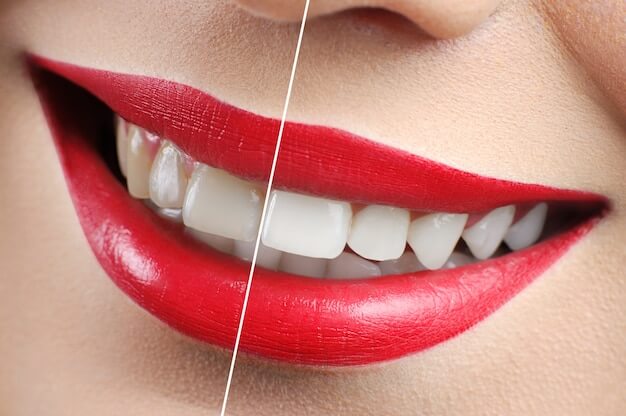
Teeth whitening is an aesthetic dentistry procedure aimed at lightening the color of teeth by targeting stains accumulated over time within the enamel and dentin layers. Extrinsic stains from external sources such as tea, coffee, smoking, and red wine tend to accumulate on the tooth surface in daily life. Additionally, intrinsic discolorations originating from within the tooth structure, such as age-related darkening or color changes due to certain medications or trauma, can also be observed. When applied with the correct indication, whitening treatment contributes to a more vibrant, clean, and aesthetic appearance of the teeth.
Teeth whitening is not a “one-size-fits-all” procedure. The most commonly used methods are in-office whitening performed in a clinical setting, at-home whitening using customized trays, and in some cases, combined protocols (office + home). In in-office whitening, higher concentration bleaching agents are used under the supervision of a dentist, with the gums protected by special barriers. For at-home whitening, lower concentration gel is applied inside clear trays prepared specifically for the patient, which are worn for prescribed durations. The combined protocol can be preferred for both faster results and more stable color retention.
The key factors affecting whitening success include the initial tooth color, the type of discoloration (surface or internal), enamel structure, dietary habits, and individual sensitivity tendencies. Some people experience rapid and noticeable lightening, while others show more limited changes. Additionally, whitening lightens the natural tooth color; however, the color of existing composite fillings, porcelain crowns, or veneers does not change with whitening. Therefore, treatment planning is especially important for patients with anterior restorations: whitening should be done first, and if needed, restorations color-matched to the new shade later.
Teeth whitening is generally safe, but temporary sensitivity is the most common side effect. This sensitivity usually decreases significantly within 24–72 hours in most patients. To manage sensitivity, desensitizing agents before and after treatment, fluoride applications, and short-term “white diet” protocols can be recommended. Moreover, excessive and uncontrolled whitening applications can damage enamel, so it is crucial that the procedure be planned and supervised by a dentist.
With proper planning, correct technique, and appropriate care, teeth whitening is a minimally invasive (not requiring enamel removal), fast-acting procedure that significantly enhances the esthetics of the smile.
What Is Teeth Whitening?
Teeth whitening is an aesthetic treatment performed with peroxide-based bleaching agents to lighten the shade of teeth. These agents penetrate the enamel and dentin layers to break down pigment molecules responsible for discoloration. As a result, the tooth achieves a lighter and more uniform color. Whitening differs from simple stain removal on the tooth surface; while “cleaning” removes tartar and surface plaque, whitening aims to lighten the tooth color via a chemical process.
Whitening produces more predictable results particularly in extrinsic stains (tea, coffee, smoking). Intrinsic discolorations (such as single-tooth darkening after trauma or age-related darkening) can also respond, but the approach and expectation management are more critical. Some cases may require specific protocols for a single tooth (e.g., internal bleaching for root canal treated teeth).
An important point: Whitening affects natural tooth tissues; existing fillings, porcelain crowns, zirconia restorations, or veneers do not change color with whitening. Therefore, whitening is often considered as the initial step in “smile design” plans.
How Is Teeth Whitening Performed?
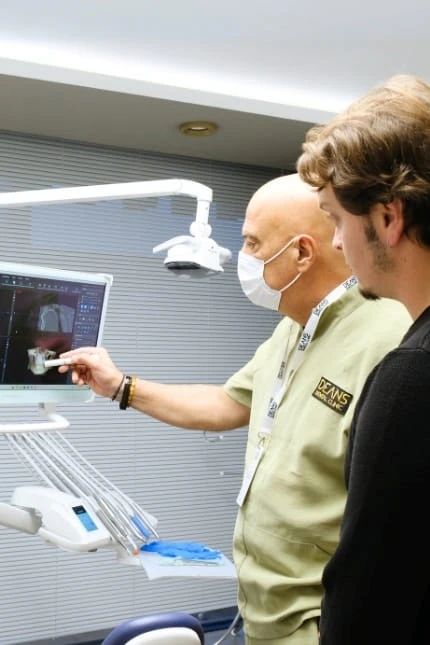
The teeth whitening procedure varies according to the chosen method, but in all approaches, the goal is controlled lightening without damaging tooth structures. The first step typically involves an examination. The dentist evaluates the type of discoloration, gum health, presence of decay or cracks, and risk of sensitivity. If Recurrent, Scaling and Polishing Are Performed Before Whitening
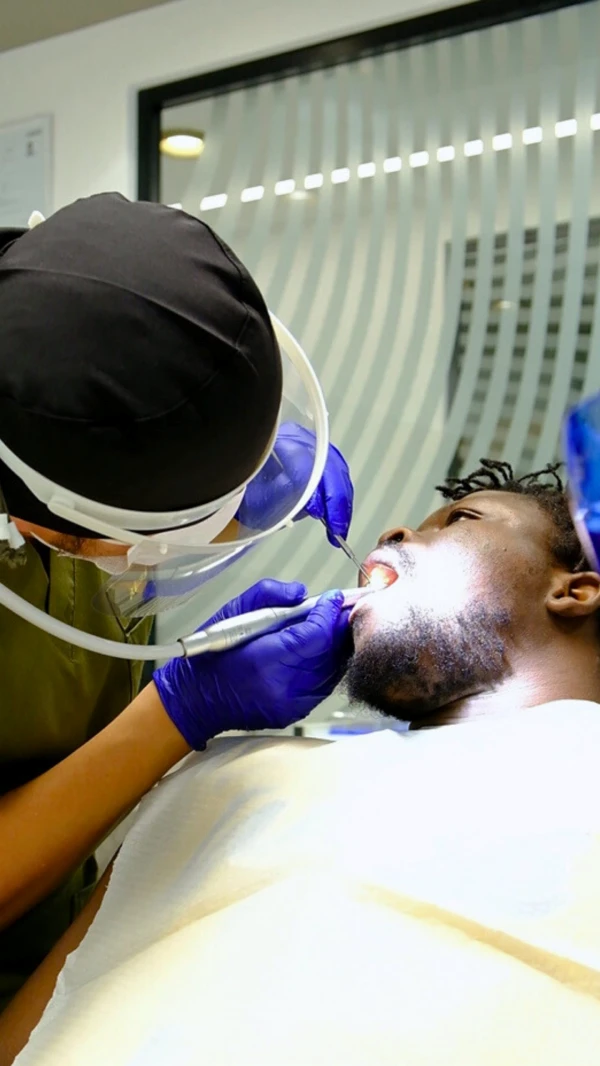
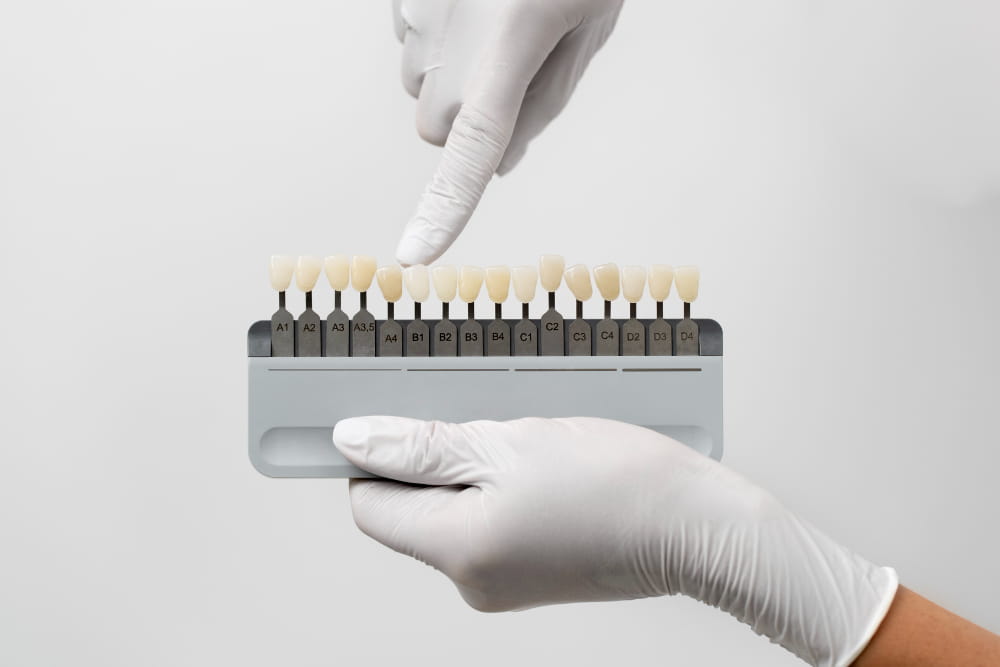
Because plaque and calculus accumulated on the surface can affect the uniformity of whitening, they are removed beforehand. The initial color is usually recorded using a color scale.
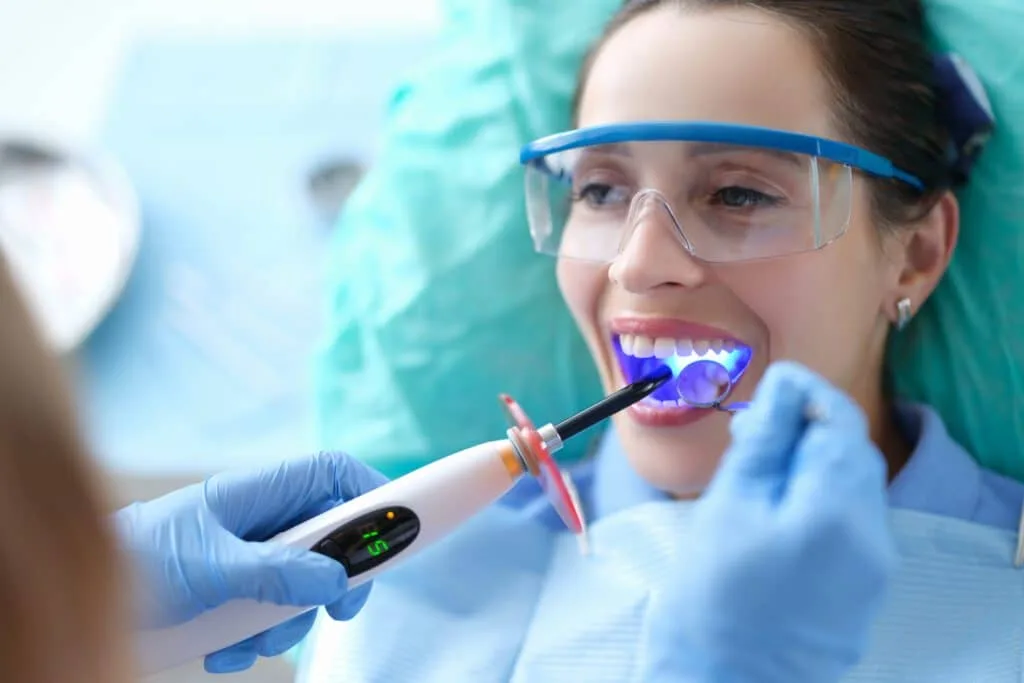
In office-type (clinical) whitening, the gums are isolated with a protective barrier, and whitening gel is applied to the tooth surfaces. The gel can be refreshed at intervals, and the procedure is performed under the dentist’s supervision. Some protocols may involve light/heat activation; the critical point here is protecting the tissues and managing sensitivity. The number of sessions and application duration are planned according to the target shade lightening and the patient’s sensitivity.
In home-type (tray) whitening, impressions or digital scans are taken from the patient to prepare a custom-fit transparent tray. The patient places the amount of gel prescribed by the dentist into the tray and applies it for the recommended durations. This protocol can provide more controlled and gradual whitening. It may be advantageous in some patients to keep sensitivity low and achieve more stable color results.
The combined protocol aims to start quickly with in-office treatment and then consolidate the shade with home application. The appropriate method depends on tooth color, timing, sensitivity tendency, and the patient’s compliance with regular use.
Who Is Suitable for Teeth Whitening?
Teeth whitening is suitable for many people who are dissatisfied with their tooth color and have stable oral health. Predictable results can be achieved especially in individuals whose tooth color has darkened due to tea-coffee consumption, smoking, or surface staining over time. Some degree of lightening can also be obtained for age-related discoloration.
The most important criterion in suitability assessment is the health of the teeth and gums. Active cavities, broken or leaking restorations, suspected cracked teeth, or gingival inflammation must be treated first. Whitening agents may increase sensitivity or cause discomfort in teeth with such problems. Lower concentration, more controlled protocols can be preferred for patients with severe tooth sensitivity.
Whitening may not provide the expected aesthetic benefit in patients with many veneers, crowns, or fillings in the anterior region, since restorations do not change color. For these patients, whitening is performed first, followed by replacing the restorations to match the new shade. If there is noticeable darkening in a single tooth (especially an endodontically treated tooth), alternative techniques such as internal bleaching may be considered instead of standard whitening.
In general, a suitable candidate for teeth whitening is someone with realistic expectations, good oral health, willingness to comply with dentist recommendations, and ability to carry out post-treatment care instructions.
What Should Be Considered Before Teeth Whitening?
The first concern before teeth whitening is completing an oral examination and resolving any necessary treatments. Cavities, broken fillings, gingival inflammation, or heavy calculus buildup must be addressed before whitening. Whitening is more comfortable and successful on healthy tooth tissue and gums. Especially scaling and polishing help create a more uniform tooth surface, contributing to more even whitening appearance.
The second point is determining the color goal accurately. The dentist usually records the initial shade and discusses the expected degree of whitening. Not all teeth lighten equally; the tooth structure and type of discoloration affect the outcome. Therefore, forming realistic expectations about “fully white” or “snow white” shades is important. Some patients may find more natural tones better harmonize with their face; this aesthetic preference can affect treatment planning.
If home whitening is planned, proper fit of the trays and correct gel quantities must be ensured. Exceeding the recommended duration increases the risk of sensitivity. Additionally, existing restorations should be evaluated before whitening: if there are large fillings or crowns in the anterior region, color mismatches may occur after whitening, so careful planning is needed. It Should Be Done According to
Individuals prone to sensitivity should inform this in advance. The dentist can make the process more comfortable with sensitivity relief products, fluoride applications, or softer protocols. Proper preparation means both better results and less sensitivity.
What to Pay Attention to After Teeth Whitening
Post-whitening care is important for maintaining the achieved shade and reducing sensitivity. The most frequently recommended approach is to avoid foods prone to staining during the first 24–72 hours. In some protocols, this period is considered a time when the tooth surface may be more susceptible to stains. Factors such as tea, coffee, red wine, dark-colored sauces, and smoking can accelerate the recurrence of discoloration. A “white diet” may be applied depending on the duration and protocol recommended by your dentist.
Sensitivity is the most common side effect after whitening. Short-term soreness can be felt when exposed to cold air, cold water, or sweet foods. In most patients, this decreases within 1–3 days. To reduce sensitivity, desensitizing toothpastes, fluoride-containing products, or desensitizing agents applied by the dentist can be used. If sensitivity develops during at-home whitening, the usage period can be shortened or paused with dental guidance; such adjustments should always be made under the dentist’s recommendation.
Oral hygiene is a key factor in color retention. Regular brushing and interdental cleaning reduce plaque accumulation on the surface, delaying staining. Additionally, regular professional cleaning reduces the buildup of extrinsic stains. Because composite fillings and porcelain restorations do not change color with whitening, if color discrepancy is noticed in the anterior region after whitening, planning should be done with the dentist; polishing or replacement of restorations may be considered if necessary.
When Is Teeth Whitening Applied?
Teeth whitening is applied when tooth color darkens over time or when discolorations are esthetically bothersome. The most common indication is superficial stains caused by external factors such as tea, coffee, and smoking. Whitening can provide faster and more predictable results for such stains. Structural darkening inside the tooth due to aging is another indication; in this case, lightening can be achieved, but results vary between individuals.
When darkening occurs in a single tooth after trauma, limited results can be obtained with standard whitening. In such cases, external whitening may be tried if the tooth is vital; for root canal treated and darkened teeth, internal whitening and other methods may be considered. Whitening can also be supportive in fluorosis or some structural discolorations; however, it may not be sufficient alone and restorative solutions such as veneers may be needed.
Teeth whitening is also applied as part of smile design plans. After natural teeth are lightened, composite or porcelain restorations can be planned to match the new shade if necessary. This approach provides a more homogeneous and esthetic result.
Why Is Teeth Whitening Done?
Teeth whitening is performed to improve smile aesthetics, make teeth appear cleaner and more vibrant, and sometimes to form the basis for more comprehensive esthetic plans. Tooth color directly affects facial expression. A lighter and more uniform tooth shade can create a perception of better care, youthfulness, and health for many individuals. For this reason, whitening is often chosen as one of the least invasive esthetic procedures.
In some patients, darkening of teeth can affect social confidence. Behaviors such as avoiding smiling in photos or hiding teeth while talking may be observed. These concerns can diminish after whitening. Additionally, whitening facilitates color planning before restorative treatments. For example, if bonding or porcelain veneers are considered for the anterior region, teeth are first lightened, and then restoration colors are selected accordingly, thus ensuring a more harmonious overall appearance.
Natural Integrity is Achieved.
Whitening is valuable because it provides an aesthetic improvement “without abrading the dental tissue.” In some cases, veneers or laminates may be required; however, in patients with only a color problem, the desired result can be achieved more conservatively through whitening. When performed with correct indication, whitening is both a fast and effective aesthetic solution.
How Long Does Teeth Whitening Take?
The duration of teeth whitening depends on the selected method and the individual’s dental structure. In-office whitening, which is applied under the dentist’s supervision in the clinic, tends to show results faster and is usually completed in a short time; however, multiple sessions may be planned for some patients to reach the desired shade. In at-home whitening, the process is more gradual; the patient applies treatment with custom trays for specified periods, and the color lightens step by step over days.
In a combined protocol, the initial treatment is done in-office and then reinforced with at-home application; this approach may be preferred for both speed and stability. The durability of the color depends on the patient’s dietary habits, smoking, oral hygiene, and regular check-ups. In patients who consume a lot of tea or coffee or who smoke, the shade may darken more quickly; in such cases, regular “touch-up” treatments may be necessary.
For patients prone to sensitivity, the duration and protocol can be planned more gently. The most accurate schedule is determined after examination by evaluating the initial shade of the teeth and the target tone.
Teeth Whitening Prices
Teeth whitening prices vary depending on the method to be applied (in-office, at-home, combined), the protocol of gels and materials used, the number of planned sessions, whether additional treatments are needed for sensitivity management, and the procedures to be performed before whitening (such as scaling, control X-rays, treatment of existing cavities or restorations). Additionally, in at-home whitening, the production of custom trays is part of the plan and affects the overall cost.
In patients with numerous fillings or veneers in the anterior region, supplementary restorative procedures to ensure color harmony after whitening may be required; this also impacts the overall plan. Therefore, rather than providing a standard single price, it is healthiest to clarify a personalized plan after examination.
For current and personalized information about teeth whitening prices, you should contact us. After your examination, we transparently share the most suitable whitening method for you, the session plan, and the related cost information.